Russia’s Missile Help to Iran Could Reshape the Cost of American Power
The reported C430L project points to a lasting transfer of engineering expertise. Its strategic significance does not depend on claims of an operational “carrier-killer” missile.
The most consequential element of Russia’s reported missile cooperation with Iran may be what remains after the engineers leave. A shipment adds weapons to an arsenal. Help in mastering their development can strengthen a country’s ability to rebuild, adapt and produce future systems despite external pressure.
That is the strategic concern raised by reporting on Project C430L, an alleged Russian assistance program supporting Iranian ramjet propulsion. If the account is substantiated, Washington faces a problem extending beyond one prospective missile: a relationship that could improve Iran’s defense-industrial capacity and make containing its military capabilities more difficult.
The evidence described supports serious scrutiny. It does not establish that Iran has deployed a new weapon capable of reliably striking American aircraft carriers.
First, correct the missile claim
The distinction between supersonic and hypersonic weapons matters. The Financial Times investigation, published on September 1, describes Russian assistance for supersonic cruise missiles. The supplied Ynet account repeatedly uses “hypersonic,” a stronger characterization that the available reporting does not establish.
Hypersonic generally means speeds of at least Mach 5. Possessing ramjet technology does not by itself demonstrate that performance. NASA distinguishes conventional ramjets from scramjets, which use a different combustion regime suited to higher-speed flight.
The comparison with Russia’s Kinzhal also needs correction. The Congressional Research Service classifies Kinzhal as a maneuvering air-launched ballistic missile, not a ramjet-powered cruise missile. Nor does speed alone establish precision, nuclear capability or an ability to defeat every defense.
These distinctions strengthen the analysis. A potentially important weapons program should be assessed on its demonstrated characteristics, without borrowing capabilities from unrelated systems.
The reported transfer goes beyond hardware
According to Ynet’s account of the FT investigation, the program began in 2023 and involved Rosoboronexport and NPO Mashinostroyenia. The reported evidence includes correspondence, travel records and exchanges in which Russian specialists reviewed Iranian development work. Ynet says neither government responded to the report.
WARYATV has not independently authenticated the underlying leaked records. Their reported contents nevertheless identify a consequential category of cooperation: experienced specialists helping another country overcome development problems.
The value of that relationship can exceed the value of a blueprint. Engineering judgment includes recognizing why a test failed, distinguishing a repeatable result from an anomaly and organizing further work. When such expertise is absorbed by local teams, its effects can extend beyond the original contract.
This does not mean Iran becomes technologically independent overnight. Specialized inputs, production quality and sustained testing can remain constraints. But successful knowledge transfer can gradually reduce dependence on complete foreign weapons.
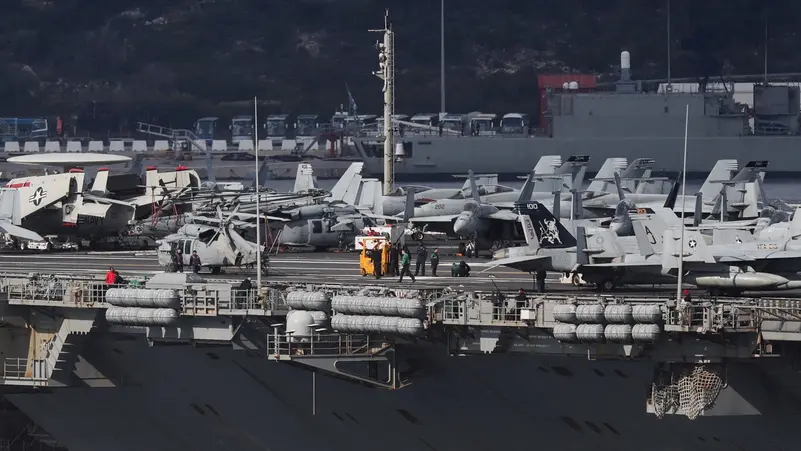
A propulsion breakthrough is not a carrier-strike capability
The reported engine work is one part of a much larger military undertaking. An operational anti-ship weapon must function as a complete system, be produced reliably and perform against a moving target under contested conditions.
A successful propulsion test cannot demonstrate all of those outcomes. Public evidence would need to establish integration, repeatable performance and actual fielding before claims of an operational capability become justified.
The carrier-focused headline therefore compresses several unresolved questions into one dramatic image. The ability to fly quickly does not automatically provide the ability to locate, track and hit a defended vessel.
Yet uncertainty should not become complacency. A credible prospect of improved Iranian capability could influence planning before the system enters service. Military organizations must account for plausible future threats, while avoiding the opposite mistake of treating every development claim as a proven breakthrough.
Why Moscow might accept the risk
One plausible Russian incentive is to increase the burden on American forces and decision-makers outside Europe. Assistance that complicates U.S. operations could create strategic value for Moscow without requiring direct Russian engagement.
That is an assessment of incentives, not evidence of a disclosed Kremlin decision. The reported program cannot, by itself, prove the motives behind every Russian action.
There are also potential costs. Sensitive transfers can bring diplomatic pressure, additional restrictions and difficulties with other partners. The extent of Moscow’s commitment should therefore be judged through verified behavior, not an assumption that Russian and Iranian interests are identical.
For Tehran, the attraction is clearer at the industrial level: acquiring expertise can improve future options even when an individual project remains unfinished. Cooperation can thus be valuable before it produces a deployable weapon.
The regional consequence could precede deployment
If the program eventually delivers a credible capability, the effect would extend beyond the possibility of physical damage. Greater uncertainty about naval operations could complicate deterrence, crisis management and the reassurance offered to regional partners.
The commercial consequences would be indirect and conditional. A secret development program does not itself close a shipping lane or establish higher insurance costs. Those effects would depend on operational deployment, threats, incidents and how governments and shipping companies respond.
For Red Sea and Gulf of Aden economies, including Somaliland, that distinction is essential. There is no evidence here that the technology has reached the Houthis or that a new threat has been deployed near Bab el-Mandeb. Such claims would require separate substantiation.
WARYATV Assessment
The strongest conclusion is about the durability of military cooperation. If Russia is helping Iran absorb advanced propulsion expertise, the partnership could make future Iranian capabilities harder to constrain through pressure on weapons shipments alone.
The indicators to watch are independently corroborated development milestones, evidence of complete-system testing, production and confirmed deployment. Until then, “carrier-killer” language outruns the record.
Washington should take the reported transfer seriously because expertise can survive the interruption of a contract or the loss of equipment. The strategic danger is a gradual improvement in Iran’s ability to generate military options—and an American response that recognizes that change only after it becomes operational.