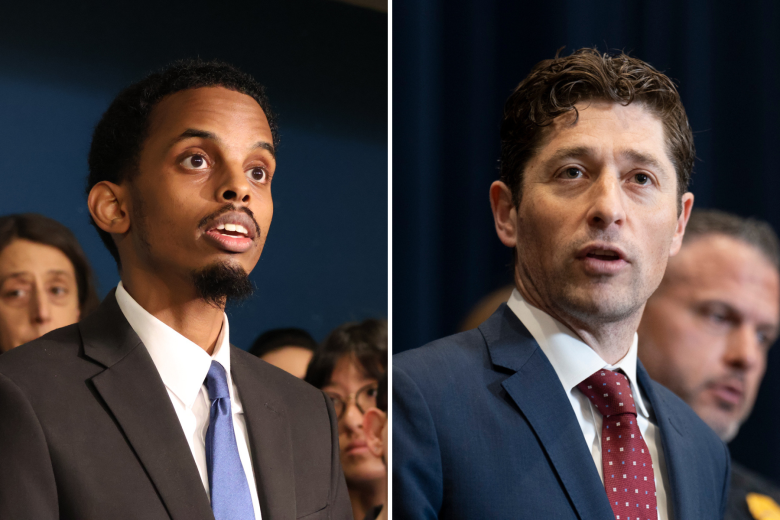
Sharmarke Issa admits to playing a key role in a $50 million fraud that stole from a federal nutrition program meant to feed children, now facing federal prison and restitution.
Sharmarke Issa, a Somali refugee who once chaired the board of the Minneapolis Public Housing Authority (MPHA), has pled guilty to federal wire fraud charges, admitting his role in a multi-million dollar fraud scheme. The scheme, centered around the Feeding Our Future (FOF) nutrition program, was designed to provide COVID relief funds to feed hungry children. However, instead of going to those in need, millions of dollars were siphoned off through a money-laundering operation in which Issa played a key part.
Issa was responsible for $7.6 million of the total $50 million misappropriated from the FOF nutrition program, according to federal prosecutors. Of that amount, he personally pocketed $3.5 million, which he has now been ordered to repay. Issa laundered these funds through two entities under his control: Minnesota’s Somali Community, a nonprofit, and Wacan Restaurant LLC. He used the stolen money to buy several properties, which he will now forfeit as part of his plea agreement.
This fraud scheme is one of the largest COVID relief-related scandals uncovered by the U.S. Department of Justice. Dozens of individuals, including other Somali immigrants, were indicted in connection to the operation. Issa, a prominent figure within Minneapolis’ Somali community, held a respected position before his criminal activities came to light.
Issa’s admission of guilt has resulted in the dismissal of other charges related to money laundering and wire fraud, though he still faces a federal prison sentence. While the maximum penalty for the charges could have been 20 years, Issa will likely serve between two years and nine months to three years and five months after entering a guilty plea. His sentencing will take into account his acceptance of responsibility and lack of a prior criminal record.
Issa’s downfall began after one of his properties became the subject of a federal investigation in early 2022. This led to his resignation from the MPHA Board in February 2022, and criminal charges followed later that year, alongside 47 other defendants. In June, five Somalis were convicted on charges related to wire fraud, bribery, and money laundering.
Issa’s story is a stark contrast to the promising public image he once held. As the first refugee to chair the MPHA Board of Commissioners, Issa was seen as a role model within the community. Having arrived in the U.S. as a child refugee, he grew up in Minneapolis public housing and eventually became a leading figure in urban planning. His appointment was praised by Minneapolis Mayor Jacob Frey, who described Issa as a “skilled steward” of public housing, emphasizing his lived experience as key to understanding the needs of low-income residents.
This case has shocked both the local Somali community and the broader public, given Issa’s once-celebrated position and his subsequent betrayal of public trust. The fraud not only diverted essential funds from feeding vulnerable children during the pandemic but also raised concerns about how public figures can exploit positions of power for personal gain.
The exposure of such widespread corruption involving high-profile figures like Issa has also drawn attention to the need for tighter oversight in federal relief programs. The Feeding Our Future fraud case is a stark reminder of the potential for abuse in large-scale emergency funding programs, especially when urgent needs bypass usual oversight mechanisms.
Sharmarke Issa’s guilty plea in one of the largest COVID-related fraud cases in U.S. history underscores the critical need for transparency and accountability, particularly in programs aimed at helping society’s most vulnerable. As Issa prepares for sentencing, the broader message is clear: even those once viewed as community leaders can fall into corruption, and the impact of such schemes can be devastating. The restitution, forfeitures, and prison time may serve as a deterrent, but the damage to public trust is far harder to repair.