Arms sales by the world’s 100 largest defense companies saw significant growth last year, driven by ongoing conflicts in Ukraine and Gaza and rising tensions in East Asia. According to a new report by the Stockholm International Peace Research Institute (SIPRI), these companies generated $632 billion in revenue in 2023, a 4.2% increase compared to the previous year.
Recovery and Growth in Arms Production
This growth marks a recovery from 2022, when supply chain disruptions hindered the ability of arms manufacturers to meet increasing demand. In 2023, many companies successfully ramped up production, and for the first time, all 100 companies in the ranking reported revenues exceeding $1 billion.
Researchers expect this upward trend to continue. SIPRI’s Lorenzo Scarazzato noted that the resurgence in sales is complemented by widespread recruitment campaigns, signaling optimism for further growth in 2024.
Smaller arms producers adapted more quickly to rising demand, thanks to their simpler supply chains and specialization in key components. Nan Tian, director of SIPRI’s military spending program, highlighted their efficiency in responding to global conflict-driven demand.
Regional Highlights
United States:
U.S.-based companies maintained dominance in global arms markets, with 41 of the top 100 companies headquartered in the U.S. These firms accounted for half of the world’s total arms revenue. However, sales growth for major U.S. manufacturers like Lockheed Martin and RTX was limited, as their reliance on complex supply chains continued to pose challenges.
Europe:
European firms saw only modest sales growth, with a 0.2% increase overall. This figure obscures contrasting trends within the region. While manufacturers of advanced systems worked on older contracts, companies producing munitions, artillery, and land defense systems benefited from strong demand linked to the war in Ukraine.
Russia:
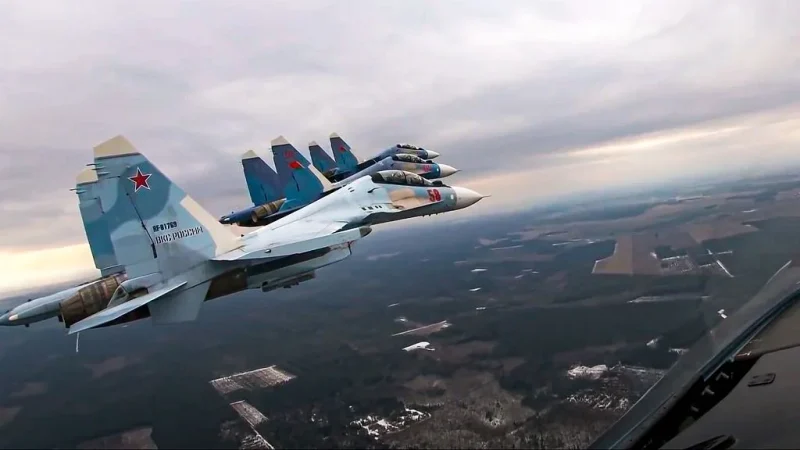
Russia’s defense industry, deeply embedded in a war economy, reported a dramatic increase in sales. The state-owned conglomerate Rostec recorded a 49% surge, contributing to a 40% overall growth among Russian companies.
Middle East:
Arms manufacturers in the Middle East, particularly in Israel and Turkey, experienced sharp increases in sales. Israeli companies posted record revenues of $13.6 billion, while Turkey’s Baykar and others saw a 24% jump, driven by the Ukraine conflict and regional defense priorities.
Asia:
General rearmament in Asia bolstered sales for manufacturers in South Korea and Japan, as these nations ramped up their military capabilities amid regional tensions. However, Chinese arms producers faced slower growth, reflecting broader economic challenges.
The resurgence in global arms sales underscores the profound impact of geopolitical instability on the defense industry. While major manufacturers grapple with supply chain complexities, smaller and more agile firms have capitalized on immediate demand.
The growing involvement of non-Western producers, particularly in the Middle East and Asia, reflects a diversification of global arms markets. At the same time, heightened competition and increased production capacity could influence the trajectory of global arms trade in the coming years.
As conflicts persist and defense spending rises, the arms industry is set to remain a significant player in shaping global economic and political dynamics.