Fear Empties the Mall: How Trump’s ICE Crackdown Is Strangling Somali America.
At Karmel Mall in south Minneapolis, the heart of Somali-American commerce, silence has replaced the usual rhythm of trade.
Once crowded corridors now echo with Quran recitation and the hum of heaters, not customers. Clothing shops sit open but empty. Food stalls prepare meals no one comes to buy. Travel agencies cancel bookings that once sustained families. For three weeks, fear — not winter — has become the dominant economic force.
This is not an abstract immigration debate. It is a localized economic shock.
“Early afternoons used to bring 15 to 20 customers,” said Abdi Wahid. Now, he waits hours for one. Across the complex, dozens of businesses have stopped opening altogether. Workers stay home. Customers stay away. Even U.S. citizens avoid public spaces, carrying passports in their pockets as if they were foreign visitors in their own city.
The trigger is not crime. It is perception.
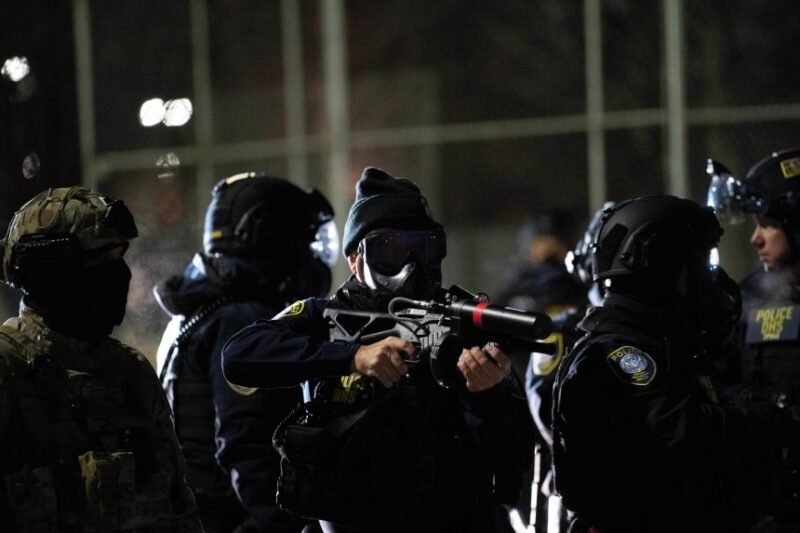
Trump’s “Operation Metro Surge” has turned visibility itself into a risk. The Somali community, already under political scrutiny after a fraud case, has become a rhetorical target. When a president describes a community as “garbage” and claims it “contributes nothing,” enforcement quickly becomes collective punishment in practice, even if not in law.
The fear now cuts across legal status. Citizens cancel travel. Families avoid mosques. Employees refuse to come to work. Bashir Garad, who runs a travel and accounting firm, has lost nearly all clients — not because they are undocumented, but because they no longer trust the system to protect them.
“They are citizens,” he said. “But they are afraid they won’t be allowed back.”
That is the deeper damage: the collapse of confidence.
ICE insists enforcement is based on “reasonable suspicion,” not race. But on the ground, suspicion has become visual. Wahid says the killing of Renee Good and the raid at Roosevelt High School convinced many that race itself is now enough.
The economic cost is immediate and measurable. Ibrahim Dahiye says his electronics business is down $20,000 a month. Employees stay home. Rent becomes a shared burden. Survival becomes a prayer.
This is not simply immigration enforcement. It is market disruption.
Karmel Mall is not only a shopping center. It is a financial engine, a religious center, a housing complex, and a social institution for the largest Somali community in the United States. When it slows, an entire ecosystem weakens.
There is a larger lesson here.
Targeted rhetoric reshapes behavior faster than any law. Even when enforcement claims neutrality, public signals determine economic outcomes. Once fear enters the market, legality becomes irrelevant.
What is unfolding in Minneapolis is not deportation policy. It is economic deterrence by atmosphere.
And the price is being paid not by criminals — but by shopkeepers, accountants, and citizens who now treat their own neighborhood as hostile territory.