Kuwait Under Fire—Iranian Drones Strike Oil and Power Heart.
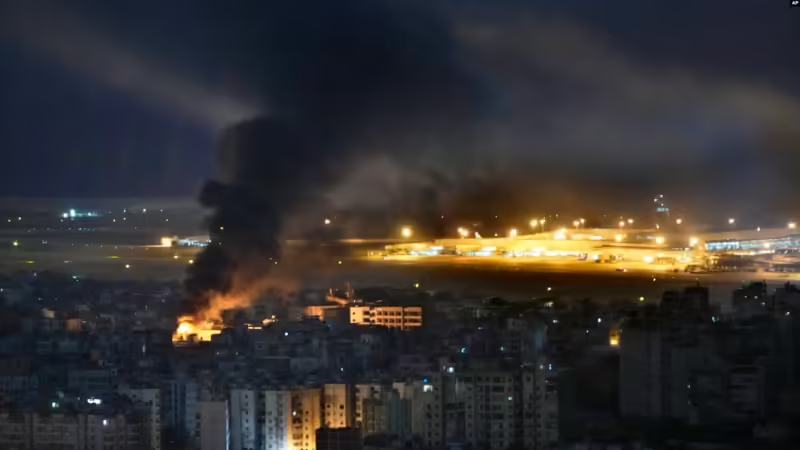
The first signs were smoke rising over Shuwaikh, where one of Kuwait’s most critical energy hubs sits at the edge of the capital.
By dawn, officials confirmed what many feared: Iranian drones had struck the Shuwaikh oil sector complex, triggering a fire inside facilities that house both the oil ministry and the state-run Kuwait Petroleum Corporation. Within hours, additional strikes hit government buildings and key power infrastructure, widening the scope of the attack.
No casualties were reported. But the damage ran deeper than the absence of injuries might suggest.
According to Kuwaiti authorities, two power generation units were forced out of service after drones targeted electricity and desalination plants—facilities essential not only for energy supply but also for water security in a country where freshwater is largely produced through desalination.
By the third layer of impact, the significance becomes clear: this was not a symbolic strike. It was a calculated hit on the systems that sustain daily life.
The attacks come as the war between the United States, Israel, and Iran enters its sixth week, steadily expanding beyond traditional military targets. Increasingly, economic and civilian infrastructure across the Gulf is being drawn into the conflict.
For Kuwait, a state that has publicly maintained it is not a party to the war, the strikes raise urgent questions about vulnerability.
Officials described “significant material damage” to government office complexes, underscoring how administrative and energy systems are now exposed. While air defenses have intercepted many incoming threats across the region, the ability of drones to penetrate and disrupt critical facilities highlights a shifting battlefield—one defined less by frontlines and more by reach.
The pattern is becoming familiar.
Across the Gulf, similar incidents have targeted oil storage sites, petrochemical plants, and power networks. The strategy appears aimed at applying pressure without triggering mass civilian casualties, while still delivering economic and psychological shock.
There has been no immediate response from Tehran.
But the broader message is already resonating: the war is no longer contained to military bases or distant installations. It is moving into the infrastructure that underpins state stability.
For Kuwait and its neighbors, the challenge is no longer just defense—it is continuity.
Keeping the lights on, water flowing, and markets stable has become part of the war effort itself.
And as long as the conflict endures, those systems remain in the crosshairs.