US Launches Fresh Strikes Across Iran as Gulf Conflict Enters Dangerous New Phase
The United States has carried out its ninth consecutive night of military strikes against Iran, targeting military command centres, air defence systems, missile launch sites and communications infrastructure, as the confrontation widens across the Gulf and threatens one of the world’s most critical energy corridors.
According to US Central Command (CENTCOM), the operation focused on degrading Iranian military capabilities used to threaten commercial shipping and civilian vessels transiting the Strait of Hormuz, a maritime chokepoint through which roughly one-fifth of global oil supplies pass.
Shortly after the strikes began, Iranian media reported explosions across multiple locations, including Tabriz, Chabahar, Konarak, Mahshahr, and Bandar Imam Khomeini, indicating that the attacks were spread across northern, southern and western Iran.
Iran Expands Retaliation
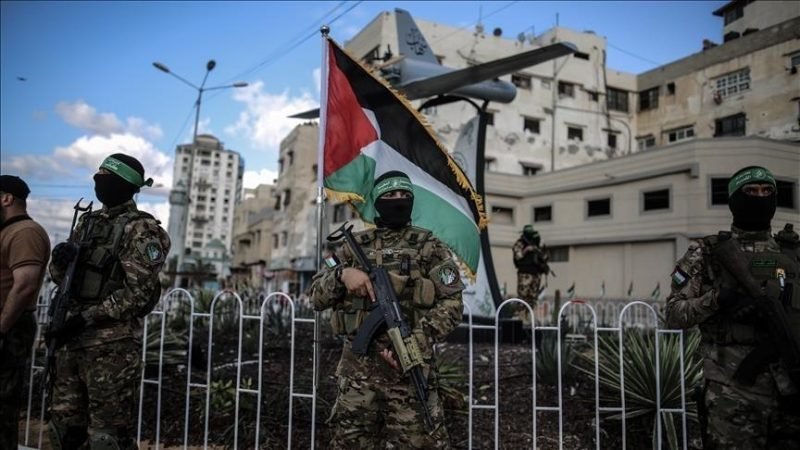
Tehran responded by launching drones toward Kuwait, where authorities said air defence systems intercepted the incoming aircraft.
Air raid sirens also sounded in Bahrain, home to the headquarters of the US Navy’s Fifth Fleet, underscoring Iran’s continued effort to pressure countries hosting American military forces.
The latest exchanges suggest the conflict is moving beyond direct US-Iran confrontation into a broader regional security crisis involving Gulf states.
Strait of Hormuz Faces New Shipping Emergency
The maritime situation deteriorated further after the UK Maritime Trade Operations (UKMTO) reported that a commercial vessel caught fire after being struck by an unknown projectile approximately 15 kilometres northwest of Kumzar, Oman.
The crew abandoned the vessel safely and were rescued by a tugboat, but the ship remains adrift with the fire still burning.
Security firm Ambrey reported that the distressed vessel was a Maltese-flagged oil tanker.
Meanwhile, Iran’s Islamic Revolutionary Guard Corps (IRGC) claimed that two oil tankers exploded after allegedly ignoring Iran’s designated “safe sea lane” through the Strait of Hormuz. Tehran has repeatedly warned commercial shipping that vessels should follow routes approved by Iranian authorities.
The incident raises fresh concerns over freedom of navigation in one of the world’s most strategically important waterways.
US Military Death Toll Rises
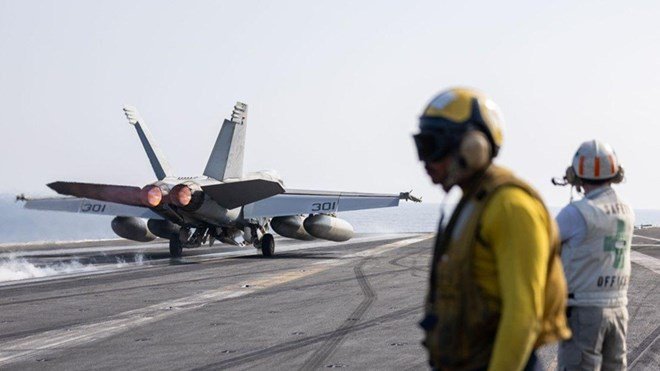
The Pentagon is reinforcing its regional posture by deploying additional fighter aircraft and aerial refuelling assets to the Middle East.
At the same time, the human cost of the conflict continues to climb.
CENTCOM confirmed that another American service member died in northern Iraq while clearing unexploded ordnance from a downed Iranian one-way attack drone. Combined with earlier casualties announced over the weekend, the confirmed US military death toll has now reached 17, marking the deadliest period for American forces since the conflict began.
WARYATV Strategic Analysis
The conflict is no longer defined solely by airstrikes between Washington and Tehran. It has evolved into a multidomain confrontation spanning air, sea and regional proxy theatres.
Three strategic developments stand out.
First, the United States appears to be systematically dismantling Iran’s command-and-control infrastructure while simultaneously protecting commercial shipping through sustained military pressure.
Second, Iran is shifting toward asymmetric retaliation. Rather than matching American air power directly, it is increasing pressure on Gulf allies, targeting maritime traffic and demonstrating that it can disrupt regional stability without engaging in a conventional military confrontation.
Third, the Strait of Hormuz has become the conflict’s most dangerous flashpoint. Every attack on commercial shipping increases insurance costs, threatens global energy markets and raises the risk that international naval forces could become directly involved.
The coming days will determine whether the confrontation remains a controlled military campaign or expands into a broader regional war involving multiple Gulf states, international shipping and global energy security.