U.S. Halts Iran’s Maritime Trade as Diplomacy Resumes, Deepening Strategic Paradox.
Can you negotiate peace while strangling your opponent’s economy? That’s the gamble now reshaping the Middle East.
The United States has effectively shut down Iran’s maritime trade—while simultaneously signaling a return to diplomacy. That contradiction is not accidental. It is the strategy.
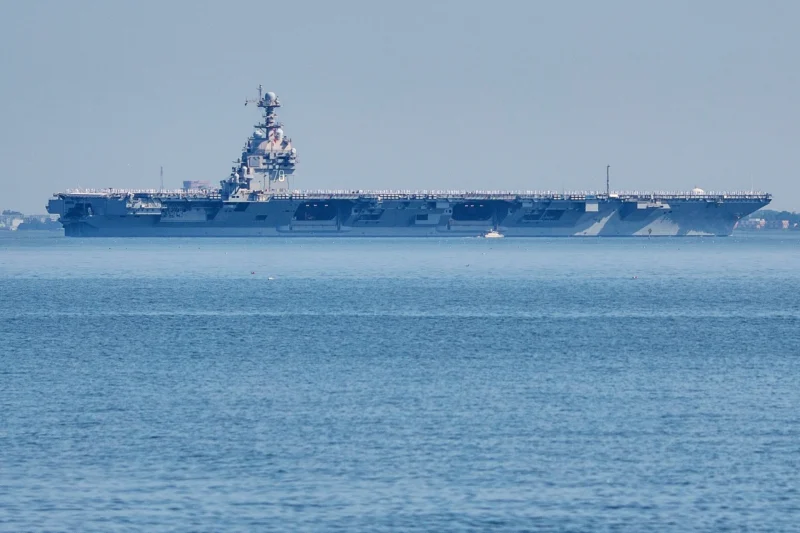
In less than 36 hours, U.S. forces enforced a sweeping naval blockade that halted nearly all seaborne trade into and out of Iran, according to Central Command. Given that roughly 90% of Iran’s external trade depends on maritime routes, the move represents one of the most aggressive economic pressure campaigns in recent history.
Yet at the same moment, Donald Trump and JD Vance are projecting optimism about renewed talks with Tehran, potentially returning to Islamabad within days.
This is not diplomacy despite pressure. It is diplomacy through pressure.
Washington is attempting to force a negotiation outcome by collapsing Iran’s economic leverage—particularly its ability to use the Strait of Hormuz as a bargaining chip. The logic is simple: if Tehran cannot export oil, it cannot sustain prolonged resistance.
But the risks are equally clear.
From Tehran’s perspective, the blockade is not a negotiating tactic—it is an act of war. Iranian officials have already warned that if their ports are choked, no port in the Gulf will remain safe. That raises the prospect of retaliation not just against U.S. assets, but against regional infrastructure and global shipping lanes.
The result is a dangerous dual-track reality: talks may resume, but escalation is already underway.
This dynamic exposes the core dilemma of the current phase of the conflict. Both sides claim to prefer a deal, yet both are intensifying pressure in ways that make compromise harder. The United States is tightening economic constraints; Iran is signaling it can widen the battlefield, whether through proxies or control of key chokepoints.
Even the negotiations themselves reflect this mistrust. The gap between proposals—Washington reportedly seeking a 20-year halt to nuclear activity, Tehran offering a far shorter timeline—underscores how far apart the two sides remain. Issues like sanctions relief and the fate of enriched uranium continue to block progress.
Meanwhile, events on the ground are moving faster than diplomacy.
Ships are turning back. Oil flows are disrupted. Regional actors are bracing for retaliation. And Israel’s continued operations in Lebanon—outside the ceasefire framework—add another layer of instability that could derail talks entirely.
What emerges is a conflict that has not paused, but fragmented.
The battlefield now spans naval enforcement, economic warfare, proxy fronts, and negotiation rooms. Each arena feeds into the other. A successful blockade strengthens U.S. leverage—but also increases the likelihood of Iranian escalation. Renewed talks create hope—but also raise the stakes if they fail.
The immediate question is whether this pressure can produce a breakthrough before the ceasefire window closes. The larger question is more consequential: whether a strategy built on simultaneous coercion and negotiation can stabilize the region—or push it toward a wider confrontation.
For now, the answer remains uncertain. But one reality is already clear.
This is no longer just a war of weapons. It is a contest over who can shape the terms of peace—while still fighting in every domain that matters.