Connect with us

Top stories

Ethiopia Launches National Coffee Platform to Boost Export Earnings

Published

on

Ethiopia, the birthplace of coffee, has launched a National Coffee Stakeholder Engagement Platform aimed at enhancing the country’s coffee production, quality, and export revenues. The initiative, inaugurated Thursday in the capital Addis Ababa, seeks to address persistent challenges in the coffee sector while leveraging opportunities to maximize its economic potential.

Adugna Debela, director-general of the Ethiopian Coffee and Tea Authority, underscored the platform’s role in fostering inclusive dialogue among stakeholders across the coffee value chain.

“The platform provides access for all stakeholders to discuss various coffee-related issues, from cultivation to marketing, with the aim of enhancing the country’s coffee productivity and quality,” Debela said during the launch.

Key priorities include:

  • Establishing quality standards to improve branding and marketing.
  • Promoting specialty coffee trading, a growing segment in global markets.
  • Streamlining discussions on challenges like climate change, pricing volatility, and supply chain inefficiencies.

Ethiopia has long been synonymous with coffee, contributing to its culture and economy. In the last Ethiopian fiscal year, which ended on July 7, 2024, the country earned $1.43 billion from coffee exports. Now, it is setting an ambitious target of increasing this revenue to $2 billion by 2024/2025.

Ethiopian State Minister of Finance for Economic Cooperation Semereta Sewasew described the platform as a “significant step forward” in addressing systemic hurdles and capitalizing on global demand for Ethiopian coffee, particularly in premium markets.

The emphasis on specialty coffee reflects Ethiopia’s intention to carve a niche in high-value markets. Ethiopian coffee, known for its unique flavors and origins such as Sidama, Yirgacheffe, and Harrar, has long been prized by connoisseurs.

To achieve its goals, Ethiopia aims to:

  1. Strengthen Branding: Establish a cohesive identity for Ethiopian coffee to differentiate it in competitive global markets.
  2. Ensure Sustainability: Support coffee farmers in adopting sustainable practices that address environmental and social concerns.
  3. Improve Productivity: Provide resources and training to enhance yields while maintaining quality.

While the platform offers a roadmap to revitalizing the sector, Ethiopia faces several hurdles:

  • Climate Vulnerability: Shifts in weather patterns threaten coffee yields and quality.
  • Market Access: Smallholder farmers, who produce the majority of Ethiopian coffee, often face barriers to entering lucrative international markets.
  • Price Fluctuations: Global coffee prices can be volatile, impacting the stability of export revenues.

By bringing together farmers, exporters, policymakers, and other stakeholders, the platform aims to create a unified approach to addressing these challenges.

Ethiopia’s efforts come at a time when global coffee demand is rising, particularly for specialty and sustainably sourced products. With this initiative, Ethiopia not only seeks to boost its export earnings but also to solidify its reputation as a leader in the coffee industry.

The platform represents a critical step in aligning the country’s coffee sector with global trends, ensuring that its farmers and exporters are well-positioned to thrive in an evolving market.


Top stories

Trump Says All Governors Invited to White House Meeting

Published

on

A bipartisan tradition turns political. Why are two Democratic governors excluded from Trump’s White House invite list?

President Donald Trump said Wednesday that he has invited nearly every U.S. governor — Democrat and Republican alike — to a long-standing bipartisan meeting at the White House next week, carving out two exceptions: Maryland Gov. Wes Moore and Colorado Gov. Jared Polis.

The annual session, organized in connection with the National Governors Association (NGA), has traditionally served as a rare moment of cross-party dialogue between state leaders and the president. This year’s gathering, scheduled for Feb. 20, instead ignited confusion and partisan friction.

In a post on Truth Social, Trump asserted that invitations “were sent to ALL governors” except Moore and Polis. He also criticized Oklahoma Gov. Kevin Stitt, the NGA chair, calling him a “RINO” — Republican in name only — and accusing him of misrepresenting the White House’s position.

Trump’s statement appeared to contradict earlier communications from NGA officials. Last week, the group said it had been informed by the White House that only Republican governors would be invited to the Feb. 20 business meeting. As a result, NGA leaders said they removed the event from their formal agenda, citing the association’s bipartisan mission.

Shortly before Trump’s post, NGA Chief Executive Brandon Tatum said Stitt had spoken with the White House and that all governors from “all 55 states and territories” would attend. In an email obtained by NBC News, Stitt told fellow governors that Trump had been “very clear” that the event was intended for the full NGA membership and that a scheduling misunderstanding had been addressed.

Complicating matters further, a source familiar with the situation said Moore had received an invitation Wednesday afternoon, prior to Trump’s public statement. A spokesperson for Polis declined to confirm whether Colorado had been formally invited, but said the governor remained focused on bipartisan cooperation regardless of the administration’s posture.

The status of a separate governors’ dinner, typically held alongside the business session, remains uncertain.

The dispute underscores how even routine Washington traditions can become flashpoints in an era of heightened political polarization. What was once a symbolic display of federal-state partnership has, at least for now, become another test of party lines — and presidential messaging.

Continue Reading

Top stories

Nuclear Uncertainty: Moscow Signals Restraint as New START Expires

Published

on

The last guardrail is gone. Russia says it will show restraint — but only if Washington does the same.

Russia said Wednesday it would continue observing the missile and warhead ceilings set under the now-expired New START agreement — provided the United States does not exceed those limits.

Speaking before the State Duma, Foreign Minister Sergei Lavrov described Moscow’s position as a conditional moratorium. “Our position is that this moratorium on our side that was declared by the president is still in place, but only as long as the United States doesn’t exceed the said limits,” he said.

The 2010 treaty formally expired on February 5, removing binding constraints on the world’s two largest nuclear arsenals for the first time in more than 50 years. The lapse has fueled concerns among arms-control advocates about a renewed strategic competition — potentially involving not only Washington and Moscow but also Beijing, whose nuclear stockpile remains smaller but is expanding rapidly.

U.S. President Donald Trump declined an offer from Russian President Vladimir Putin to voluntarily extend adherence to the treaty’s limits for another year. Trump said he preferred negotiating what he described as a “new, improved and modernized” agreement rather than prolonging the existing framework.

Lavrov suggested Moscow believes Washington has little immediate incentive to break from the treaty’s numerical thresholds, though he did not detail the intelligence underpinning that assessment. He also renewed calls for a broader “strategic dialogue,” saying such talks were “long overdue.”

Analysts say Russia’s pledge leaves important gaps. Georgia Cole, a security analyst at Chatham House in London, noted that Moscow remains free to continue developing nuclear systems that were not covered under New START’s scope. At the same time, she said, the Kremlin’s conditional restraint allows it to frame the United States as the destabilizing actor should Washington move to expand its arsenal beyond previous limits.

Economic considerations may also shape Moscow’s approach. Russia’s budget remains under strain from its prolonged war in Ukraine. A full-scale nuclear buildup would carry significant financial costs, even if the Kremlin sought to match any major U.S. expansion.

If hostilities in Ukraine ease, more resources could shift toward strategic forces. Yet rebuilding conventional capabilities would also compete for funding. For now, both sides appear to be signaling caution — even as the formal architecture that once enforced it has disappeared.

Continue Reading

Top stories

From Negotiation to Escalation: Why the Iran File Is Sliding Toward Force

Published

on

Iran Rules Out Broader Talks as Trump Signals Possible Second Carrier Deployment.

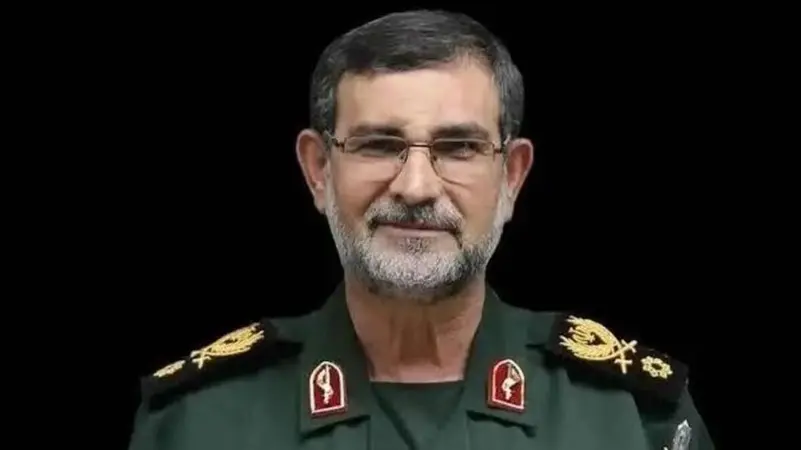
Iran said Wednesday it is willing to negotiate with the United States over its nuclear program but firmly rejected expanding talks to include its ballistic missile arsenal, drawing a clear line as diplomatic efforts intensify and military pressure mounts in the region.

President Masoud Pezeshkian, speaking in Tehran during ceremonies marking the anniversary of the 1979 Islamic Revolution, reiterated that Iran is not seeking nuclear weapons and is prepared to accept verification measures. At the same time, senior Iranian officials made clear that missile capabilities and broader defense issues remain off the table.

“We are not seeking nuclear weapons and we are ready for any kind of verification,” Pezeshkian told crowds gathered in the capital. But advisers to Supreme Leader Ayatollah Ali Khamenei emphasized that Iran’s missile program is non-negotiable, describing it as a core component of national defense.

The remarks come as President Donald Trump increases both diplomatic outreach and military signaling. The USS Abraham Lincoln aircraft carrier is already operating in the region, and Trump indicated this week that a second carrier group could be deployed if negotiations falter.

“We have an armada that is heading there and another one might be going,” Trump said in an interview, warning that time is “running out” for Tehran to reach what he described as a fair agreement.

The escalating rhetoric coincides with renewed talks between U.S. and Iranian officials, including a recent round of discussions in Oman. While Trump has said negotiations are underway, he has also warned that failure to reach a deal could result in decisive military action.

Israeli Prime Minister Benjamin Netanyahu, who met Trump in Washington, is expected to press for any agreement to address not only Iran’s nuclear activities but also its expanding ballistic missile stockpiles and support for regional proxy groups. Israeli officials view Iran’s missile arsenal as a direct and immediate threat, particularly after last year’s 12-day conflict between the two countries.

Iranian leaders, however, have rejected linking missile discussions to nuclear negotiations. Foreign Minister Abbas Araghchi said earlier this week that while nuclear talks are possible, Iran’s defense capabilities “will never be negotiated.”

Tensions have been further heightened by domestic unrest inside Iran. Nationwide protests erupted in late December over rising living costs before evolving into broader anti-government demonstrations. Human rights groups report thousands of deaths during the crackdown, though official figures released by Iranian authorities are significantly lower. Independent verification of casualty numbers remains difficult.

As the diplomatic track continues, both sides are balancing pressure and positioning. Washington has expanded its military presence in the Middle East, while Tehran has warned that any attack would trigger a regional confrontation. Iranian military leaders say forces are on high alert.

Despite the hardened rhetoric, officials in both capitals have signaled that negotiations remain possible. The coming weeks are likely to determine whether talks yield a limited nuclear understanding or whether escalating military deployments push the crisis toward a more dangerous phase.

Continue Reading

Top stories

Puntland and Jubaland Presidents Return to Mogadishu

Published

on

Puntland President Said Abdullahi Deni and Jubaland President Ahmed Mohamed Islam arrived in Mogadishu on Tuesday, marking a rare joint return to the capital after a prolonged political standoff with the federal government.

President Deni landed at Aden Adde International Airport accompanied by a delegation that included security officials. He was received by members of parliament, senators, opposition figures and representatives of civil society before being escorted to his residence at the Halane camp.

His arrival followed that of President Ahmed Madobe, who reached Mogadishu earlier in the day after an absence of roughly 18 months. Madobe was similarly welcomed by senior officials and community representatives at the airport.

Both leaders are attending a conference convened by Somali President Hassan Sheikh Mohamud, bringing together Villa Somalia and members of the Future Council. The talks are expected to focus on national priorities, including elections, constitutional disputes, unity, security, the fight against Al-Shabaab and the broader governance crisis.

Deni and Madobe have largely stayed away from Mogadishu in recent years due to escalating tensions with the federal government, which at times led to a breakdown in cooperation between the centre and key federal member states.

The conference, scheduled to begin imminently, is being closely watched as a potential turning point in strained federal-state relations. Both presidents are expected to address the media and outline their positions as discussions get under way.

Continue Reading

Top stories

UN Awaits U.S. Payment as $4 Billion Arrears Threaten Financial Crisis

Published

on

The United Nations said Monday it is waiting to learn how much of the nearly $4 billion owed by the United States the Trump administration intends to pay, and when the funds will be delivered, as the world body warns of a looming financial crisis.

UN Secretary-General Antonio Guterres cautioned last week that the organization faces an “imminent financial collapse” unless its funding rules are reformed or all 193 member states meet their financial obligations—a warning widely seen as aimed at Washington.

According to UN officials, the United States owes about $2.2 billion to the UN’s regular operating budget, including roughly $767 million for the current year, as well as an additional $1.8 billion for peacekeeping operations. Those arrears are expected to grow if payments are further delayed.

The United Nations confirmed that U.S. Ambassador Mike Waltz told officials the administration plans to make a significant initial payment within weeks, though the final amount has not yet been decided.

UN spokesman Stephane Dujarric said Secretary-General Guterres and senior UN financial officials have been in ongoing contact with U.S. counterparts, but stressed that the organization is still awaiting clarity. In a recent letter to member states, Guterres warned that funds for the UN’s core budget could be exhausted by July, potentially disrupting operations worldwide.

President Donald Trump has repeatedly criticized the UN, arguing it has failed to live up to its mission. His administration made no payments to the UN in 2025 and has withdrawn from several UN bodies, including the World Health Organization and UNESCO, while cutting funding to dozens of others.

UN officials say the United States accounts for roughly 95% of unpaid contributions to the organization’s regular budget. Venezuela is the second-largest debtor, owing about $38 million, and has lost its General Assembly voting rights after falling more than two years behind on payments.

Nearly 60 countries paid their annual UN dues by the February deadline, but officials warn that without U.S. action, the financial strain could soon become critical.

Continue Reading

Top stories

South Korea Raids Spy Agency in Probe of Drone Flights Into North Korea

Published

on

South Korean police on Tuesday raided the country’s intelligence services as part of an expanding investigation into suspected government involvement in drone flights into North Korea earlier this year.

Investigators from a joint military–police task force searched 18 locations, including the Defense Intelligence Command and the National Intelligence Service, authorities said. The raids are linked to a drone that North Korea claims was flown into its territory and shot down over Kaesong in January.

Pyongyang accused Seoul of sending the drone to drop propaganda leaflets and released images it said showed debris from the downed aircraft. The South Korean government initially denied any official role, with President Lee Jae Myung warning at the time that such an act would amount to a dangerous provocation.

Authorities now say they are investigating three active-duty soldiers and one intelligence agency employee in connection with the incident. Three civilians have already been charged. One has publicly claimed responsibility, saying the flight was intended to measure radiation levels near North Korea’s Pyongsan uranium facility.

The investigation also casts renewed scrutiny on former president Yoon Suk Yeol, who is on trial over allegations he illegally ordered drone flights into North Korea to help justify a declaration of martial law in late 2024. Prosecutors say the actions were designed to provoke a response from Pyongyang and create conditions for emergency rule. Yoon was impeached and removed from office last year after the plan collapsed.

Since taking office, Lee has sought to reduce tensions with the North, including ordering the removal of propaganda loudspeakers along the border. He has previously suggested an apology might be warranted for his predecessor’s alleged actions, though he cautioned against fueling domestic political divisions.

North Korea, meanwhile, has showcased new attack drones and accused the South of repeated provocations, as cross-border tensions continue despite intermittent efforts at de-escalation.

Continue Reading

Top stories

Russia Warns Cuba Fuel Situation Critical; Havana Slams ‘Cruel’ US Tactics

Published

on

Russia has warned that Cuba’s worsening fuel shortage has reached a critical stage, accusing the United States of imposing “suffocating measures” aimed at crippling the island’s economy and political will.

Kremlin spokesman Dmitry Peskov said Monday that Moscow is discussing “possible solutions” to support Havana and stands ready to provide assistance. His remarks come as Cuba reels from severe energy shortages after Washington cut off oil flows from Venezuela and threatened tariffs against countries supplying fuel to the island.

“The situation is really critical in Cuba,” Peskov told reporters, blaming US sanctions for deepening the crisis.

Russian Foreign Minister Sergey Lavrov echoed that stance, expressing solidarity with Cuba and Venezuela and insisting both nations have the right to determine their own futures without external pressure.

Cuba’s fuel shortage has forced emergency measures across the country. Authorities have introduced a four-day work week for state firms, limited fuel sales, shut universities, shortened school hours and warned airlines that jet fuel supplies are running out. Air Canada announced Monday it would suspend flights to Cuba due to the lack of aviation fuel.

Cuban Foreign Minister Bruno Rodríguez condemned what he called Washington’s “cruel aggression,” saying the goal was to “break the political will of the Cuban people.” President Miguel Díaz-Canel said Havana remains open to dialogue with the United States, but not under coercion.

The crisis has drawn international concern. UN Secretary-General António Guterres has warned of a potential humanitarian collapse if Cuba’s energy needs are not met. Mexico’s President Claudia Sheinbaum also criticized US sanctions, vowing to continue diplomatic efforts to restore oil shipments despite the risk of American tariffs.

Washington, meanwhile, has defended its hard line. President Donald Trump has labeled Cuba an “extraordinary threat” to US national security and warned of further penalties against countries supplying the island with fuel, signaling that pressure on Havana is set to intensify.

Continue Reading

Top stories

Curtain Falls on Hong Kong Press Freedom

Published

on

Hong Kong’s most prominent pro-democracy media figure, Jimmy Lai, was sentenced on Monday to 20 years in prison under the city’s Beijing-imposed national security law, drawing sharp international condemnation and warnings that the punishment amounts to a life sentence.

The 78-year-old founder of the now-defunct Apple Daily was convicted of foreign collusion and sedition, the harshest penalty yet imposed under the law. Lai has been in detention since 2020. His family said the sentence is cruel and life-threatening given his age and deteriorating health, warning that he could die behind bars if the ruling stands.

Hong Kong leader John Lee defended the verdict, calling Lai’s actions “heinous” and saying the sentence upheld the rule of law. Beijing echoed that position, insisting the case was lawful and beyond dispute.

Western governments and rights groups reacted with alarm. Britain described the sentence as tantamount to a life term and urged Lai’s release on humanitarian grounds. The European Union said it deplored the ruling and called for an end to the prosecution of journalists. Australia and Taiwan warned the case would deepen the chilling effect on freedoms in Hong Kong and beyond.

Press freedom advocates said the verdict symbolized the collapse of independent journalism in the city. Human Rights Watch called the 20-year term “effectively a death sentence,” while legal scholars said the punishment appeared unusually severe and that an appeal should be considered.

Continue Reading

Most Viewed

error: Content is protected !!