VP Kamala Harris Poised to Lead Democrats in 2024 Election After Biden’s Shocking Withdrawal
Vice President Kamala Harris has unofficially secured enough support to become the Democratic Party’s candidate in the upcoming November presidential election. This pivotal development follows President Joe Biden’s unexpected withdrawal from the race, an announcement that has further roiled U.S. political waters at a crucial juncture in the Gaza conflict.
The Associated Press revealed that Harris now commands the backing of over 2,200 delegates, easily surpassing the 1,976 required to clinch the nomination. This tally, derived from public statements by state parties and delegate interviews, underscores Harris’s growing momentum within the Democratic ranks.
As Biden’s exit reverberated through political circles, Democratic leaders swiftly moved to finalize the nomination process. Democratic National Committee Chairman Jaime Harrison confirmed that the party will officially choose its nominee by August 7, ahead of the August 19-22 Democratic National Convention.
Harris, who has been a steadfast ally to Biden, expressed her readiness to take on the mantle. “I look forward to formally accepting the nomination soon,” she stated on Monday. This declaration comes on the heels of a remarkable fundraising surge, with Harris amassing over $80 million shortly after Biden’s announcement.
Support for Harris has coalesced rapidly, with numerous Democratic officials and influential figures endorsing her candidacy. Former House Speaker Nancy Pelosi, a significant force within the party, publicly threw her weight behind Harris, praising her leadership and vision for America’s future.
“Today, it is with immense pride and limitless optimism for our country’s future that I endorse Vice President Kamala Harris for president of the United States,” Pelosi declared, reflecting a broader consensus among Democratic stalwarts.
Several prominent Democratic governors have also rallied around Harris, including J.B. Pritzker of Illinois, Gretchen Whitmer of Michigan, and Gavin Newsom of California. Speculation is rife about potential vice-presidential picks from this cohort, though Harris has yet to comment on her preferences.
Harris’s political journey, from a California senator to the vice-presidential nominee in 2020, has been marked by resilience and ambition. Despite facing a challenging reelection campaign alongside Biden, she now stands as the party’s presumptive leader in the face-off against former President Donald Trump.
The Trump campaign has wasted no time in targeting Harris, with a provocative ad accusing her of concealing Biden’s alleged mental decline. “Kamala was in on it,” the ad asserts, suggesting she knowingly supported Biden despite his perceived weaknesses. Harris, however, remains undeterred, confidently championing her record and contrasting it sharply with Trump’s controversial tenure.
“Donald Trump wants to take our country backwards to a time before many of our fellow Americans had full freedoms and rights. But we believe in a brighter future that makes room for all Americans,” Harris proclaimed at a campaign event, signaling her readiness for the intense battle ahead.
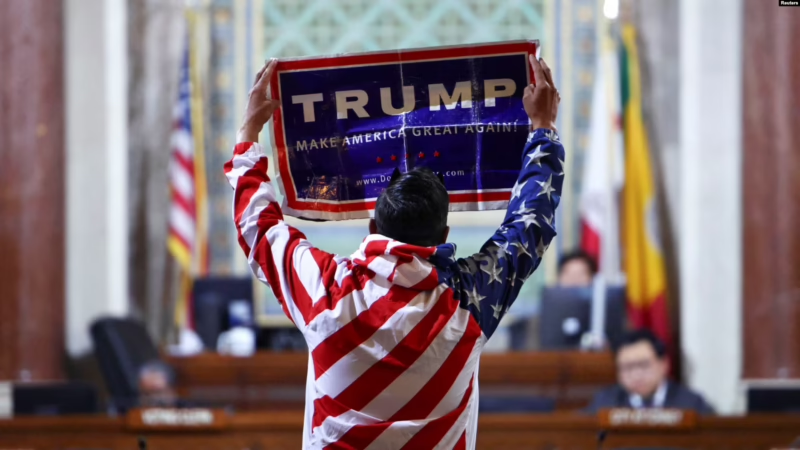
Trump, having accepted the Republican nomination at a recent convention, is set to revive his combative campaign style. As the political landscape shifts dramatically, Harris’s emergence as the Democratic candidate heralds a fiercely contested election, with profound implications for the future of U.S.-Israel relations and global diplomacy.
The stakes could not be higher as Harris prepares to solidify her nomination, navigate complex international issues, and confront a relentless opponent in Donald Trump. The upcoming months promise a riveting and high-stakes political saga, capturing the attention of a nation on the brink of profound change.