Russia-Ukraine War
Russia Launches Third Ballistic Missile Attack on Kyiv
Ukrainian Air Defenses Intercept Most Missiles, Limited Damage Reported
Russia’s relentless missile barrage on Kyiv has reached a disturbing pattern. As the city endures its third ballistic attack this month, the stakes of the conflict escalate. As dawn broke over Kyiv on Sunday, the Ukrainian capital was plunged back into chaos, enduring its third ballistic missile assault this month alone. With Russian missiles raining down with unsettling precision, the frequency and intensity of these attacks paint a grim picture of an escalating conflict. The recurring pattern—attacks occurring at exact six-day intervals—raises troubling questions about Russia’s strategic intentions and its chilling methodical approach to warfare.
This latest barrage, characterized by the use of suspected North Korean-made ballistic missiles, has become a harrowing spectacle of destruction and defiance. While Ukrainian air defenses managed to intercept most of the incoming threats, the sheer audacity of Russia’s tactics reveals a brazen intent to destabilize and terrorize Kyiv. Reports from the front lines confirm that Ukrainian forces shot down five out of eight missiles, including a mix of ballistic, cruise, and guided aircraft missiles, but the relentless assault underscores the sophistication and persistence of the Russian offensive.
President Volodymyr Zelenskiy has condemned these attacks as deliberate acts of terror, describing them as calculated moves in Russia’s broader campaign to instill fear and chaos. With no immediate casualties reported from the latest strike, the physical damage includes the destruction of two private homes and significant damage to 16 others from debris. Yet, the psychological impact of such relentless bombardment is far more profound and damaging.
The timing and targeting of these strikes are particularly alarming. Just hours after the attack, fresh raid alerts blanketed Kyiv and the surrounding regions, signaling an ongoing and immediate threat. The city’s air defenses were thrust into high alert, grappling with the threat of further missile strikes. This constant state of readiness not only tests the resilience of Ukrainian defense systems but also heightens the city’s vulnerability to further aggression.
The wider context of these attacks paints an even darker picture. Since Russia’s full-scale invasion of Ukraine began two-and-a-half years ago, Moscow has captured roughly 18% of Ukrainian territory in the east and south. This relentless assault on Kyiv is not just a military strategy but also a psychological weapon aimed at eroding the morale and resolve of both the Ukrainian people and their defenders.
As the conflict drags on, the sophistication of Russia’s missile strikes and the frequency of these assaults suggest a calculated strategy to push Ukraine to its limits.
In this high-stakes game of cat and mouse, Ukraine’s air defenses are proving their mettle, but the frequency of these attacks hints at a troubling persistence in Russia’s strategy. The dire situation on the ground reflects a broader geopolitical struggle, where each missile launch is a grim reminder of the enduring conflict and the severe human cost of war.
As Kyiv braces for potential further attacks and the world watches, the question remains: how many more times will Kyiv face the brutal reality of ballistic terror before a resolution is reached?
Russia-Ukraine War
Kim Jong Un Expands Military Partnership With Putin in Latest High-Level Talks
Senior North Korean and Russian military officials have held fresh talks in Pyongyang, underscoring the two countries’ accelerating defense cooperation as Moscow’s war in Ukraine enters its fourth year and both regimes deepen their alignment against the West.
North Korea’s state-run Korean Central News Agency (KCNA) reported Friday that the discussions, led by Pak Yong Il, vice director of the Korean People’s Army’s General Political Bureau, and Viktor Goremykin, Russia’s deputy defense minister, focused on “expanding military cooperation” under what it called the “deepened bilateral relations” fostered by Kim Jong Un and Vladimir Putin.
The talks took place Wednesday in Pyongyang and were followed by a separate meeting Thursday between Goremykin and North Korean Defense Minister No Kwang Chol, according to KCNA.
While the report offered no details on agreements, analysts say the meetings mark another step in the two nations’ emerging strategic partnership — one that has rapidly evolved from symbolic solidarity into a tangible military alliance.
The timing of the talks is notable. Earlier this week, South Korea’s National Intelligence Service (NIS) told lawmakers in a closed-door briefing that it had detected signs of recruitment and training in North Korea, possibly linked to further troop deployments to Russia.
The NIS estimates that around 15,000 North Korean personnel — including soldiers, engineers, and deminers — have been dispatched to support Russia since late last year, alongside shipments of artillery shells and ballistic missiles.
Seoul believes that an additional 5,000 military construction workers began moving to Russia in phases this fall, reportedly to help rebuild infrastructure in the Kursk region, where Russian forces have faced repeated Ukrainian drone and missile strikes.
When asked about the reports, South Korea’s Unification Ministry spokesperson Chang Yoon-jeong said Friday that Seoul was “closely monitoring the situation” but would refrain from “speculative assessments” about troop deployments.
The growing defense collaboration between Pyongyang and Moscow follows a high-profile summit between Kim and Putin in Vladivostok last year, during which the two leaders discussed arms transfers, technology exchange, and joint industrial projects.
U.S. and allied officials have since accused North Korea of supplying munitions and short-range ballistic missiles to aid Russia’s battlefield campaign in Ukraine, while Russia has reportedly provided Pyongyang with food aid, oil supplies, and advanced military technology.
The deepening partnership is fueling concerns in Washington, Seoul, and Tokyo that the two authoritarian states — both heavily sanctioned and internationally isolated — are forming a new axis of resistance to Western power.
During his visit to South Korea earlier this week, U.S. Defense Secretary Pete Hegseth praised Seoul’s plans to increase defense spending and warned that “Pyongyang’s cooperation with Moscow represents one of the most dangerous military convergences in the world today.”
For Kim Jong Un, the alliance with Russia has broken years of diplomatic isolation and provided new leverage against the United States. For Putin, it offers badly needed ammunition and manpower for a protracted war — at a time when Western sanctions and battlefield losses are tightening the Kremlin’s options.
Russia-Ukraine War
Ukraine Strikes Major Russian Oil Refinery in Volgograd With Long-Range Drones
Ukraine says it has hit one of Russia’s largest oil refineries in the Volgograd region, marking the second such strike in less than three months and underscoring Kyiv’s growing ability to project force deep into Russian territory.
In a statement Thursday, Ukraine’s General Staff said long-range drones struck the Volgograd refinery — the biggest producer of fuel and lubricants in Russia’s Southern Federal District, processing more than 15 million tons of crude annually, roughly 5.6% of the country’s refining capacity.
Russian authorities did not officially confirm the attack, but the regional governor acknowledged that drones had sparked a fire at an industrial site. No casualties were reported.
The strike is part of a broader energy war between Moscow and Kyiv, as both sides target infrastructure critical to their opponent’s war effort.
Ukraine’s drone campaign aims to deprive the Kremlin of vital oil revenue, while Russia continues to hammer Ukraine’s power grid in what officials in Kyiv call an attempt to “weaponize winter.”
Ukrainian President Volodymyr Zelenskyy said foreign partners are helping repair and fortify the grid amid daily bombardments.
“Practically every day, our engineers and emergency crews are carrying out restorations after attacks,” Zelenskyy said late Wednesday, noting that critical facilities near the Russian border remain under constant fire.
Ukraine’s intelligence service, GUR, also reported sabotage operations inside Russia. The Freedom of Russia Legion, an anti-Kremlin group, allegedly used Molotov cocktails to destroy control systems on dozens of locomotives used for transporting military cargo.
The claim could not be independently verified, and Russian officials have not commented.
In addition to the Volgograd strike, Ukrainian forces said they targeted three fuel storage facilities in occupied Crimea, a Shahed drone base in Donetsk, and energy infrastructure in Russia’s Kostroma region northeast of Moscow.
Local officials there said the attack caused a fire but did not disrupt electricity supply. Unconfirmed reports suggested the target may have been one of Russia’s largest hydroelectric power plants.
Russia’s Defense Ministry claimed its air defenses shot down 75 Ukrainian drones overnight, including over Crimea and several Russian regions.
Kyiv’s air force countered that Russia had launched 135 drones of its own against Ukrainian cities, one of which hit the Dnipropetrovsk region, killing one civilian and injuring eight others.
Analysts say Ukraine’s campaign reflects a strategic shift — away from the static front lines of the Donbas and toward deep strikes designed to undermine Moscow’s logistics, oil exports, and political confidence.
As the war nears its fourth year, the conflict’s new phase is being fought less over territory than over infrastructure — a shadow war where energy, supply chains, and endurance are as decisive as battlefield advances.
Russia-Ukraine War
Ukraine Fights to Hold Pokrovsk as Russia Mounts 170,000-Troop Offensive
Russia Deploys 170,000 Troops in Donetsk Offensive, Zelenskyy Warns of “Difficult” Battle for Pokrovsk.
Ukraine’s President Volodymyr Zelenskyy said Friday that Russia has massed around 170,000 troops in the eastern Donetsk region, launching a fresh push to seize the embattled city of Pokrovsk in what could become one of the largest offensives of the war this year.
“The situation in Pokrovsk is difficult,” Zelenskyy said during a briefing in Kyiv, rejecting Moscow’s claim that the city is surrounded. “There are Russians in Pokrovsk,” he acknowledged, “but they are being destroyed — gradually destroyed — because we need to preserve our personnel.”
Pokrovsk, once a thriving industrial hub, has been reduced to rubble after more than a year of intense fighting. Ukrainian officials said Russian forces have breached parts of the city’s outskirts, forcing Ukrainian defenders to withdraw to fortified positions.
Despite the intensity of the assault, Zelenskyy insisted that Kyiv’s troops were holding their ground and methodically repelling infiltration attempts.
The battle for Donetsk has become symbolic for both sides. Russian President Vladimir Putin has framed it as essential to completing Moscow’s stated goal of “liberating” the entire Donbas, while Western analysts see the campaign as a test of whether Ukraine can maintain defensive cohesion amid manpower shortages and dwindling ammunition.
Putin has claimed “steady advances” across the eastern front, though progress has been slow and costly. Analysts say Moscow hopes a high-profile victory before winter could strengthen its negotiating leverage as Washington presses for renewed peace talks.
Ukraine Strikes Back Inside Russia
Even as Kyiv’s forces dig in along the eastern front, Ukraine has intensified its campaign of deep strikes against Russian infrastructure.
Vasyl Maliuk, head of Ukraine’s Security Service (SBU), said his forces have carried out more than 160 successful long-range attacks this year on Russian oil extraction and refining facilities — a campaign designed to disrupt Moscow’s logistics and erode its war economy.
Maliuk claimed the attacks caused a 20% drop in domestic oil products and temporarily halted 37% of Russia’s refining capacity, though the figures could not be independently verified.
He also said Ukrainian operations destroyed nearly half of Russia’s Pantsir air-defense systems and even struck an Oreshnik hypersonic missile — touted by Putin as “invincible” — while it sat on a launch pad inside Russia.
“These operations show that we are not resting on our achievements,” Maliuk said. “We’re developing new equipment, new combat units, and new methods of warfare.”
Rising Civilian Toll and Shrinking Aid
Meanwhile, the U.N. Humanitarian Coordinator in Ukraine, Matthias Schmale, warned that civilian casualties have risen 30% this year compared with 2024, driven largely by Russia’s relentless drone and missile attacks on energy and residential infrastructure.
Overnight strikes on Sumy injured 11 people, including four children, while drones also targeted Odesa’s energy grid, threatening heating and water services ahead of what forecasters predict will be a harsher winter than last year.
“Destroying energy production and distribution capacity as winter starts clearly impacts the civilian population and is a form of terror,” Schmale said in Geneva.
He added that the U.N.’s Ukraine response fund has plunged from $4 billion in 2022 to just $1.1 billion this year, leaving millions vulnerable. “This conflict increasingly feels like a protracted war,” Schmale said. “Right now on the ground, it doesn’t feel like it’s ending any time soon.”
Russia-Ukraine War
Poland Intercepts Russian Spy Plane Flying Dark Over the Baltic Sea
Poland said it scrambled two fighter jets this week to intercept a Russian Il-20 reconnaissance plane flying without a transponder over the Baltic Sea, the latest in a growing series of incidents testing NATO’s air defenses in Eastern Europe.
The Polish Armed Forces confirmed that the Ilyushin-20 — a Cold War–era turboprop aircraft used by Russia for intelligence gathering — was detected on Tuesday just outside Polish airspace.
The aircraft’s transponder had been switched off, effectively rendering it invisible to civilian radar systems. “Thanks to the high combat readiness and professionalism of our pilots, the operation was carried out quickly, effectively, and safely,” the military said.
Two Polish MiG-29s intercepted, identified, and escorted the Russian plane away from the boundary of Polish-controlled airspace.
Warsaw said the aircraft never entered its national airspace but called the flight a clear provocation, part of Moscow’s pattern of “probing” NATO’s defenses since its full-scale invasion of Ukraine in 2022. The Russian defense ministry has not commented.
The Baltic Sea region has become one of Europe’s most sensitive flashpoints. Poland, which borders Russia’s Kaliningrad exclave, has reported multiple airspace violations and drone incursions in recent months.
On September 10, Polish authorities raised the alarm over several unmarked drones crossing from the east, prompting temporary airspace restrictions.
Similar incidents have occurred in Denmark and Lithuania, where mysterious drone swarms and even helium-filled balloons allegedly launched from Belarus have forced repeated airport closures.
Estonia, another NATO ally on the Baltic coast, recently invoked Article 4 of the alliance’s charter — calling for emergency consultations — after three Russian fighter jets violated its airspace in late September.
NATO condemned the incursions as “escalatory” and warned that they “risk miscalculation and endanger lives.”
Western analysts say Moscow’s flights near NATO borders serve two purposes: gathering electronic intelligence on allied radar and response systems, and testing how quickly NATO interceptors can scramble.
Turning off transponders, they note, heightens the danger of midair collisions in crowded commercial corridors.
While the Polish military described this latest intercept as routine, the frequency of such encounters underscores how the Baltic has become an active front in the wider standoff between Russia and NATO — a contest now fought less through open confrontation and more through dangerous games of brinkmanship in the skies.
Russia-Ukraine War
Ukraine Faces New Russian Tactic: Small Teams, Big Chaos
Russian Infiltration Tactics Spread Across Ukraine’s Front, Turning War Into a Game of Shadows.
Along Ukraine’s sprawling front line, a new Russian tactic is taking shape — one that relies less on mass assaults and more on stealth, confusion, and expendable soldiers.
Small Russian infiltration units, often only a handful of men, are slipping past Ukrainian defenses under the cover of darkness or drone guidance, sowing chaos in areas already stretched thin by manpower shortages and exhaustion.
Ukrainian troops describe these teams as “appearing out of nowhere.” Guided by drones and directed by commanders watching from above, they creep across the 800-mile battlefront — planting mines, exposing Ukrainian drone bases, or seizing temporary positions before vanishing or being wiped out.
“It’s become the main battle tactic,” said Dimko Zhluktenko, a Ukrainian drone operator in Donetsk. “Problematic because it works.”
The approach isn’t entirely new. Both sides have used infiltration since the early months of the war. But Ukrainian officers say what was once occasional has now become routine — a daily grind of small incursions that force Kyiv’s forces to respond to dozens of micro-threats at once.
In one sector, Ukrainian units reportedly faced Russian infiltration attempts in 14 locations simultaneously, each requiring troops to redeploy from critical areas.
The units themselves are often sent with little expectation of survival. Artem, a Ukrainian officer in the 3rd Army Corps, said Russian soldiers advance in camouflage coats or hide under tents to avoid detection.
Some carry no weapons — only anti-tank mines to drop into Ukrainian trenches before detonating themselves. “There are hundreds of Russians ready to die in those pointless assaults every day,” Zhluktenko said. “It’s never-ending.”
The chaos serves a purpose. Each infiltration diverts Ukrainian manpower and exposes command and control weaknesses. When Ukrainian drones respond, their launch sites are often revealed to Russian observers, who can then target them with artillery.
The result is a grinding war of movement and attrition — a shadow conflict unfolding within the larger one.
Analysts see echoes of Russia’s “human-wave” tactics once used in Bakhmut and Avdiivka, now adapted into smaller, smarter operations that exploit every gap in Ukraine’s overstretched defense.
Western intelligence reports have also noted similar patterns involving North Korean reinforcements in Russia’s Kursk region, where foreign troops have been deployed in equally futile, high-casualty probing missions.
In this evolving battlefield, drones see everything, but still, men move unseen.
Ukraine’s war is no longer just fought in trenches or skies — it’s being waged in the narrow spaces between, where silence, confusion, and sacrifice define the fight.
Russia-Ukraine War
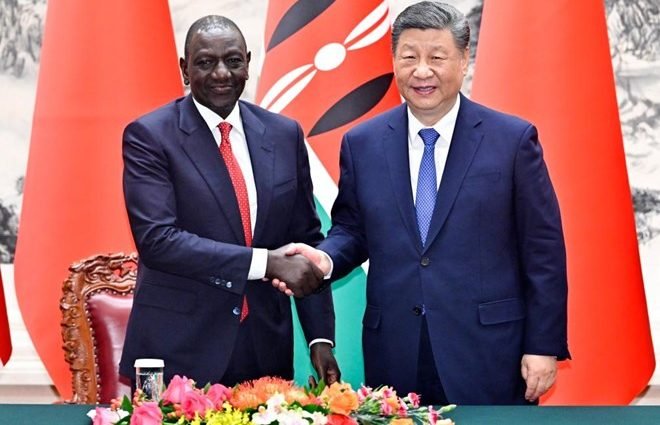
Kenya Presses Moscow to Free Citizens Caught in Russia’s War Machine
Kenya says it is negotiating directly with Moscow to bring home citizens who ended up inside Russia’s war machine.
Nairobi confirmed that it has been in “constructive dialogue” with the Russian Foreign Ministry for months to secure the release and repatriation of Kenyans detained in Russian military camps after being lured into the Russia-Ukraine war, according to Prime Cabinet Secretary and Foreign and Diaspora Affairs Minister Musalia Mudavadi.
The Kenyan government says several nationals have already been extracted, issued emergency travel documents, and are on track to be reunited with their families.
The story behind those extractions is ugly. Kenyan officials say young men were recruited with promises of well-paid “security jobs” or other work opportunities in Russia, only to discover on arrival that they were being pushed toward front-line roles in active combat zones.
The recruiters, described by Mudavadi as “corrupt and ruthless agents,” allegedly posed as legitimate intermediaries working with the Russian government and pressured Kenyans into signing contracts they did not fully understand, often written in Russian.
This pipeline, officials say, effectively moved Kenyan citizens from job-seeker status to irregular fighters in a foreign war.
The result is now a diplomatic emergency. Nairobi says it reached an understanding with Moscow that any Kenyan being held “without consent” will be released immediately to Kenya’s mission in Moscow for safe return.
That phrasing matters. It suggests Russia is acknowledging at least two categories of Kenyans in its custody: those who willingly signed up, and those who insist they were deceived or coerced.
Sorting between the two will be the next point of tension. If Russia treats some of these men as volunteers under contract, it could resist releasing them.
If Kenya treats them all as victims of trafficking, pressure escalates.
For Nairobi, this is more than a consular problem. It’s also domestic security. Kenya has ordered immigration, intelligence, and airport authorities to tighten scrutiny at exits and borders in an effort to disrupt the recruitment networks.
Officials are worried about two things: first, the trafficking of desperate, unemployed youth into a foreign conflict; second, the possibility that combat-trained returnees could come back radicalized, indebted to foreign armed structures, or simply traumatized.
This is also about geopolitics. Kenya and Russia are, at the same time, negotiating a Bilateral Labour Agreement — a formal path for Kenyans to take “genuine job opportunities in Russia,” as Nairobi puts it.
On paper, that deal would create a legal alternative to the black-market pipeline. But it also reveals a hard reality: Kenya is trying to protect its citizens while keeping relations with Moscow warm enough to get results.
Strip away the diplomatic language and you see the real leverage. Kenya is telling Russia: release our people, stop the shadow recruitment, and we’ll keep talking to you as a partner — not an abductor.
Russia’s response, and how quickly those detainees actually land in Nairobi, will show whether Moscow views Kenya as a respected negotiator or just another source of disposable manpower for its war.
Russia-Ukraine War
Europe Adrift as Russia Prepares for War with NATO: Intelligence Experts Warn
Analysts say Europe faces its most dangerous security vacuum since 1939, with Russia’s military buildup, drone incursions, and sabotage operations testing NATO’s resolve while U.S.–EU intelligence ties fracture.
Europe’s security architecture is showing alarming cracks as Russia ramps up what analysts describe as pre-war maneuvers across the Baltic and North Seas.
Intelligence experts say the continent lacks both coordination and urgency, even as Russian drones and fighter jets increasingly test NATO’s borders.
“Europe is no more ready today to face Russia’s military advances than it was in 1939,” said Joseph Fitsanakis of Coastal Carolina University.
His warning comes amid reports that Russia’s “shadow fleet” — a network of oil tankers suspected of espionage — has been operating near critical European infrastructure.
Recent incursions have underscored the threat. Russian drones entered Polish airspace in September, MiG-31s violated Estonian skies, and reconnaissance aircraft probed German and Latvian defenses.
NATO fighters scrambled multiple times in response — but officials admit the pattern resembles Moscow’s historical “period of emergency,” a phase Russian planners use to test and prepare for conflict.
Western intelligence agencies now believe Russia is “actively preparing for war with NATO,” Fitsanakis said, while Germany’s spy chief, Martin Jager, warned that confrontation could come “much sooner than expected.”
Yet Europe’s response remains fragmented. Belgium blocked EU efforts to redirect frozen Russian assets toward Ukraine’s defense, and Nordic states have failed to coordinate counterdrone systems despite repeated incursions.
Analysts say reliance on U.S. intelligence — now strained by political paralysis in Washington — has left Europe dangerously dependent.
“American intelligence is being defanged by politics,” Fitsanakis told reporters. “And Europe has stopped trusting it.”
Experts say that without unified surveillance, sanctions enforcement, and counter-sabotage operations, Europe risks entering the next stage of Russian hybrid warfare blind.
The Kremlin denies all accusations — but to many analysts, the pattern is unmistakable: Russia is testing, probing, and preparing. The only unknown is whether Europe will wake up before it’s too late.
Commentary
Ukraine: Diplomatic Push, Sanctions Chess, and Battlefield Friction
In London, Volodymyr Zelenskyy coupled pageantry (Windsor) with power politics (Downing Street), pressing a “coalition of the willing” for more air defenses and a legal pathway to tap frozen Russian assets.
The political logic is clear: Ukraine’s winter resilience hinges on interceptors, power-grid hardening, and predictable funding.
The legal logic is harder. Belgium’s Bart De Wever—pivotal because Euroclear holds much of the assets—warned that outright confiscation is “uncharted territory,” foreshadowing years of litigation and uneven risk-sharing inside the EU.
Expect a compromise model that channels profits/interest from frozen assets rather than seizing principal, paired with indemnity schemes to keep Brussels unified.
Washington’s designations of Rosneft and Lukoil plus the EU’s 19th package (including an LNG import ban) target the Kremlin’s cashflow, not symbolism.
Effectiveness now rests on enforcement: secondary sanctions on shippers, insurers, and banks; tracking Russia’s “shadow fleet”; and tightening price-cap evasion via swaps and reflags.
Viktor Orbán’s stated intent to “circumvent” U.S. measures is a stress test for transatlantic coherence. Moscow will probe for gaps, hedge with Asia, and weaponize counters in energy, cyber, and maritime lanes—accepting near-term losses to preserve wartime revenue.
Zelenskyy’s ask for 25 Patriot-class batteries is about geometry: layered coverage for cities, grid nodes, and industry as Russia resumes mass drone/missile salvos.
Interceptor stockpiles, reload tempo, and radar integration will determine whether Ukraine can outlast winter barrages.
Without additional batteries—or at minimum large interceptor tranches—Ukraine faces rolling blackouts that sap industrial output and strain mobilization.
Russia claims village-level gains around Bolohivka (Kharkiv), Promin (Donetsk), Zlagoda (Dnipropetrovsk)—incremental steps consistent with an attritional approach.
Kyiv’s offset is deep economic interdiction: drones and precision strikes against refineries and defense-linked sites (e.g., Bryansk) that export price shocks to the near abroad (Tajik fuel spikes) and force Russia into costlier logistics.
The Ovruch rail-station blast underscores persistent homeland-security risks along Belarus-adjacent corridors; expect tighter rail policing, more counter-sabotage sweeps, and civil-defense drills.
What to watch next.
-
A London-led delivery plan for air defense (Patriot/IRIS-T/NASAMS interceptors, CUAS suites) and grid protection.
-
A G7/EU profits-only asset mechanism with legal backstops—and whether Belgium signs on.
-
Real secondary sanctions on oil/LNG facilitators—and Brussels’ response to Hungarian noncompliance.
-
Russian retaliation vectors (shipping, cyber against finance/energy), and whether Ukrainian deep-reach strikes sustain refinery downtime.
Bottom line: Kyiv’s strategy marries lawfare + enforcement with air-defense density + economic interdiction. If allies lock in an assets framework and choke sanctions leakage, Ukraine’s winter position strengthens; if legal fissures and enforcement gaps widen, the pressure dulls while the front grinds on.
-
Analysis8 months agoSaudi Arabia’s Billion-Dollar Bid for Eritrea’s Assab Port
-
Opinion17 years agoSomaliland Needs a Paradigm Change: Now or Never!
-
ASSESSMENTS7 months agoOperation Geel Exposes the Truth: International Community’s Reluctance to Embrace Somaliland as a Strategic Ally
-
Somaliland9 months agoSomaliland and UAE Elevate Ties to Comprehensive Strategic Partnership
-
Africa2 years agoHow Somaliland Could Lead the Global Camel Milk Industry
-
Analysis7 months agoFrom Cell to Summit: The Prisoner Who Became Syria’s President
-
Analysis7 months ago
How an Israeli Strike on Iran’s Nuclear Program Could Play Out
-
Analysis2 years ago
Iran escalates conflict, attacking Israel; US forces help Israel to intercept Iranian projectiles