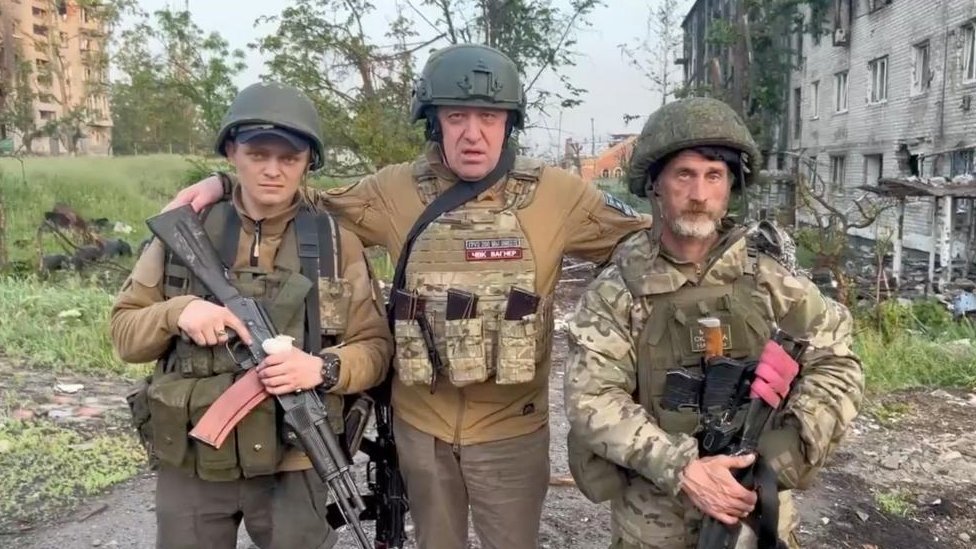
As winter looms, the war between Russia and Ukraine appears locked in a deadly stalemate, with neither rising casualty numbers nor plunging temperatures expected to alter the trajectory of the conflict, according to senior U.S. officials. These officials, who briefed reporters on Wednesday under the condition of anonymity, emphasized that both sides seem entrenched, with recent fighting resulting in only minor shifts along the front lines and few signs of strategic change from Russia.
“It’s an attritional strategy,” a senior U.S. military official said, describing Russia’s approach. “It’s kind of the Russian way of war—continuing to throw mass into the problem.” This strategy, based on overwhelming Ukrainian defenses through sheer numbers, has led to staggering losses. U.S. estimates suggest that Russia has suffered around 600,000 casualties, both killed and wounded, since the invasion began in February 2022. The toll, U.S. officials noted, is the highest Russia has faced in any conflict since World War II.
September alone was particularly devastating for Russian forces, marking the bloodiest month of the war so far. In addition to the heavy loss of life, Russia’s military has faced severe material depletion. Senior U.S. defense officials estimate that Ukraine has destroyed or severely damaged more than 30 Russian ships in the Black Sea, forcing Moscow to reposition its fleet. Ukrainian forces are also believed to have obliterated more than two-thirds of Russia’s prewar tank inventory, further eroding the Russian military’s combat capacity.
The degradation of Russian military assets has forced Moscow to dig deep into its aging Soviet-era stockpiles. “They’re pulling out fuel tanks from World War II,” one U.S. defense official said, underlining the dire state of Russia’s equipment reserves. Ukrainian drone strikes on Russian ammunition depots have compounded these difficulties, destroying large quantities of artillery shells, including those supplied by North Korea. This destruction is expected to slow the supply of ammunition to Russian troops on the front lines.
Despite these losses, U.S. officials warned that the Kremlin remains undeterred. Russia continues to devote vast resources and lives to the conflict, focusing its efforts on grinding down Ukrainian defenses in the eastern part of the country. “Russia has demonstrated time and time again a willingness to do whatever it takes to attempt to force the Ukrainians to capitulate, including purposely targeting civilians and critical infrastructure,” a senior U.S. defense official said.
For now, Russian President Vladimir Putin has avoided another large-scale mobilization like the one seen in September 2022, when some 300,000 reservists were called up. U.S. officials believe this is partly due to financial incentives for Russian volunteers. However, it remains unclear how long Putin can sustain the war effort without resorting to another major call-up of troops.
On the Ukrainian side, officials pointed to successes with domestically produced drones and recent offensives in Russia’s Kursk region as signs of resilience. “My assessment is that the Ukrainians will be able to maintain their position in Kursk for some amount of time, here into the future,” a senior U.S. military official said, suggesting that Ukraine’s forces are likely to hold their ground for months.
U.S. officials also commended Ukraine’s long-term strategic thinking. “Certainly, they’re focused on how they get through the winter,” one official said. “But they’re also thinking about how to set the conditions for success next year.” This includes increasing recruitment, reconstituting battle-worn brigades, and acquiring better equipment and training. Ukraine’s leadership is reportedly looking beyond the immediate future, with plans extending through 2025 to ensure their combat power grows stronger over time.
As both nations prepare for the harsh conditions of winter, the conflict shows no sign of resolution. The war’s toll on lives and resources continues to escalate, but both sides remain locked in a fierce contest of attrition that neither is yet willing—or able—to abandon.