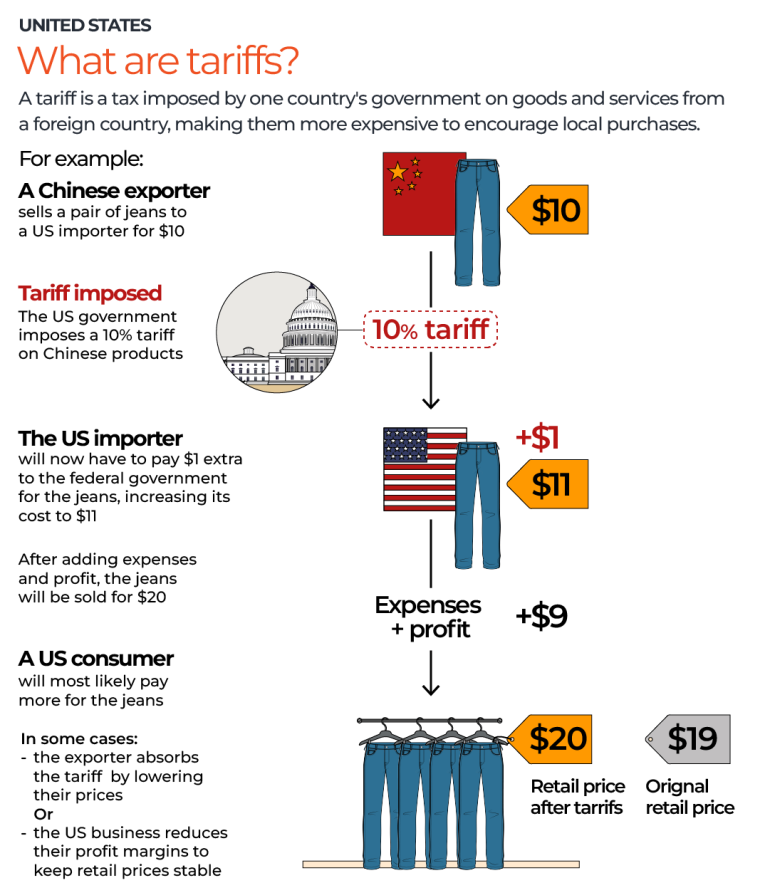
President Donald Trump’s recent declaration to impose a 25% tariff on goods imported from Canada and Mexico has led to a notable downturn in U.S. stock markets and looming price increases for consumers. This policy, set to take effect on Tuesday, has already had immediate financial repercussions.
On Monday, the Dow Jones Industrial Average took a hit, dropping 1.48%, while the S&P 500 fell by 1.76%, and the Nasdaq Composite saw a significant decrease of 2.64%. Among the most affected are major U.S. automakers like General Motors and Ford, which saw their stock prices decrease by 4% and 1.7%, respectively. These companies have substantial production operations in Mexico, making them particularly vulnerable to changes in tariff policies.
The automotive sector stands at the forefront of industries facing direct impact from these tariffs. Gustavo Flores-Macias, a public policy professor at Cornell University, highlighted the specific challenges for this sector, noting that the disruption in intricate supply chains across the three countries could lead to increased vehicle prices—a change that may dampen consumer demand swiftly.
According to Flores-Macias, U.S. consumers could start feeling the pinch of rising prices “within days,” an alarming prospect for an economy still grappling with inflationary pressures. This tariff could not only escalate retail prices but also further complicate the economic landscape by slowing down demand and potentially affecting broader market trends.
As businesses and consumers brace for these changes, the broader implications of these tariffs on the U.S. and global economy remain a topic of intense scrutiny and concern.