Captured arms spark international uproar as Somalia accused of turning donor aid into tools of regional destabilization.
Somaliland accuses Somalia of sponsoring militia attacks after seizing weapons marked “Federal Government of Somalia.” Regional tensions flare as calls grow for international investigation.
Somaliland’s armed forces have intercepted a cache of military-grade weapons explicitly marked as belonging to the Somali Ministry of Defense. The discovery, made after a firefight in the Dhuurmadare area of eastern Sanaag on April 18, not only proves Somalia’s military fingerprints in the region—it redefines the nature of the conflict.
The wooden boxes didn’t lie: emblazoned with “MINISTRY OF DEFENSE ARMED FORCES – THE FEDERAL REPUBLIC OF SOMALIA”, and a formal contract number, they obliterate the fiction that Somalia’s arms are strictly used for counterterrorism. Instead, they now appear weaponized for political warfare—against Somaliland.
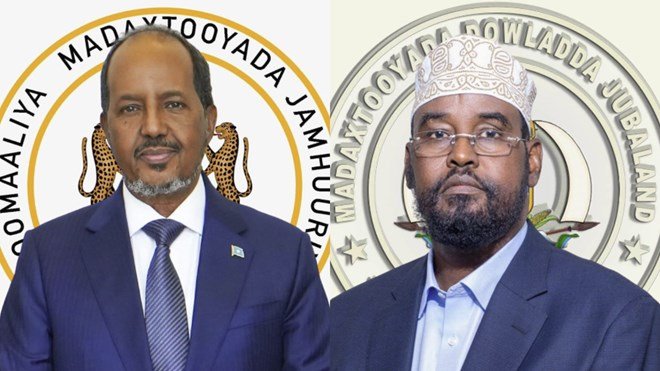
Somaliland’s Ministry of Defense wasted no time issuing a blistering rebuke, blaming Prime Minister Hamza Abdi Barre directly for orchestrating the attack, just days after his controversial visit to Las Anod. “This is not a rogue operation—it’s a state-sponsored proxy war,” the statement warned. For a government that boasts over 30 years of democratic stability, the incursion represents a red line.
And it raises uncomfortable questions for international donors.
The U.S., U.K., EU, and other Western allies have long funneled military aid to Somalia under the guise of fighting al-Shabaab—a group that now reportedly operates within striking distance of Mogadishu. But with donor-funded weapons showing up in anti-Somaliland insurgent hands, the credibility of that narrative is cracking.
Experts warn this could trigger a donor reckoning. “This is what happens when there’s no oversight,” one analyst told WARYATV. “Western taxpayers may be unknowingly funding attacks on a peaceful, democratic neighbor.”
Somaliland has called for an urgent international inquiry—and this time, the evidence speaks louder than diplomacy.