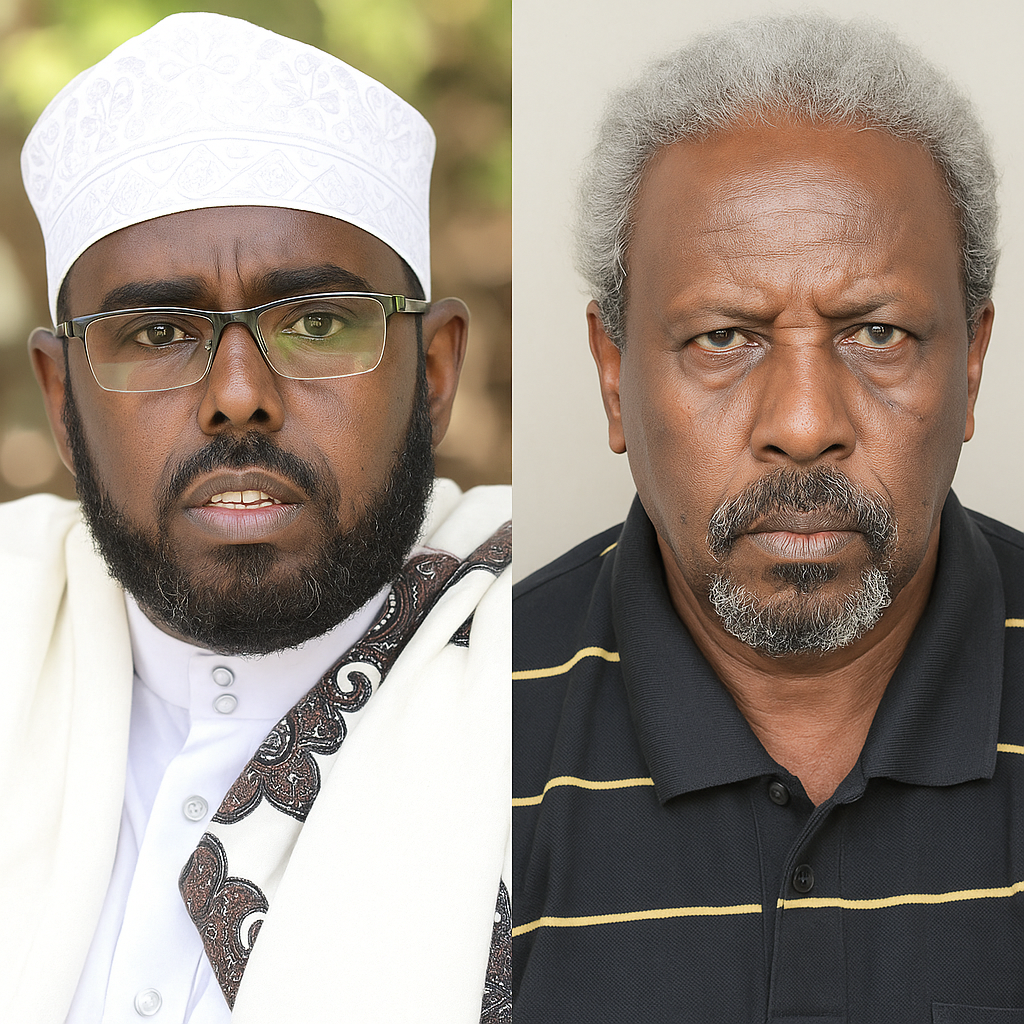
In a rapidly escalating political feud that has electrified Somaliland’s media landscape, a sharp divide has emerged between two influential figures: Dr. Mohamed Warsame, a former senior UN officer and fierce advocate for Somaliland sovereignty, and Boqor Osman Aw-Maxamuud Buurmadow, a revered traditional leader accused of overstepping into state affairs.
At the heart of the controversy is Buurmadow’s recent initiative to broker a prisoner exchange between Somaliland and Puntland involving detainees from the 2013 Las Anod conflict. Though the move was welcomed by some as a humanitarian gesture, it has drawn fierce condemnation from Dr. Warsame, who accuses Buurmadow of undermining Somaliland’s hard-earned sovereignty and flirting with dangerous unity rhetoric.
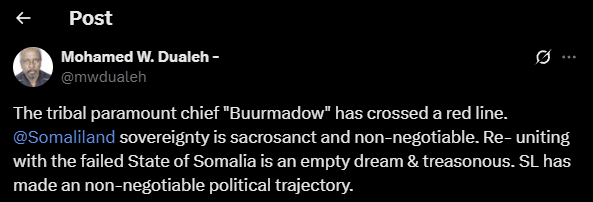
Posting on X (formerly Twitter), Dr. Warsame declared, “The tribal paramount chief Buurmadow has crossed a red line. Somaliland sovereignty is sacrosanct and non-negotiable. Reuniting with the failed state of Somalia is an empty dream & treasonous.”
Warsame’s statement follows a viral image showing Buurmadow seated alongside Puntland President Said Abdullahi Dani, a photo that ignited outrage across Somaliland’s nationalist circles. Adding fuel to the fire, Buurmadow was quoted praising Puntland as “our leader,” a comment seen by critics as not just politically tone-deaf, but an outright betrayal of Somaliland’s decades-long push for recognition.
Though Buurmadow holds no official position in the Somaliland government, his traditional influence remains formidable. Supporters argue he played a pivotal role in nationalizing former rebel fighters in the east, contributing to peacebuilding and reintegration efforts. But detractors like Dr. Warsame argue that Buurmadow’s rising involvement in cross-border diplomacy and ambiguous loyalties threaten Somaliland’s national identity.
This clash of visions—between a formal statehood advocate and a culturally rooted monarch—exposes a deeper crisis in Somaliland: the tension between modern political sovereignty and traditional clan leadership. As the debate spills into diaspora forums and local media, the question remains: Who truly speaks for Somaliland?
What began as a prisoner negotiation has now evolved into a full-blown ideological war over the soul of the nation. And in this fight, silence is no longer an option.