Lower electricity bills, new schools, modern hospitals—inside the president’s drive to build a stronger, fairer republic.
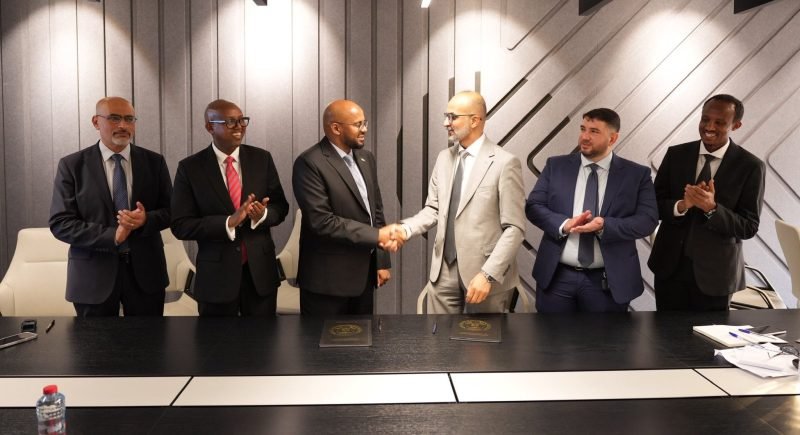
It is a rare thing in politics to watch campaign promises so swiftly transformed into tangible projects. In Somaliland, President Abdirahman Mohamed Abdullahi (Irro) has, in less than a month, shown that leadership can mean more than speeches and symbolism. It can mean water running in new pipes, oxygen flowing into hospital wards, and classrooms filled with the next generation of Somaliland’s thinkers and leaders.
In Boorama, Gabiley, Hargeisa, Berbera, Oodweyne, and Burco, the past three weeks have felt like a cascade of change. Where citizens once carried water in jerrycans for miles, new wells and dams promise relief. Where hospitals once rationed critical supplies, modern oxygen generators now stand ready. And where students once dreamed of opportunity, graduation ceremonies at Amoud and Tima’ade universities have become celebrations of both personal and national progress.
Irro calls this governing philosophy Wadajir iyo Waxqabad—Unity and Action. The phrase is more than a political slogan; it is a strategic blueprint. Unity, in this context, means ensuring development is not hoarded by the capital but shared by every region. Action means delivering services not on paper but in bricks, pipes, wires, and working machinery.
The approach is deliberately decentralizing. By investing directly in local infrastructure—water plants in Gabiley, stadiums in Oodweyne, research centers in Daad-Madheedh—the administration is weaving together Somaliland’s diverse regions into a stronger, more cohesive whole. The signal is unmistakable: prosperity must be national, not regional; development must be felt by farmers in Wajaale as much as by traders in Berbera.
Nowhere is the ambition clearer than in water. From the Kalqoray Dam in Hargeisa to the Berbera Water Expansion Project and the desalination initiative in Gabiley, the government is attacking the scarcity problem at its root. Clean, reliable water is not just a social good; it is a foundation for health, agriculture, and economic growth. In a region where climate change has turned scarcity into crisis, Somaliland is quietly rewriting the narrative.
The same is true in healthcare. With new oxygen facilities in Gabiley and Boorama, and a specialty hospital under construction in Burco, Irro’s government is not simply patching holes—it is modernizing an entire system. Education, too, is receiving structural investment: land for Amoud University in Hargeisa, an Agricultural Research Center at Tima’ade, and seven new schools laid down in Daad-Madheedh. These are not the gestures of an administration content with managing decline. They are the scaffolding of a state preparing to endure.
Infrastructure and economics remain the other half of the equation. Roads and ports—Lughaya, Boorama Airport, the Boorama-Lawyacaddo corridor—are the arteries of Somaliland’s economic future. Reducing electricity prices in Berbera, Boorama, Gabiley, and Burco signals a government willing to use policy levers to ease daily burdens and stimulate growth. Even sports, often dismissed as non-essential, are treated here as instruments of nation-building: stadiums that will give young people pride, structure, and a sense of belonging.
The cumulative effect is striking. In place of distant promises, Somalilandis are seeing progress in their neighborhoods, their schools, their hospitals. For a country whose democratic experiment has long drawn praise abroad but frustration at home, Irro’s early months suggest a recalibration: democracy that delivers.
It is still early days, of course. Challenges remain—finances are tight, regional pressures are constant, and global recognition remains elusive. But if the measure of a presidency lies in whether people’s lives are visibly improved, then Somaliland has, at last, a leader who seems determined to ensure the state serves its people in ways both practical and profound.
The historian’s test is always whether leaders leave behind symbols or systems. President Irro appears intent on building the latter. And that may be the legacy Somaliland needs most.