British police have been granted additional time to question four suspects following a deadly attack outside a Manchester synagogue that left two worshippers dead and several others wounded on Yom Kippur, the holiest day in the Jewish calendar.
The assailant, identified as 35-year-old Jihad Al-Shamie, was shot dead by officers on Thursday after he rammed a car into pedestrians, stabbed several people, and attempted to force his way into the Heaton Park Congregation Synagogue. Authorities said he was wearing a fake explosives belt.
Two members of the congregation—Melvin Cravitz, 66, and Adrian Daulby, 53—were killed in the attack. Police later confirmed that Daulby died after being struck by a bullet fired by an officer during the chaos, as congregants tried to barricade the synagogue’s entrance.
Three others remain hospitalized with serious injuries.
Investigators believe Al-Shamie, a British citizen of Syrian origin, may have been influenced by extremist ideology. He was reportedly on bail for an alleged rape case at the time of the attack but had not been charged.
Six people were arrested in the days following the incident on suspicion of “commission, preparation, and instigation of acts of terrorism.” A court on Saturday approved a police request to detain four of them—two men aged 30 and 32 and two women aged 46 and 61—for an additional five days.
An 18-year-old woman and a 43-year-old man were released without charge. Police have not disclosed the suspects’ identities or detailed their connection to Al-Shamie.
The assault has sent shockwaves through Britain’s Jewish community and reignited a national debate over antisemitism, free expression, and public protest.
Recorded antisemitic incidents have surged in the United Kingdom since Hamas’s October 7, 2023, attack on Israel and the ensuing war in Gaza, according to the Community Security Trust, which monitors antisemitic activity.
Chief Rabbi Ephraim Mirvis called the Manchester killings “the tragic consequence of an unrelenting wave of Jew hatred,” both online and on the streets.
The tragedy also came amid renewed tension over pro-Palestinian demonstrations. On Saturday, protests went ahead in Manchester and London despite appeals from Prime Minister Keir Starmer and police to postpone them “out of respect for the victims.” In Manchester, several dozen demonstrators rallied under Palestinian flags, chanting against Israel’s Gaza offensive.
In London, hundreds gathered in Trafalgar Square to oppose the government’s recent ban on the activist group Palestine Action, which has targeted U.K. arms manufacturers linked to Israel.
The government’s decision to designate the group a terrorist organization has made public support for it a criminal offense. Police said more than 490 arrests were made during Saturday’s protest, part of a wider crackdown that has seen over 2,000 detentions since the ban took effect in July.
At a vigil for the victims on Friday, Deputy Prime Minister David Lammy was heckled by protesters shouting “Shame on you,” reflecting the polarization that has increasingly defined Britain’s public discourse over the Gaza conflict.
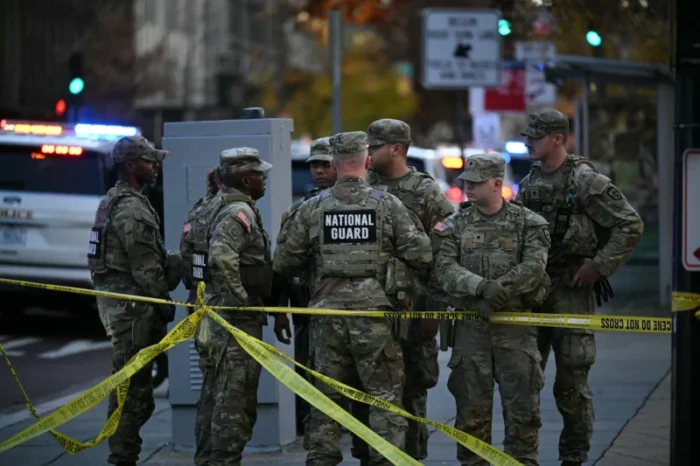
As the investigation continues, Manchester remains under heightened security, with police guarding synagogues and Jewish schools across the region. Prime Minister Starmer said Britain would “do everything necessary to keep our Jewish community safe.”