Nearly a year after his downfall, former Syrian President Bashar al-Assad has resurfaced — not in a courtroom or exile camp, but in a gilded Moscow high-rise where he now lives under Russian protection and near-total silence.
A new Die Zeit investigation paints a portrait of the once-feared strongman turned dependent guest, his power traded for luxury, his voice muted by the Kremlin that once saved him.
According to the report, Assad, 59, and his family occupy about 20 apartments in a gleaming Moscow tower overlooking the river, surrounded by private security funded by the Russian state.
Sources described the building’s marble bathrooms, gold-trimmed wardrobes, and 20-meter ceilings — a stark contrast to the bombed ruins of Damascus he left behind in late 2024 after a coup forced his flight.
One former insider told Die Zeit that Assad spends “long hours playing online video games,” a strange pastime for a man who once commanded a brutal security apparatus and shaped a nation’s fate.
His wife, Asma Assad, is reportedly gravely ill with a recurrence of breast cancer, while his brother Maher lives separately in the Four Seasons Hotel, drifting through Moscow’s nightlife.
The Die Zeit team said they gained access to the building, describing it as a sealed world of expatriate elites and political exiles — a reminder of how Russia has become the last refuge for toppled allies who served its strategic designs.
Assad, long the symbol of Moscow’s interventionist power in the Middle East, now exists as a political ghost, entirely dependent on President Vladimir Putin’s goodwill.
A Syrian source quoted in the investigation said bluntly: “He took a vow of silence. Putin controls what he says, what he reads, and what he knows.” The same Kremlin that propped up his dictatorship for a decade now dictates the terms of his obscurity.
Assad’s eldest son, Hafez, recently posted a video from Moscow describing the family’s nighttime escape — a desperate evacuation by Russian military aircraft as Damascus fell.
The clip, filmed against a skyline of glass and neon, confirms what many suspected: the Assad dynasty survived, but only as Russia’s dependent tenants.
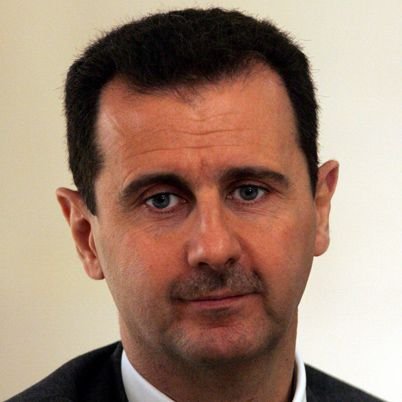
The irony is almost cinematic. The man who once crushed dissent with chemical weapons and foreign militias now wanders luxury malls in Moscow, his empire reduced to a handful of apartments — and a joystick.