Why Senator Ted Cruz’s Somaliland Advocacy Signals a Strategic Shift in U.S. Horn of Africa Policy.
Senator Ted Cruz’s backing of Somaliland marks a turning point in U.S. strategy toward the Horn of Africa, linking Red Sea security, China containment, and the Trump Doctrine.
In the quiet corridors of the Russell Senate Office Building, a subtle but consequential shift in Washington’s approach to the Horn of Africa is taking shape. While official State Department language remains deliberately cautious, Senator Ted Cruz has emerged as the most forceful and consistent voice reframing Somaliland not as a diplomatic anomaly, but as a strategic necessity.
His recent remarks reflect more than sympathy for an unrecognized democracy; they signal a recalibration of U.S. interests anchored in maritime security, great-power competition, and hard geopolitical math.
Cruz’s intervention departs sharply from the traditional humanitarian framing that has long defined Somaliland discussions in Washington. Rather than leaning on democracy promotion alone, he has grounded his case in operational realities.
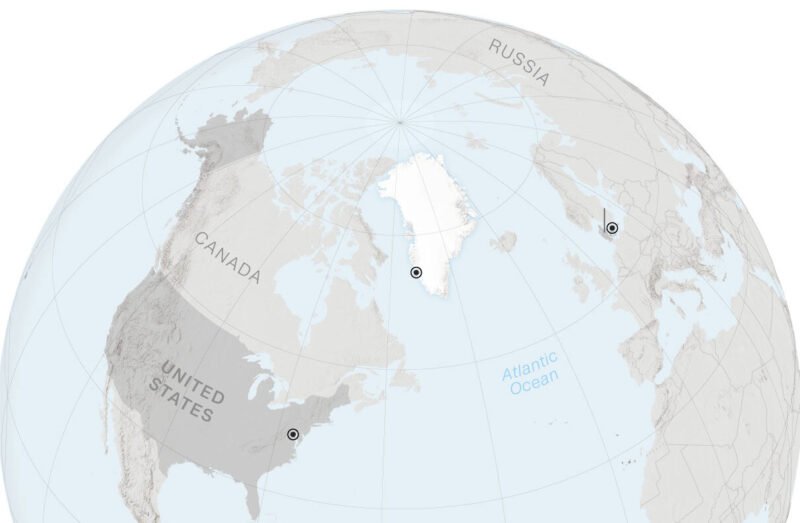
Somaliland’s control of an 850-kilometer coastline along the Gulf of Aden, its record of counter-piracy enforcement, and its stability amid regional collapse place it squarely within U.S. security priorities. At a moment when the Red Sea is under strain from Houthi attacks, Iranian logistics networks, and transnational militant cooperation, Cruz is arguing that ignoring Somaliland is no longer a neutral policy choice—it is a strategic risk.
For U.S. Africa Command and naval planners, this argument resonates. The Red Sea corridor is no longer a peripheral theater; it is a global chokepoint where commercial shipping, energy flows, and military access converge.
Cruz’s pointed questioning of the State Department about expanding cooperation with Somaliland sends a clear message to the bureaucracy: the long-standing posture of non-recognition is increasingly misaligned with U.S. security needs.
Equally significant is how Cruz has placed Somaliland within the broader framework of great-power rivalry. By highlighting Hargeisa’s alignment with democratic partners such as Taiwan and Israel, he has woven Somaliland into the emerging architecture of alliances countering authoritarian expansion.
Cruz’s reminder that Beijing reacted angrily to his earlier call for President Trump to recognize Somaliland underscores just how sensitive the issue has become.
Behind the scenes, Somaliland’s own diplomacy has strengthened Cruz’s hand. Intelligence and defense sources indicate that Hargeisa has quietly offered concrete forms of cooperation that appeal directly to Washington’s strategic instincts.
At the same time, Somaliland’s untapped mineral resources fit neatly into America’s drive to secure critical supply chains independent of Beijing.
Cruz’s advocacy is therefore not symbolic. By pressing for institutional engagement—through defense legislation, security cooperation, or executive action—he is laying the groundwork for a policy shift that acknowledges a long-standing reality: Somaliland already functions as a sovereign state and a reliable partner, even if it lacks formal recognition.
As instability deepens elsewhere in the Horn, Washington’s calculus is changing. The question now is not whether Somaliland matters to U.S. strategy, but whether the United States will move quickly enough to formalize a partnership before rivals exploit the vacuum.