From national security to Dengue fever and mineral wealth, Somaliland’s cabinet laid out a snapshot of a state managing pressure—and planning ahead.
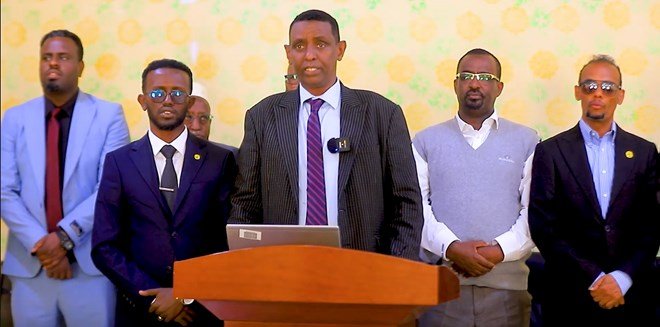
Somaliland’s Council of Ministers on Tuesday reviewed the state of national security, mounting public health pressures, and long-term economic priorities during its 46th session, chaired by President Abdirahman Mohamed Abdullahi “Irro” at the Presidential Palace in Hargeisa.
The Minister of Internal Affairs and National Security, Abdalle Mohamed Arab, told the cabinet that the country’s overall security situation remains stable, with no incidents reported across Somaliland’s regions. His briefing followed a recent ministerial tour of the Salel and Awdal regions, which officials said confirmed calm conditions on the ground.
Economic performance featured prominently in the session. The Minister of Finance reported that government revenue collection for the first 11 months of the year remains aligned with projections set out in the 2025 national budget.
He also updated ministers on outcomes from a high-level development forum in Nairobi, noting ongoing efforts to deepen cooperation with international partners, including the World Bank and the African Development Bank. Modernization of the Berbera Port, in partnership with DP World, was highlighted as a strategic priority to strengthen regional trade links, particularly with Ethiopia.
The Minister of Planning separately briefed the cabinet on the High-Level Development Coordination Forum held in Nairobi on December 9, describing it as a key platform for direct engagement between Somaliland and major international stakeholders, including the United Kingdom, the United States, the United Nations, and Denmark. Discussions centered on Somaliland’s National Development Plan and future cooperation frameworks.
Public health concerns took a more urgent tone. The Minister of Health Development reported a localized outbreak of Dengue fever in the eastern regions, with emergency medical teams deployed to affected areas to provide treatment and public health guidance. He warned that prolonged drought conditions are placing severe strain on the health system, contributing to rising malnutrition, increased risk of infectious diseases, and shortages of essential medical supplies.
On economic diversification, the Minister of Energy and Minerals presented the outcomes of the Somaliland Minerals Expo 2025, held this week in Hargeisa and attended by more than 30 international delegations. Key recommendations included establishing a National Institute for Mining, adopting international laboratory standards, and conducting a comprehensive national mineral survey.
The cabinet stressed that future mining projects must uphold environmental safeguards and ensure meaningful participation by local communities.
Social protection and infrastructure reform were also on the agenda. The Ministry of Labor and Social Affairs presented a communiqué from the recent Social Welfare Conference, outlining a ten-point action plan that includes creating a National Social Welfare Registry System and increasing budget allocations for social services.
Meanwhile, the Minister of Public Works introduced a draft National Land Policy aimed at promoting transparent and equitable land administration to support stability and economic growth.
Additional briefings covered livestock and transport. The Ministry of Animal Husbandry reported that more than 2.7 million animals have been treated but warned that drought continues to threaten livestock health and production.
The Ministry of Transport unveiled a new five-year sector plan and announced the formation of a National Committee tasked with reducing traffic accidents through stricter regulation and public awareness campaigns.
Taken together, the cabinet session painted a picture of a government balancing short-term crises with longer-term structural reforms—seeking to maintain stability while laying groundwork for economic resilience and institutional development.