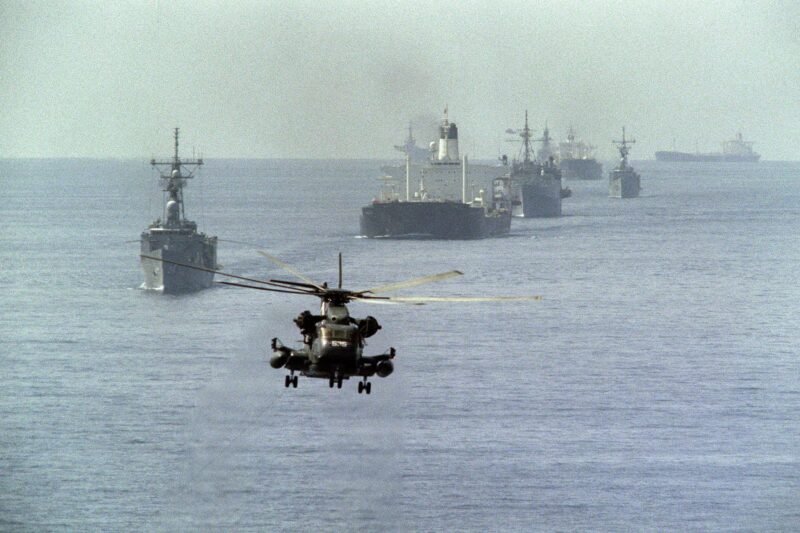
U.S. Urges Allies to Protect Strait of Hormuz Amid Energy Shock, Warns Inaction Could Harm NATO’s Future.
If the Strait of Hormuz is Europe’s energy lifeline, why isn’t Europe sending ships?
President Donald Trump has escalated pressure on European and Asian allies to help secure the Strait of Hormuz, warning that failure to assist could have consequences for NATO’s future.
Tehran’s effective closure of the strait — a passageway for roughly one-fifth of global oil supplies — has triggered the largest energy disruption in decades. Oil prices have surged past $100 a barrel, sending shockwaves through global markets and raising fears of prolonged economic strain.
Trump argues that countries most dependent on Gulf energy should shoulder the burden of protecting it. “It’s only appropriate,” he said, suggesting that allies benefiting from the waterway must help defend it. In comments to the Financial Times, he warned that a refusal to participate would be “very bad” for NATO — an unusually direct linkage between energy security and alliance solidarity.
So far, the response has been restrained.
Japan, which imports the vast majority of its oil from the Middle East, has declined to dispatch naval vessels. Prime Minister Sanae Takaichi instead authorized the release of strategic reserves — the first such move since Russia’s invasion of Ukraine in 2022. Tokyo’s hesitation reflects both constitutional constraints and domestic sensitivities about overseas deployments.
Australia has similarly ruled out sending ships. France and the United Kingdom are exploring limited options — such as aerial mine-clearing support — but remain wary of escalating the conflict.
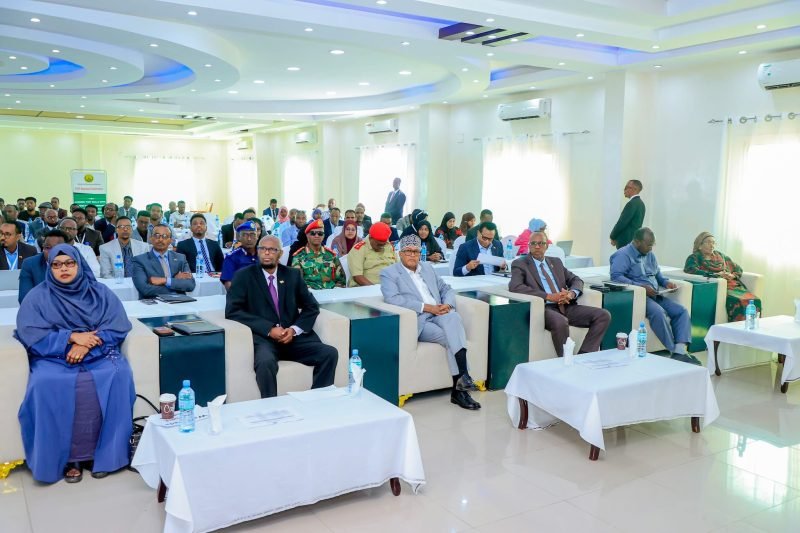
European Union foreign ministers are discussing reinforcement of an existing naval mission, though no consensus has emerged on expanding operations into the strait itself.
The reluctance underscores a widening strategic gap. For Washington, reopening Hormuz is urgent not only economically but politically. Rising energy prices are fueling domestic pressure on the administration. For European capitals, however, direct involvement risks entanglement in a conflict they neither initiated nor fully control.
Trump has also pressed China, which imports significant volumes of Gulf oil, to contribute. He has hinted that cooperation over Hormuz could shape his willingness to proceed with a summit with Xi Jinping. Beijing, meanwhile, is reportedly engaging Tehran diplomatically to ensure safe passage for shipments.
The broader question is whether alliance dynamics can withstand the strain. NATO was built around collective defense against clear military threats. The Hormuz crisis blurs those lines — part naval mission, part economic stabilization effort, part geopolitical contest.
If allies continue to hesitate, Washington faces a difficult choice: escalate alone, or recalibrate expectations of burden-sharing. Either path carries risks.
For now, the strait remains constrained, oil prices elevated, and the alliance under pressure. In a conflict already reshaping the Middle East, it may also test the limits of Western unity.