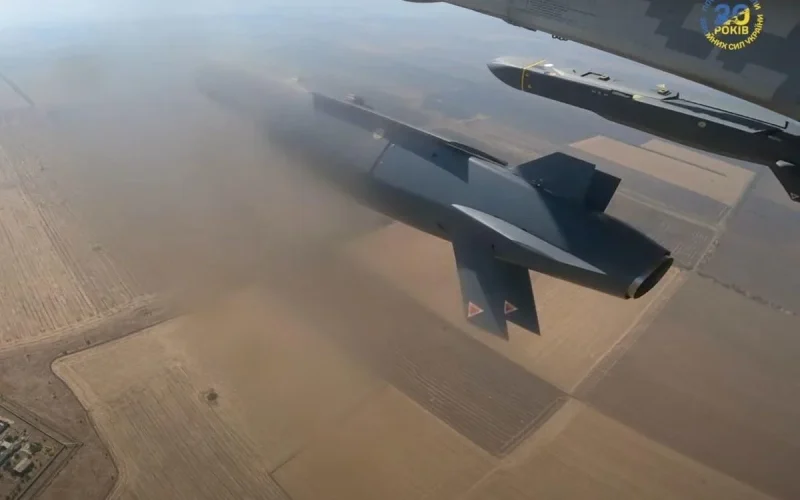
Deep-Penetrator Bombs Target Iranian Coastal Missile Sites as Tensions Escalate in Strategic Waterway.
The fight for Hormuz just went underground — literally.
The United States military has dropped multiple 5,000-pound deep-penetrator bombs on hardened Iranian anti-ship missile positions near the Strait of Hormuz, escalating efforts to secure one of the world’s most critical energy chokepoints.
US Central Command said Tuesday that the strikes targeted coastal defense cruise missile sites capable of threatening international shipping. Roughly 20 percent of global oil supplies pass through the narrow waterway linking the Persian Gulf to the Gulf of Oman.
“The Iranian anti-ship cruise missiles in these sites posed a risk to international shipping in the strait,” Centcom said in a statement.
U.S. officials confirmed that the munitions used were GBU-72 Advanced Penetrators — heavy bunker-busting bombs designed to destroy deeply buried and reinforced targets. The weapon was developed to address hardened military infrastructure and can be deployed by both fighter jets and bombers.
The strikes come as Iran continues attacks on vessels in the strait and maintains its effective blockade of the waterway. Iran’s new supreme leader, Mojtaba Khamenei, has said the strait will remain closed in response to joint U.S.-Israeli air operations launched on Feb. 28.
Energy markets remain on edge. Disruptions to oil transit have driven up gasoline prices in the United States and globally, intensifying political pressure in Washington and abroad.
Iran’s ability to deploy low-cost drones, lay sea mines and fire anti-ship cruise missiles has complicated Western planning. European allies have so far hesitated to join U.S.-led efforts to reopen the strait, citing the risk of asymmetric retaliation.
Sen. Lindsey Graham, a Republican ally of President Donald Trump, criticized European reluctance this week, warning of “wide and deep” repercussions for alliances. Trump, in a social media post Wednesday, suggested that if the U.S. were to “finish off” what he called the Iranian regime, other nations reliant on Hormuz energy flows would have to assume responsibility for securing the strait.
The deployment of heavy penetrator bombs signals a shift from surface-level engagements to direct strikes on Iran’s coastal missile infrastructure. Whether the move deters Tehran or provokes further escalation will shape the next phase of a conflict already rippling through global energy markets.