The war may end—but the real battle could be who controls the world’s most important oil route.
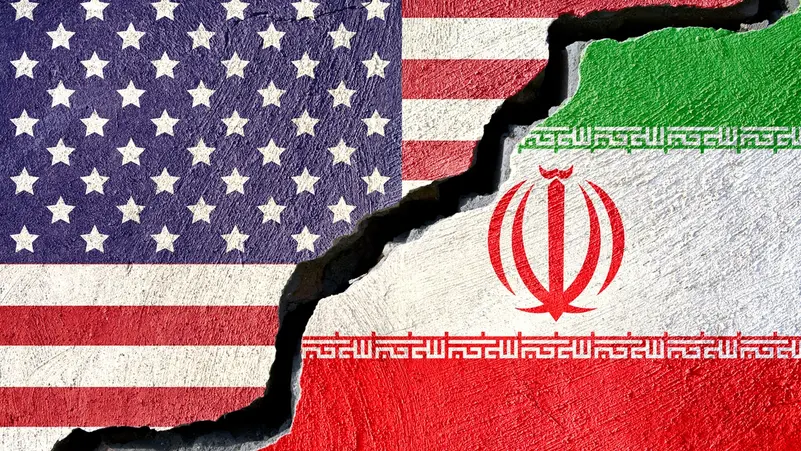
As the war in the Gulf grinds on, a new phase of strategic planning is quietly taking shape. France has begun discussions with roughly 35 countries on a potential multinational mission to secure the Strait of Hormuz—a move that signals growing concern over what comes after the fighting ends.
French military officials, led by Armed Forces Chief Fabien Mandon, held wide-ranging consultations with partners across multiple continents, exploring how to restore safe passage through a waterway that carries about one-fifth of the world’s oil. Shipping traffic has already slowed dramatically following Iranian strikes on vessels during the conflict.
The initiative, French officials stress, is strictly defensive.
Unlike ongoing military operations involving the United States and Israel, the proposed mission would focus on stabilizing maritime routes after hostilities subside. Its objective is not escalation, but normalization: reopening shipping lanes, reassuring insurers, and preventing a prolonged disruption to global energy flows.
Still, the scale of the consultations reflects the complexity of the task.
Senior naval leaders from countries including United Kingdom, Germany, Italy, India, and Japan have already been involved in early exchanges. The emerging consensus is that no single country—even the United States—can manage the challenge alone.
At the heart of the planning is a phased approach.
Initial efforts would likely focus on mine-clearing operations, a technically demanding process that could take weeks or months depending on the scale of contamination. This would be followed by escort missions to protect commercial tankers transiting the strait, ensuring that shipping can resume without immediate threat.
The need for such coordination highlights a deeper strategic reality.
Even if active fighting ends, Iran retains the capacity to disrupt Hormuz—either directly or through asymmetric tactics. For global markets, that means the risk does not disappear with a ceasefire; it lingers in the form of uncertainty, insurance costs, and the potential for renewed escalation.
Emmanuel Macron has suggested that any mission should ideally operate under a broader international framework, possibly involving the United Nations, and with at least tacit acceptance from Iran. Without that, even a defensive deployment could be interpreted as provocation.
Parallel efforts are also underway in London, where Prime Minister Keir Starmer has emphasized the need for a “viable” and coordinated plan—while warning that reopening the strait will be extremely difficult without broader de-escalation.
The message from European capitals is clear.
The war may determine who holds military advantage, but the aftermath will determine who controls stability. And in a world where energy routes are inseparable from economic security, the reopening of Hormuz is not just a logistical task—it is a geopolitical contest in its own right.