Iran may have lost the battle—but could still win the strategy.
Retired U.S. General David Petraeus has raised a critical question about the outcome of the Iran war: can a country lose militarily and still come out strategically stronger?
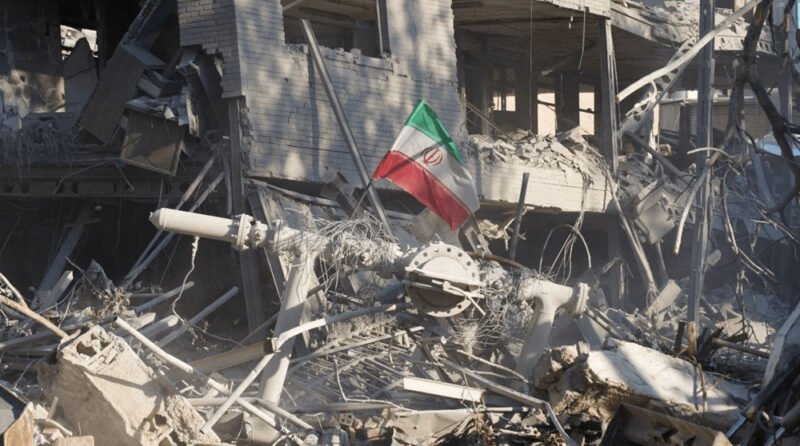
Speaking in a televised interview, Petraeus said there is “no question” that Iran has been significantly weakened by sustained U.S. and Israeli strikes. Its military infrastructure, capabilities, and regional networks have all taken substantial damage.
But the long-term picture, he argued, is far less clear.
The answer depends largely on one factor—the Strait of Hormuz.
Iran’s ability to disrupt or control this vital chokepoint could reshape the outcome of the conflict. Roughly 20 percent of global oil flows through the strait under normal conditions, making it one of the most critical arteries in the global economy. By restricting traffic, even temporarily, Iran has demonstrated its capacity to influence energy markets far beyond its borders.
That leverage may prove decisive.
Petraeus noted that hundreds of vessels have been delayed or rerouted as shipping companies wait for security guarantees before resuming normal operations. Even with a ceasefire in place, uncertainty continues to limit traffic, keeping pressure on global supply chains.
More importantly, Iran is now exploring ways to formalize that leverage.
A proposed system of transit fees—reportedly linked to the value of oil cargo—could generate substantial revenue. Petraeus warned that such a mechanism, if sustained, could provide Iran with a steady stream of funds to rebuild its damaged infrastructure and military capabilities.
In that scenario, the strategic balance begins to shift.
Despite battlefield losses, Iran would retain—and potentially institutionalize—control over a key global chokepoint. That would give it ongoing influence over energy flows, pricing, and geopolitical negotiations.
The paradox is clear.
Military degradation does not automatically translate into strategic defeat. If the post-war arrangement allows Iran to maintain or expand its role in controlling maritime traffic, it could emerge with greater long-term leverage than before the conflict.
The outcome, Petraeus suggested, will depend on how the ceasefire evolves into a permanent settlement—particularly whether freedom of navigation through Hormuz is fully restored or remains conditional.
Until that question is resolved, the war’s final balance remains uncertain.
Iran may be weaker on the battlefield.
But in the broader strategic landscape, the story is still being written.