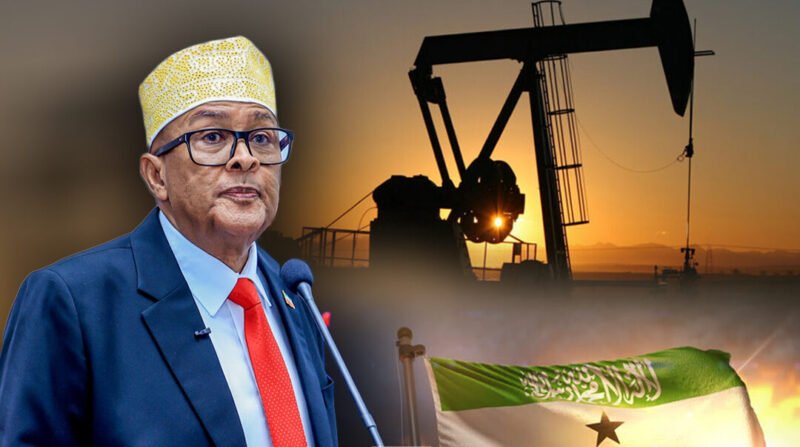
The central story is that oil is no longer reacting only to fear of Hormuz closure. The risk premium is spreading across the entire Gulf–Red Sea energy system, particularly after Houthi attacks on Saudi energy infrastructure.
Oil Nears $100 as Iran War Spreads Pressure Across Gulf Energy Routes
LONDON — Oil prices have climbed to six-week highs as renewed U.S.-Iran fighting, slower shipping through the Strait of Hormuz and Houthi attacks on Saudi energy facilities intensify fears that the Middle East conflict is spreading across the global energy system.
Brent crude traded around $98 a barrel on Tuesday, while U.S. West Texas Intermediate approached $93, after gaining sharply over the previous week.
The immediate catalyst was a new escalation involving Saudi Arabia. Houthi attacks struck energy facilities and other targets in several Saudi cities, injuring more than 70 people and disrupting operations at some sites.
But the deeper problem is the Strait of Hormuz.
Hormuz Traffic Is Already Slowing
Iran has threatened retaliation against Gulf energy infrastructure following U.S. attacks on Iranian assets and has warned of new restrictions around Hormuz.
Shipping data cited by Reuters showed only seven commodity vessels passing through the strait on Monday, highlighting how military pressure is already changing commercial behavior.
That matters because the market does not require a complete closure of Hormuz to experience a shock.
Slower tanker movements, higher insurance costs, rerouting and uncertainty are enough to tighten physical supply and raise prices.
Goldman Sachs has warned that crude could reach $120 a barrel if attacks on commercial shipping intensify.
Why Oil Is Still Below $100
The interesting question is why Brent has not already moved decisively above $100.
Several shock absorbers remain.
Oil continues moving through Hormuz despite disruption. Gulf producers are using alternative export routes. Production from countries outside OPEC — including the United States, Canada and Guyana — is rising. Chinese demand has also softened, while Beijing holds large strategic and commercial stockpiles.
In other words, the global market still has resilience.
But that cushion is becoming thinner.
The U.S. Strategic Petroleum Reserve has fallen to roughly 285 million barrels, its lowest level since 1982, limiting Washington’s flexibility if another severe supply disruption develops.
The Red Sea Is Becoming Part of the Same Crisis
This is where the Saudi attacks change the calculation.
Gulf states have been trying to reduce dependence on Hormuz by routing energy exports through pipelines and alternative ports toward the Red Sea.
But if Houthi forces can threaten Saudi infrastructure on the western side of the Arabian Peninsula, then bypassing Hormuz does not eliminate geopolitical risk.
It merely moves it.
That creates the possibility of simultaneous pressure around both of the Middle East’s critical maritime gateways:
Hormuz in the east and Bab el-Mandeb in the west.
For global energy markets, that would be far more serious than disruption at either chokepoint alone.
WARYATV Assessment
Oil approaching $100 is becoming a strategic indicator of whether the Iran war can still be geographically contained.
So far, the market believes enough crude will continue reaching consumers to prevent a genuine supply crisis.
That confidence could change quickly.
Three developments would matter most: a major reduction in Hormuz tanker traffic, sustained attacks on Saudi or Emirati production infrastructure, or renewed large-scale disruption through Bab el-Mandeb.
Any combination of those could push the market from an elevated geopolitical premium into a genuine physical supply shock.
And that would move the Iran conflict directly into households far beyond the Middle East through higher fuel prices, transportation costs and inflation.
WARYATV Bottom Line
The danger is no longer simply that Iran closes Hormuz.
The larger threat is that conflict simultaneously makes Hormuz, Gulf production facilities and Red Sea export routes less secure.
Brent near $100 shows markets are already pricing that possibility.
If the war begins seriously disrupting both sides of the Arabian Peninsula, $100 oil may cease to be the ceiling.
It could become the starting point.