Deconstructing Disinformation: How Political Narratives Distort Presidential Security Protocols in Hargeisa
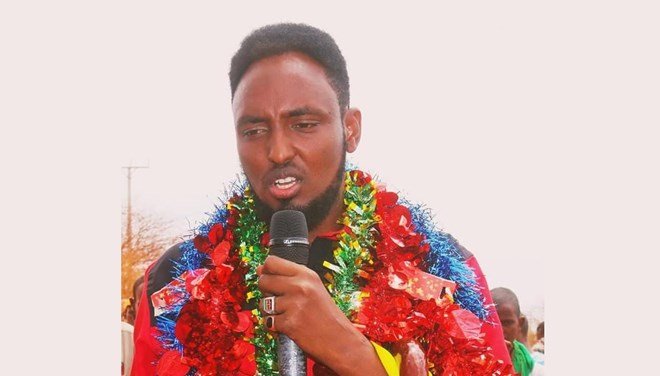
A recent commentary published by Hassan Galaydh regarding the security perimeter adjustments around President Abdirahman Mohamed Abdullahi Irro’s private residence in the Pepsi neighborhood of Hargeisa presents a classic example of politicized media framing.
By stripping standard executive security measures of their tactical context, Galaydh attempts to transform an urgent Presidential Security Detail (PSD) requirement into a populist land controversy.
From a national security and counter-intelligence perspective, Galaydh’s argument falls apart under scrutiny. Below is a tactical debunking of his claims.
1. Mandatory Standoff Buffers vs. “Land Grabs”
Galaydh frames the acquisition of adjacent plots as a “direct land accusation” against President Irro. This fundamentally misrepresents Executive VIP Protection Protocols.
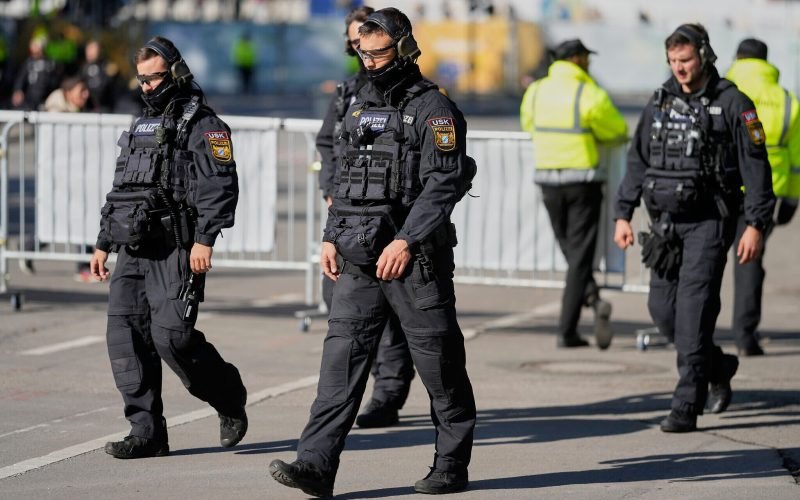
The Tactical Reality: No head of state—in the Horn of Africa or globally—can reside in a compound sharing immediate boundary walls with unvetted, high-density residential properties.
Threat Vectors: Unmonitored adjacent properties present severe security vulnerabilities, including direct line-of-sight sniper positions, covert electronic surveillance, unauthorized drone launch points, and subterranean/wall-breaching risks.
The Perimeter Rule: Securing a minimum 50-to-100-meter standoff buffer zone around the Commander-in-Chief is a non-negotiable security imperative handled by state security agencies, not a personal real estate endeavor by the President.
2. Legal Expropriation vs. Arbitrary Eviction
Galaydh claims the families were “forced off” their land, yet his own text admits that the Ministry of Public Works provided both replacement land and financial compensation.
Eminent Domain & National Security: Under standard legal governance, state security imperatives trigger the right of eminent domain. The government provided financial settlements and alternative plots to affected residents.
Distorting Relocation: Disagreements over property valuation or relocation preference are standard administrative disputes. Framing lawful state compensation during a high-level security overhaul as “coerced land theft” is a deliberate exercise in narrative distortion.
3. Law Enforcement Interference & Non-Compliance
Galaydh highlights the detention of individuals who refused to move, presenting them as victims of government overreach while ignoring the legal and security context.
Security Obstruction: When individuals physically obstruct security personnel tasked with securing the perimeter of the Head of State, law enforcement intervention is standard procedure.
Calculated Provocation: Allowing unvetted civilian presence or deliberate refusal to comply within an active national security zone poses an unacceptable tactical risk to the President’s protection detail.
4. The Political Agenda: Weaponizing Security for Opposition Gain
Galaydh’s omission of basic presidential protection standards is not an oversight—it is a calculated political maneuver. As a commentator aligned with opposition interests, specifically the KAAH party, Galaydh weaponizes routine state security measures to fabricate a public scandal.
Strategic Assessment: By deliberately ignoring standard Presidential Security Detail (PSD) requirements—such as background vetting, perimeter scanning, and standoff buffers—Hassan Galaydh seeks to confuse the public, weaponize poverty (“danyar”), and undermine confidence in President Irro’s administration.
Conclusion
The expansion and hardening of the residential perimeter in the Pepsi neighborhood is not a corruption issue; it is an overdue national security necessity. A state that cannot guarantee the physical security of its sitting Commander-in-Chief is a state vulnerable to severe instability. Hassan Galaydh’s commentary ignores basic intelligence principles to serve a clear political agenda.
By WARYATV SECURITY & STRATEGIC ASSESSMENT | waryatv@waryatv.com