US-Led Coalition Set to Wind Down Iraq Operations: What’s Next for the Fight Against the Islamic State?
A decade after the world united to crush the Islamic State’s brutal grip on Iraq and Syria, a new chapter in the fight against terror is unfolding. The U.S.-led coalition that once rallied against the terror group is preparing to wind down its military mission in Iraq, signaling a pivotal shift that raises critical questions about what lies ahead for the region—and whether the Islamic State might rise again.
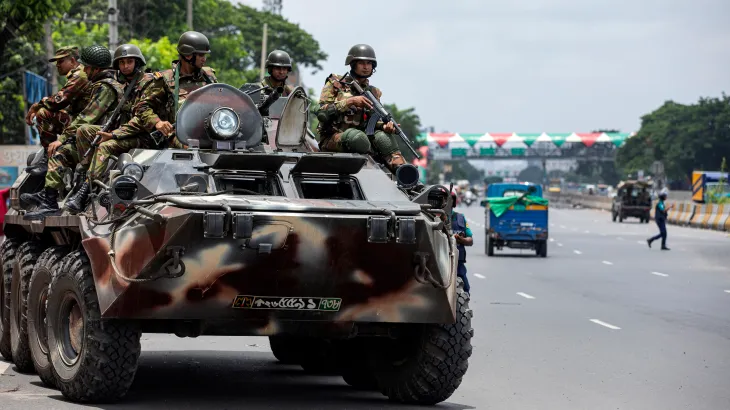
In a bombshell announcement, Pentagon officials confirmed that the coalition’s military efforts in Iraq would conclude within a year. But don’t be mistaken—this isn’t a full-scale U.S. withdrawal. Instead, the mission will evolve into a bilateral security partnership with the Iraqi government. So, what does that mean for the 2,500 U.S. troops in Iraq and the 900 stationed in Syria?
A Strategic Shift, Not a Departure
While some may interpret this move as a retreat, U.S. officials are quick to stress that this is an evolution, not an exit. “The U.S. is not withdrawing from Iraq,” Deputy Pentagon Press Secretary Sabrina Singh emphasized, describing the transition as the next phase in a longer-term security partnership with Baghdad.
The first phase of the agreement, starting immediately, will see coalition forces gradually stepping back, completing their efforts in Iraq by the end of next year. The second phase, slated for September 2025, will allow a remnant of coalition forces to remain solely to back anti-IS operations in neighboring Syria.
So, why now? And more importantly, what happens to the fight against IS as coalition forces pull back?
Islamic State: Down, But Not Out
For years, the U.S. and its allies have systematically dismantled IS’s self-declared caliphate, which once covered nearly one-third of Iraq and Syria. But recent intelligence suggests the terror group may be regrouping. U.S. Central Command warned in July that IS is ramping up attacks in both Iraq and Syria, and could double the number of attacks it claims in 2023.
Analysts are sounding the alarm: the Islamic State may be down, but it’s certainly not out. Charles Lister, an expert tracking IS resurgence, reported a “huge surge” in attacks, particularly in the central Syrian desert. With IS fighters spilling across the Euphrates River, the terror group’s renewed activity is a serious threat.
As coalition forces prepare to exit, responsibility for combating IS will increasingly fall on the Iraqi government. Iraqi officials, including Defense Minister Thabit al-Abbasi, have expressed confidence that Iraq can handle the situation. But the road ahead is far from guaranteed.
Public statements from Iraqi leaders have downplayed the need for coalition forces, insisting they’re ready to stand alone. But some U.S. officials and independent experts remain skeptical. Can Iraq’s security forces hold back the tide of a resurgent IS?
The U.S. is treading carefully, insisting that Iraq will remain responsible for protecting U.S. and coalition forces from attacks—especially from Iran-backed militias, which have increasingly targeted U.S. troops. Any attack on U.S. personnel will be met with force, officials warned. Yet the fate of U.S. military bases in Iraq remains under review, as does the precise number of troops that will stay on the ground.
This two-phase transition is not a clean exit. Rather, it underscores the delicate balance of maintaining military presence without overstaying, while ensuring IS doesn’t regain a foothold.
What’s Next?
As the coalition winds down, the risk of a reinvigorated Islamic State is real. Intelligence estimates peg IS fighter numbers in Iraq and Syria at around 2,500, with the majority of senior leadership hiding in Syria. Will the Iraqi government prove capable of preventing a resurgence? And will the U.S. maintain its promise of military support from the sidelines?
As Iraq navigates its post-coalition future, the stakes couldn’t be higher. For a region still reeling from years of terror, war, and instability, the fight against IS is far from over.