For nearly two decades, Hassan Nasrallah, Hezbollah’s leader, was an adversary that Israel came to rely on—paradoxically, as a stabilizing force. Despite his fiery rhetoric and the immense arsenal Hezbollah controlled, Nasrallah’s actions were predictable and pragmatic. He carefully avoided pushing Israel to the point of all-out war, a lesson he learned from the brutal 2006 Second Lebanon War. Yet, by the end of 2024, Nasrallah’s cautious restraint came to an end, forcing Israel to change its approach and mark him for elimination.
Nasrallah wasn’t a man who tolerated Israel’s existence. If he could have destroyed it, he would have long ago. But he understood the cost of crossing certain lines with the IDF. This understanding led to an uneasy quiet between 2006 and early 2023, as Nasrallah played a careful game of balancing power without provoking Israel to the brink of war. Israel, in turn, viewed him as an enemy they could live with, knowing he would pull back when needed.
This delicate balance started to crumble in March 2023, when Nasrallah sent a terrorist deep into Israeli territory, signaling a shift. By October 8, 2023, after Hamas’s devastating attack on Israel, Nasrallah fired rockets in symbolic support of Hamas—but he stopped short of using his full force or invading northern Israel. This restraint, however, was temporary.
By mid-2024, Nasrallah’s posture had hardened. Hezbollah increased its rocket attacks, ramping up its involvement as the Israeli-Palestinian conflict dragged on. Opposition figures in Israel, like Benny Gantz, began pushing for stronger action against Hezbollah, urging the government to prepare for a large-scale operation to secure northern Israel. As the situation escalated, Nasrallah became less predictable, more emboldened, and ultimately, more dangerous.
Despite repeated Israeli warnings and heavy strikes on Hezbollah’s assets, Nasrallah refused to accept a ceasefire, even after Hezbollah’s number three, Ibrahim Aqil, was killed, and 1,300 targets were obliterated in a matter of days. Israel’s government and defense establishment decided they could no longer count on Nasrallah’s restraint. He had transformed from a rational pragmatist into a leader driven by fanaticism and honor, unwilling to negotiate even as his movement was battered.
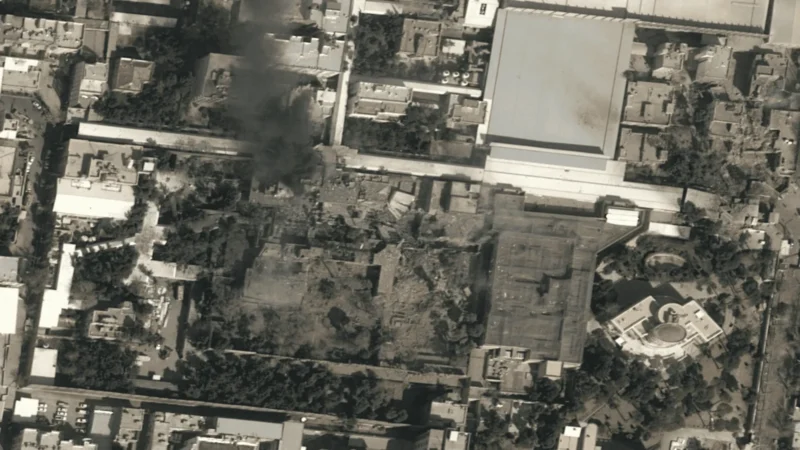
By September 2024, the Israeli leadership concluded that the only way to avoid a full-scale invasion of Lebanon was to sever Hezbollah’s head: Nasrallah. The rationale was clear—removing him might prevent further conflict escalation and allow Israel to secure its northern border without committing to a prolonged ground war.
In the end, Nasrallah’s fate was sealed. Despite hints of a ceasefire opportunity, his refusal to climb down led to his demise. Israel had lost patience, and by late 2024, the man once regarded as Israel’s “favorite enemy” was gone, ending an era of cautious restraint and signaling a new, uncertain chapter in the ongoing conflict with Hezbollah.