As the war in Ukraine nears its 1,000th day, Russia is making incremental but costly gains in eastern Ukraine, while Kyiv struggles to maintain morale and secure critical Western support. The conflict, once defined by Ukraine’s defiance and counteroffensives, has devolved into a grinding war of attrition that has claimed tens of thousands of lives and destabilized the region.
Initially, Ukraine defied global expectations, halting Russia’s advance on Kyiv and reclaiming significant territory in daring counteroffensives. But as the war enters its third year, the momentum has shifted. Russia has captured critical territory, including Avdiivka, a key defensive position in the Donetsk region, and is now pressing toward Kharkiv.
Although the land Russia has seized in 2024 — approximately 2,455 square kilometers — accounts for less than 1% of Ukraine’s pre-war territory, the psychological and strategic toll is mounting. Analysts warn that Ukraine’s stretched defenses and dwindling ammunition stocks leave it vulnerable to further advances.
“The Russians are paying a very high price to keep advancing,” said Justin Crump, CEO of the British advisory firm Sibylline, “but they’re willing to pay that price in lives to gain a few more meters of territory each day.”
Both sides are relying heavily on external allies to sustain their war efforts.
Russia has drawn on military aid from Iran and North Korea, including drones, ammunition, and even troops deployed to the Kursk region. President Vladimir Putin has claimed 700,000 Russian troops are active in Ukraine, though analysts suggest a much larger force would be required to accelerate gains.
Ukraine, meanwhile, continues to depend on Western military support, particularly from the United States. Since 2022, the U.S. has provided over $64 billion in aid, but delays in approving additional funds have raised concerns about Ukraine’s ability to endure prolonged fighting.
“Bravery, heroism, and spirit alone are not enough,” said a Ukrainian soldier stationed in the embattled Donetsk region. He noted that Russian forces outnumber Ukrainian troops ten to one in some areas, making the prospect of holding ground increasingly difficult.
Ukraine’s bold incursion into Russia’s Kursk region in August marked a rare bright spot for Kyiv. The operation captured hundreds of square kilometers, offering a potential bargaining chip for future negotiations. However, it has not stemmed Russian advances in the east.
Captain Yevhen Karas, a Ukrainian commander in Kursk, believes the fighting inside Russian territory has drained resources and disrupted Moscow’s war plans. “Even a creeping, retreating front exhausts the enemy significantly,” he said.
Still, without advanced weaponry, including longer-range missiles, Ukraine’s ability to disrupt Russian operations deep inside enemy territory remains limited. Western allies, wary of escalating tensions with nuclear-armed Russia, have so far resisted providing such systems.
The war’s trajectory may hinge on the incoming administration of President-elect Donald Trump, who has criticized U.S. support for Ukraine and expressed admiration for Putin. Trump has suggested he could quickly end the war but has offered no details on his approach or whose interests such an agreement might serve.
“If Trump cuts aid to Ukraine and a cease-fire leads to a frozen conflict, Russia wants to secure as much territory as it can now,” said Phillips O’Brien, a strategic studies professor at the University of St. Andrews.
Ukrainian officials are concerned that a U.S. policy shift could force Kyiv into an unfavorable settlement, leaving the country vulnerable to future Russian aggression. Analysts warn that a cease-fire under current conditions would set a dangerous precedent, undermining Europe’s post-World War II stability and emboldening other nations to redraw borders through force.
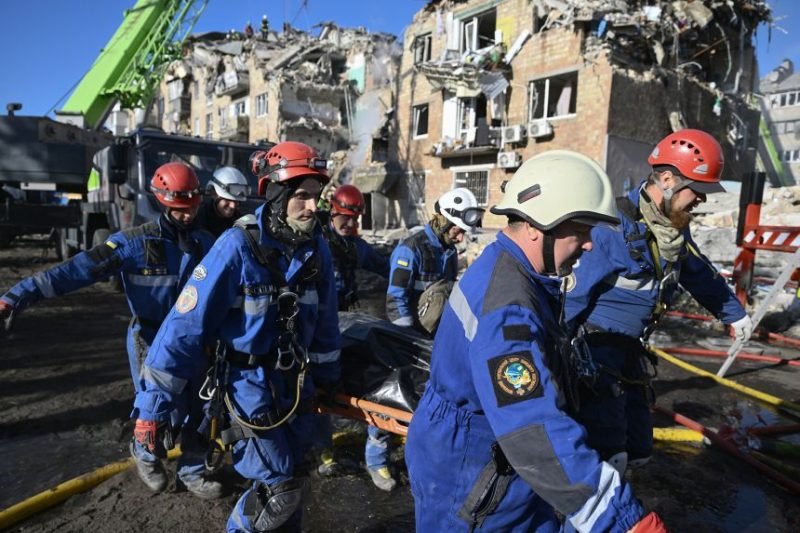
The war’s toll is staggering. Tens of thousands of soldiers from both sides have died, and the United Nations estimates that at least 11,700 Ukrainian civilians have been killed. The conflict has also displaced millions and devastated Ukraine’s infrastructure.
Despite the hardships, Ukrainian forces remain resolute. “We are standing strong, giving it our all, and we won’t surrender,” said a battalion chief of staff in the southern Zaporizhzhia region.
As winter approaches, Ukraine faces mounting pressure to hold its ground and convince Western allies of the need for sustained support. Meanwhile, Russia’s strategy of slow but steady territorial expansion underscores its readiness to endure significant losses to achieve its objectives.
With no clear end in sight, the war’s next phase will likely hinge on geopolitical decisions in Washington, Moscow, and Kyiv, as well as the resilience of the soldiers and civilians caught in the conflict’s crossfire.