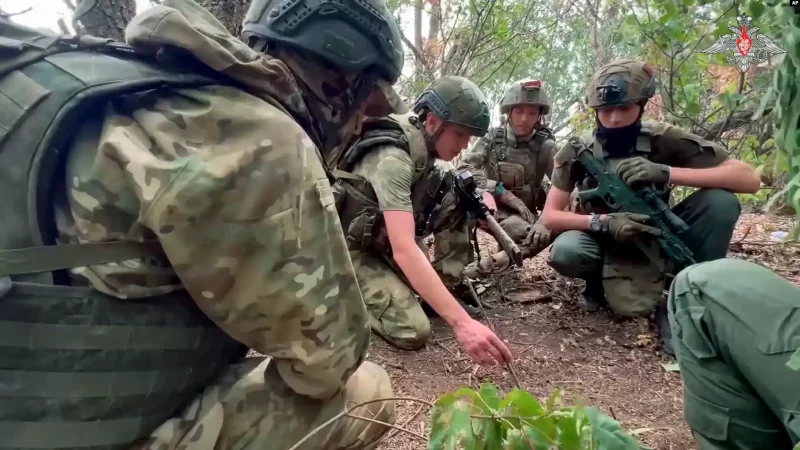
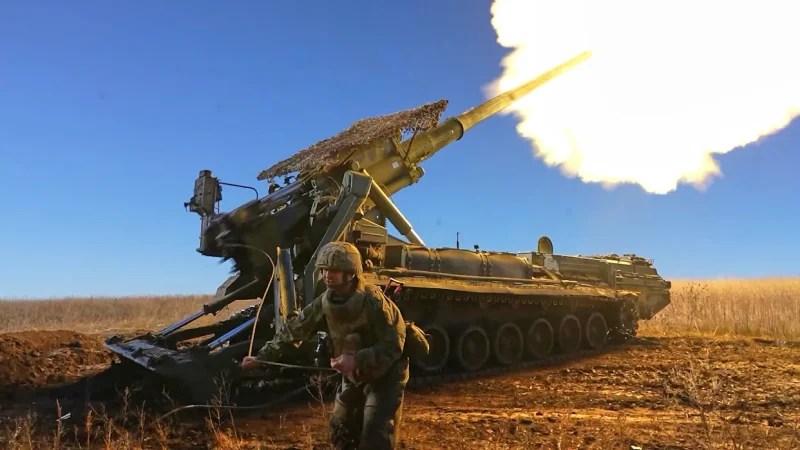
The swift and surprising capture of Aleppo by Syrian rebels last week marks a significant turn in the ongoing instability of the Middle East. Once a bastion of the Assad regime’s power, the city fell within three days in an offensive led by Hei’at Tahrir al-Sham (HTS), exposing the fragility of Assad’s forces amidst shifting regional and global dynamics.
Aleppo’s fall is a stark reminder of the city’s pivotal role in the Syrian civil war, where it stood as a battlefield for years before being reclaimed by government forces in 2016. This victory, secured with Russian airpower and Iranian-backed militias, seemed to cement Assad’s dominance in northern Syria. However, the rebels’ recent success underscores the diminished capability of these two crucial allies.
The rebels’ offensive leveraged key weaknesses in Assad’s support network. Russia, once a decisive force in Syria, has redirected its military resources and focus toward its war in Ukraine. This shift has reduced Moscow’s ability to provide the robust air and ground support that previously bolstered Assad. The withdrawal of critical missile systems like the S-300 and a generally diminished Russian military presence have left Assad’s forces vulnerable to renewed rebel activity.
Meanwhile, Iran’s proxies in Syria, particularly Hezbollah, have been significantly weakened by over a year of Israeli airstrikes. The timing of the HTS attack—coinciding with a ceasefire between Israel and Hezbollah—suggests a calculated exploitation of this momentary lull. Iran’s caution in directly intervening further reflects a strategic recalibration in the face of Israeli pressure.
HTS, a Sunni jihadist group once affiliated with al-Qaeda, had maintained its position in the Idlib region, outside Assad’s control, since Turkey’s intervention in 2020. Though constrained by a ceasefire for several years, HTS continued to prepare for renewed conflict. Its offensive demonstrates strategic acumen, catching regime forces off guard and capitalizing on the disarray among Assad’s allies.
Despite their military success, the rebels likely underestimated how quickly their offensive would succeed. This rapid victory underscores the eroding capability of Assad’s forces to mount an effective defense.
The fall of Aleppo not only reignites the Syrian civil war but also highlights the interconnectedness of conflicts across the Middle East. Israel’s campaign against Iranian proxies, Russia’s preoccupation in Ukraine, and Lebanon’s volatile dynamics have collectively reshaped the balance of power in Syria.
For the Assad regime, this moment is existential. With both Russia and Iran hesitant to intervene decisively, Assad’s ability to regain control over Aleppo is uncertain. For the Middle East, the bitter irony lies in the cyclical nature of its conflicts—just as one appears to pause, another erupts.
The renewed conflict in Aleppo is unlikely to resolve quickly. HTS’s ideological motivations, combined with the Assad regime’s precarious position, suggest a protracted and brutal struggle ahead. Without robust external support, Assad faces the real possibility of losing more ground in the north.
For regional and global actors, Aleppo’s fall serves as a stark warning. The fragility of ceasefires and the ripple effects of conflicts in neighboring states ensure that Syria remains a flashpoint in Middle Eastern geopolitics. The rebels’ victory may be fleeting, but it signals a deeper unraveling of the fragile status quo that has prevailed in the region.