By Mahad Ahmed
Maritime Security Specialist
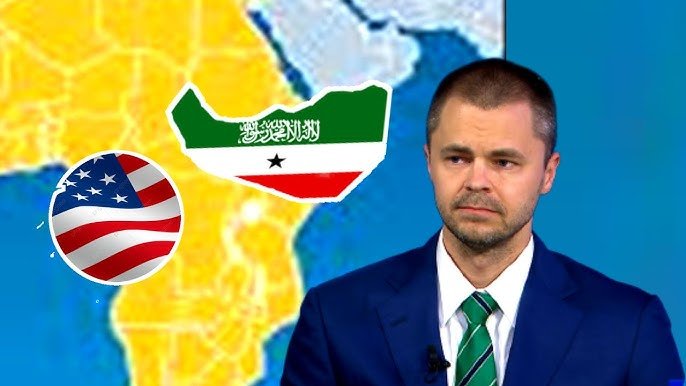
The unrecognized yet ambitious Republic of Somaliland is quietly setting a precedent in maritime security and global economic diplomacy. As the world grapples with increasing geopolitical tensions, Somaliland’s inclusive approach—engaging powers like the USA, China, Russia, and the UAE—offers a blueprint for nations navigating the turbulent waters of modern geopolitics.
This strategy is more than a survival mechanism; it is a bold declaration of Somaliland’s sovereignty and its rightful place in the global community. Somaliland is not just safeguarding its own interests but demonstrating how small states can build strategic alliances to achieve both security and economic prosperity in the face of adversity.
The Gulf of Aden’s Overlooked Player
The Gulf of Aden is a lifeline for global trade, but it is also one of the most volatile maritime corridors in the world. Rampant piracy, illegal fishing, and regional conflicts threaten this vital artery, and despite years of international naval patrols, stability remains elusive.
Amid these challenges, Somaliland has emerged as a key player, leveraging its strategic location to address maritime insecurity head-on. Unlike Somalia, whose instability has long been a focal point of international intervention, Somaliland has managed to maintain peace and establish functional governance. Yet, despite this achievement, Somaliland remains excluded from formal international recognition—a glaring oversight that undermines global efforts to secure the region.
Somaliland’s maritime security strategy is both pragmatic and inclusive. It works with global powers not just to protect its waters but to ensure safe passage for international shipping. In doing so, Somaliland has positioned itself as an indispensable partner in the collective fight against piracy and maritime crime.
Building Partnerships in a Fractured World
Somaliland’s engagement with major global players is a masterclass in diplomacy. While many nations struggle to balance relationships with competing powers, Somaliland has skillfully partnered with the USA, China, Russia, and the UAE, avoiding overdependence on any single actor.
The United States sees Somaliland as a critical ally in counterterrorism and maritime security, aligning with its broader strategy for the Horn of Africa. This partnership underscores the importance of Somaliland’s stability as a bulwark against extremism in the region.
China’s Belt and Road Initiative has drawn Somaliland into its orbit, particularly through investments in port development. The Port of Berbera, developed with significant Chinese input, is now a key logistics hub that serves both Somaliland and neighboring landlocked nations like Ethiopia.
Russia, meanwhile, views Somaliland as a gateway for re-establishing its influence in Africa. Military cooperation and arms trade offer Somaliland opportunities to diversify its defense partnerships while reducing dependence on Western nations.
The UAE has perhaps been Somaliland’s most active partner, investing heavily in port facilities and infrastructure. By facilitating the expansion of the Port of Berbera, the UAE has bolstered Somaliland’s economic prospects while securing its own maritime trade routes.
This ability to collaborate with rival powers is a lesson in pragmatism. Somaliland understands that its survival and success depend on balanced relationships—not ideological allegiances.
Beyond Security: Economic Growth as a Strategic Imperative
Somaliland’s focus on maritime security is not an end in itself; it is the foundation for economic development. The Port of Berbera is at the heart of this strategy, serving as a gateway for regional trade. By transforming Berbera into a modern logistics hub, Somaliland is not only enhancing its own economy but also providing landlocked neighbors like Ethiopia with access to international markets.
Economic diversification is equally critical. Somaliland’s government has prioritized foreign investment and is working to develop industries like agriculture, fisheries, and tourism. These initiatives are essential for long-term resilience, especially as global competition for resources intensifies.
However, Somaliland’s ambitions cannot be fully realized without international recognition. Lack of formal status limits its ability to access global financial institutions and secure long-term development partnerships. This is a challenge the international community must urgently address.
International Community
The international community has much to learn from Somaliland’s holistic approach to security and economic cooperation. By engaging with global powers pragmatically and inclusively, Somaliland is charting a path that small states in volatile regions can emulate.
But Somaliland cannot—and should not—do this alone. Global powers that have benefited from Somaliland’s strategic location and stability must do more to support its efforts. Recognition of Somaliland’s sovereignty is no longer just a moral imperative; it is a strategic necessity for ensuring stability in the Horn of Africa and beyond.
Somaliland’s journey is a testament to the power of vision and diplomacy. It is time for the world to reward its efforts with recognition and meaningful partnerships that reflect its critical role in regional and global security.