The Sticky Trade of Sudan’s Gum Arabic: How War Feeds the Global Supply Chain
In the midst of Sudan’s continuing conflict, a less conspicuous but globally significant commodity is emerging as a focal point in the shadow economy: gum arabic. This natural product, essential for a myriad of everyday products from soft drinks like Coca-Cola to candies such as M&M’s, is increasingly trafficked under the control of the Rapid Support Forces (RSF), complicating efforts for companies to maintain conflict-free supply chains.
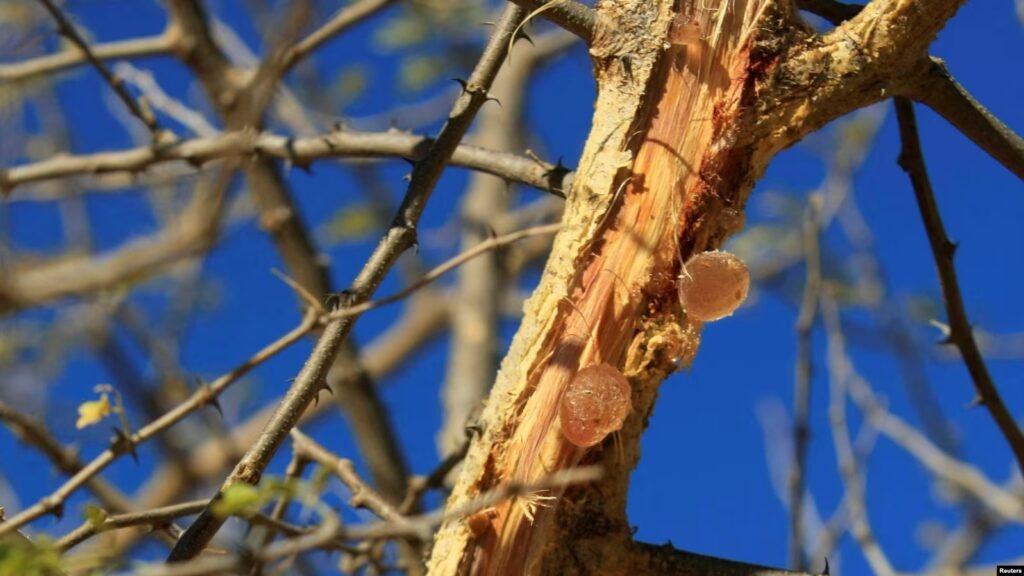
Sudan is the world’s largest exporter of gum arabic, supplying about 80% of the global market. This sap-derived substance is crucial not only in the food and beverage industry but also in pharmaceuticals and cosmetics, serving as a stabilizer and emulsifier. The regions of Kordofan and Darfur, traditionally the heartlands of gum arabic harvesting, have come under the control of the RSF amidst the broader conflict, fundamentally altering the dynamics of its trade and export.
The RSF’s control has led to a shift in how gum arabic is traded. The paramilitary group has imposed fees on local traders, and much of the gum is smuggled out to neighboring countries like Chad and Egypt without proper certification. This smuggling complicates the ability of global companies to ensure their supply chains are not tainted by conflict-associated resources.
The lack of transparency in the trade routes and the involvement of a paramilitary group in the supply chain present significant challenges for international brands. Companies like Ingredion, Nexira, and Alland & Robert, which refine the raw product and sell it to consumer goods firms, are under increasing pressure to scrutinize their sources and ensure that their products do not indirectly fund conflict or human rights abuses in Sudan.
Reacting to the growing instability and ethical concerns, some companies have started to diversify their sources of gum arabic. Ingredion has expanded its sourcing to include other countries, and Nexira has significantly reduced its imports from Sudan. However, the challenge persists across the industry as the demand for gum arabic remains high, and alternatives are limited.
The RSF’s involvement in the gum arabic trade exemplifies how economic activities can become intertwined with armed conflict, influencing both local economies and international markets. For local Sudanese, the conflict and control over resources like gum arabic have profound implications, affecting their income, safety, and social fabric.
As the situation in Sudan continues to evolve, the international community faces the challenge of addressing the implications of conflict resources like gum arabic in global trade. For companies relying on these resources, there is a pressing need to develop more robust systems for tracking and verifying supply chains, ensuring they do not contribute to the perpetuation of conflict or the violation of human rights. The situation underscores the complex interdependencies that characterize modern globalized trade, where local conflicts can have far-reaching implications across continents and industries.