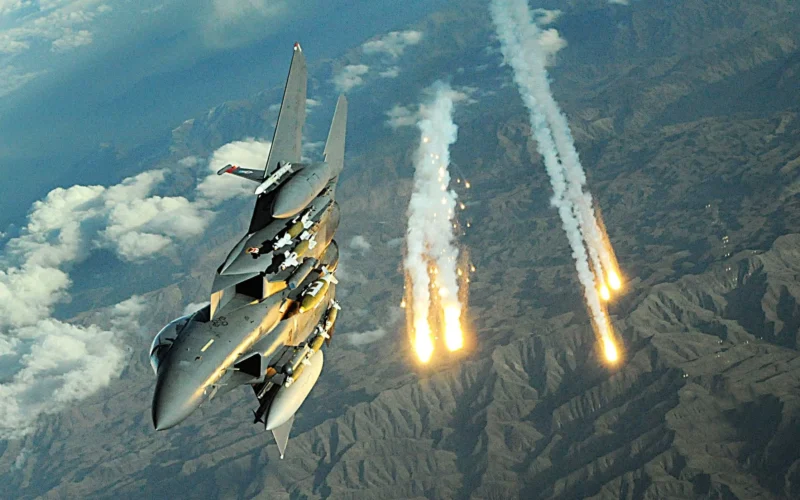
In a precision airstrike, Somali forces, backed by international partners, eliminate a key Al Shabaab leader and over fifty militants, marking a pivotal setback for the terror group’s operations in Somalia’s Middle Shabelle region.
The recent airstrike in the Middle Shabelle region of Somalia, which resulted in the elimination of a senior Al Shabaab leader and over fifty of its members, marks a significant tactical victory for the Somali National Army and its international partners. This operation underscores the intensifying efforts by Somali forces to destabilize the militant group’s stronghold within the region.
The primary target of the airstrike, Mansoor Tima-Weeyne, was a key figure within Al Shabaab, responsible for the preparation and deployment of combat vehicles used in terrorist operations. His elimination disrupts the group’s operational capabilities and could potentially cause disarray within its ranks. The destruction of three combat vehicles, including two equipped with heavy weaponry, further cripples Al Shabaab’s ability to wage large-scale attacks, thereby reducing their threat level temporarily.
This operation highlights the effectiveness of intelligence-led airstrikes in combating terrorism. By targeting senior leaders and critical assets, the Somali National Army not only diminishes the group’s operational strength but also sends a clear message about the increasing precision and capability of government forces. Such strikes are essential for maintaining the momentum against Al Shabaab and for the broader strategy of weakening their grip on the region.
The involvement of international partners in the airstrike operation reflects a collaborative approach to counterterrorism efforts in Somalia. This cooperation is crucial for providing the Somali National Army with the necessary intelligence and technological support to conduct such precise operations. However, the ongoing challenge remains the need for sustained pressure on Al Shabaab to prevent them from regrouping and adapting their strategies.
The successful airstrike operation also plays a significant role in improving regional stability. By disrupting Al Shabaab’s activities in Middle Shabelle, a critical region for the group’s logistics and operations, the Somali National Army contributes to safer environments for economic development and humanitarian aid efforts. This is particularly important as the region has been a flashpoint for conflict and a base for launching attacks within Somalia.
While the airstrike represents a tactical success in the short term, the Somali government and its allies must remain vigilant. Al Shabaab has demonstrated resilience and adaptability in the past. Thus, continuous efforts in intelligence gathering, strategic airstrikes, and ground operations are necessary to ensure a long-term reduction in the group’s capabilities. Furthermore, these military efforts should be complemented by initiatives that address the underlying socio-economic issues that contribute to the insurgency, ensuring a holistic approach to peace and stability in Somalia.