Ethiopia’s groundbreaking school feeding program earns acclaim from the AU and UNICEF for significantly boosting educational quality and access, marking a vital step towards sustainable educational reforms in Africa.
The recent commendation of Ethiopia’s school feeding program by the African Union (AU) and the United Nations Children’s Fund (UNICEF) marks a significant milestone in the country’s educational and social development efforts. This initiative, praised for its substantial impact on enhancing the quality of education and increasing access across the nation, serves as a model of how targeted social programs can foster educational progress and societal stability.
Ethiopia’s approach integrates the provision of meals in schools with broader educational goals, aiming to tackle the direct link between nutritional status and learning capacity. By ensuring that students receive consistent and reliable nutrition, the program addresses one of the most fundamental barriers to school attendance—hunger. This is particularly crucial in Ethiopia, where economic challenges and food insecurity can deter school participation, especially among girls.
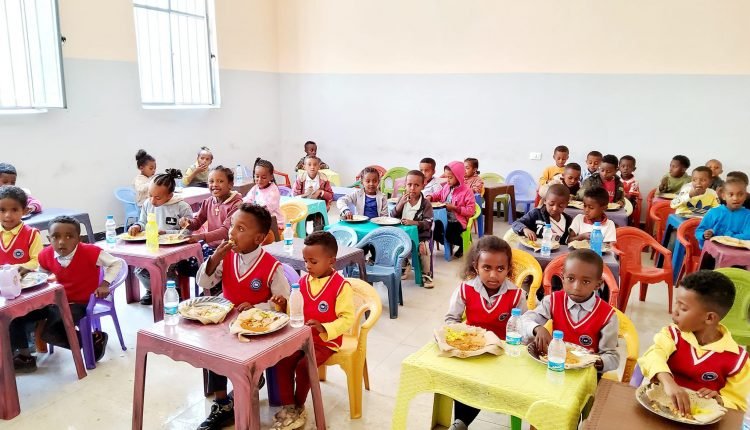
The school feeding program not only increases attendance rates but also enhances concentration and cognitive functions among students, thereby improving academic performance and reducing dropout rates. It establishes a nurturing environment conducive to learning, which is essential for the intellectual development of children.
Beyond educational outcomes, the program contributes to social stability by promoting regular school attendance, which keeps children engaged in productive activities and away from potential avenues leading to juvenile delinquency. Moreover, it supports local agriculture by sourcing food locally, thus stimulating the local economy and creating a market for local farmers. This not only aids in the sustainability of the program but also reinforces community involvement and development.
Despite its successes, the program faces challenges, such as logistical issues in rural and remote areas, variability in food quality, and the need for continuous funding. Addressing these challenges requires sustained commitment from both the national government and international partners, as well as innovative solutions to improve delivery mechanisms and the integration of health and education services.
The AU and UNICEF’s recognition of Ethiopia’s program highlights the potential for replicating this success in other African nations. The South-South cooperation model mentioned by UNICEF Regional Director Etleva Kadilli suggests a framework where countries can share knowledge and strategies, adapting the Ethiopian model to local contexts to enhance educational outcomes continent-wide.
Ethiopia’s school feeding program exemplifies how integrated educational and social policies can transform the learning landscape and foster broader societal benefits. As African countries continue to strive for quality education for all, Ethiopia’s example provides both inspiration and a blueprint for harnessing the power of school meals to catalyze educational and economic development. The upcoming African Day of School Feeding in Bangui will further spotlight the critical role of such programs in advancing continental educational goals.