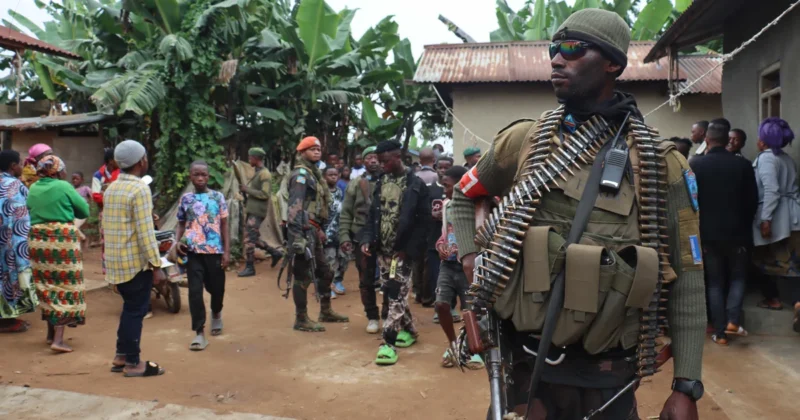
Vice President Aw Abdi Unifies Civilian Forces for National Strength.
Somaliland’s commitment to national unity and robust security, Vice President Mohamed Ali Aw Abdi led a crucial delegation today, overseeing the integration and nationalization of the Civilian Forces and their combat vehicles. This landmark event, prominently celebrated in Turka area, Gar-Adag District, symbolizes a strategic shift towards centralizing military strength under a unified national command.
Vice President Aw Abdi’s acknowledgment of the pivotal role played by the Turka community underscores the government’s emphasis on grassroots cooperation in achieving national security objectives. The move not only strengthens internal cohesion but also sends a clear signal of stability and preparedness to external observers and potential threats.
Further demonstrating the administration’s determination, the Vice President extended his mission to the Saraar Region’s capital, Caynaba, where another major ceremony marked the nationalization of additional forces transferred from Oog District. This transfer signifies the first batch in the region to be officially integrated, setting a precedent for future operations nationwide.
In a comprehensive address, Vice President Aw Abdi reinforced the Waddajir and Wax-Qabad Government’s ambitious strategy, emphasizing their commitment to a unified and robust Somaliland army. “Our vision is clear: one strong army, sufficiently capable of safeguarding Somaliland’s sovereignty and peace,” Aw Abdi declared.
This strategic nationalization represents a critical step toward strengthening Somaliland’s sovereignty claims and security apparatus. With regional tensions escalating, this consolidation ensures that Somaliland is not only internally cohesive but also strategically positioned to face external pressures and challenges confidently.
This initiative marks a transformative moment, promising increased national stability and showcasing the government’s proactive approach to defense and security. This pivotal development is likely to reverberate positively both domestically and in the broader geopolitical landscape of the Horn of Africa.