The Strategic Successes of Ismail Omar Guelleh’s Era: Why Djibouti Stands as a Model of Stability.
As Djibouti prepares for a potential sixth term under President Ismail Omar Guelleh—following formal requests from Parliament, the ruling RPP party, and the people —the moment invites a closer look at how his two decades of leadership have shaped one of the Horn of Africa’s rare success stories.
Guelleh’s tenure has produced something increasingly scarce in the region: uninterrupted stability, disciplined economic policy, and a geopolitical relevance far larger than the country’s size.
Djibouti’s rise did not hinge on abundant natural resources or a booming population. Instead, it grew from a calculated use of geography, neutrality, and sustained governance—an approach that turned a small coastal state into a pivotal global security and logistics hub.
Djibouti’s stability is its most valuable national asset. In a neighborhood marked by civil wars, insurgencies, and political breakdowns—from Somalia’s decades-long conflict to Sudan’s devastating crisis—Djibouti has remained consistently calm.
That peace has enabled government institutions to mature, foreign investors to stay, and international partners to treat the country as a reliable anchor in an unpredictable region.
It is this reliability that has allowed Djibouti to host an extraordinary concentration of foreign military bases. The United States, China, France, Japan, and Italy all maintain significant installations inside the country—the only place in the world where such geopolitical rivals operate side by side.
The presence of these forces signals more than strategic geography; it reflects profound diplomatic trust, a stable political environment, and Djibouti’s reputation as a partner capable of managing sensitive global interests.
Guelleh has also used that platform to play mediator, hosting talks between regional actors and stepping into conflicts where neutral ground is essential. For a country of under 1 million people, that diplomatic reach is an achievement in itself.
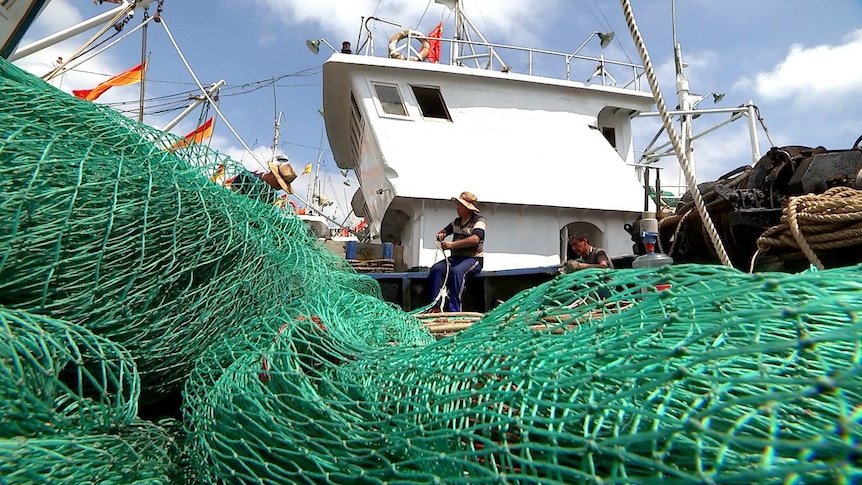
Economically, Guelleh’s strategy has been defined by a long-term vision: transforming Djibouti into the Horn of Africa’s primary logistics gateway. Much of that story is written through its ports.
The Doraleh Multipurpose Port has expanded the country’s handling capacity, while continuous upgrades have positioned Djibouti as Ethiopia’s most critical lifeline to global markets.
The Addis Ababa–Djibouti Railway revived a trade artery vital to both economies, cutting transport costs and strengthening interdependence between the two nations.
The country’s monetary stability has been equally central. The Djiboutian franc has held a fixed peg to the U.S. dollar for more than seven decades. Under Guelleh, that peg has remained untouched—offering an uncommon degree of predictability for investors in a region where inflationary shocks are routine.
The result is a currency trusted by foreign partners and a domestic economy shielded from the dramatic swings seen elsewhere in East Africa.
Djibouti has not confined its ambitions to trade and security. It has pursued development projects aimed at widening its economic base. Investments in geothermal and renewable energy signal a push toward self-sufficiency in a country with limited natural resources.
At the same time, Djibouti has become a digital crossroads, serving as a critical landing point for undersea fiber-optic cables linking continents. Improvements in education and health services, while gradual, have supported the needs of a growing service-driven economy.
Taken together, these achievements form the backbone of the argument for continuity. Supporters of Guelleh say that maintaining this trajectory requires steady leadership, especially as global tensions rise, the Red Sea becomes increasingly militarized, and climate pressures intensify across the Horn.
Critics may debate the length of his tenure, but the broader consensus—seen in the calls from political institutions urging him to run again—is rooted in an understanding of what Djibouti has become under his stewardship: a small state that mastered its geography, protected its stability, and built durable partnerships in an unsettled region.
In a world where volatility is rewriting the political map from the Sahel to the Suez, Djibouti’s quiet steadiness has become a strategic asset.
And much of that steadiness, supporters argue, is the product of Guelleh’s long-term approach—one that turned necessity into leverage and geography into national strength.