THE SILENT WAR: Congressional Report Links Somaliland Instability to China’s Red Sea Strategy.
While the people of Somaliland have been focused on internal debates, elections, and localized conflicts in Awdal and Lasanod, a much larger, invisible war has been raging around them.
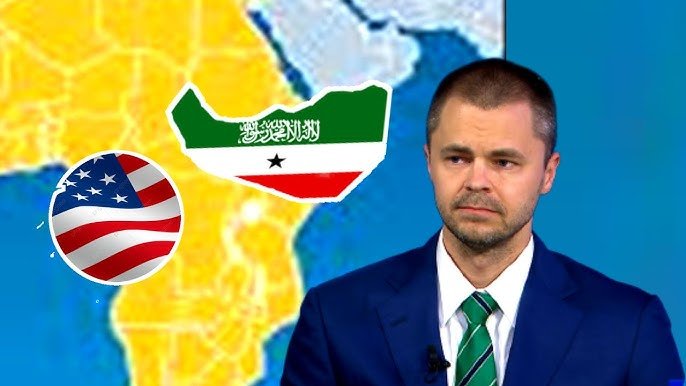
A groundbreaking investigation, corroborated by a massive 745-page report from the U.S. Congress, reveals a startling truth: Somaliland has been under sustained fire not just from Mogadishu, but from Beijing. The chaotic events of the last two years—the violence in Lasanod, the unrest in Awdal, and the relentless diplomatic pressure from Somalia—are not isolated incidents.
They are the kinetic symptoms of a superpower proxy war where China is using Somali instability to punish Hargeisa for its relationship with Taiwan.
The Beijing Doctrine: Punish the Partner

The U.S. Congress report explicitly identifies China’s “assertive Red Sea diplomacy” as a mechanism designed to “undercut Taiwan and Somaliland ties and undermine Somaliland’s recognition.”
This confirms what intelligence analysts have long suspected: Beijing has no inherent quarrel with the existence of Somaliland or its people. Its aggression is purely transactional and strategic.
China’s singular red line is Taiwan. When Hargeisa forged diplomatic ties with Taipei in 2020, it inadvertently placed itself in the crosshairs of the Chinese Communist Party’s global strategy to isolate the island democracy.
Our investigation indicates that the destabilization campaigns in Lasanod and Awdal were not organic, localized grievances but were inflamed by external financing.
Credible intelligence suggests that funds flowing through Mogadishu—officially earmarked for “development” or “security cooperation” from Chinese state-linked entities—have been diverted to fuel militias and incite unrest in Somaliland’s border regions.
The strategic goal is simple: make Somaliland appear ungovernable and unstable, thereby eroding the case for international recognition and punishing Hargeisa for its “defiance” in hosting Taiwan.
Somalia as the Proxy Spoiler
The Federal Government of Somalia (FGS) has proven to be a willing, albeit cynical, proxy in this grand game. Lacking the military or economic power to reintegrate Somaliland by force, Mogadishu has found a powerful patron in Beijing.
By aligning its anti-Somaliland rhetoric with China’s “One China” policy, the FGS secures financial backing and diplomatic cover from a permanent member of the UN Security Council.
This alliance explains the FGS’s renewed confidence and aggressive posturing in international forums. Somalia is not acting alone; it is acting with the assurance of Chinese protection.
The recent diplomatic offensives by Mogadishu to block Somaliland’s international engagements are directly supported by Chinese diplomatic machinery, which views every step toward Somaliland’s recognition as a victory for Taiwan and a loss for Beijing.
The Resource War: Minerals and Space
The U.S. report sheds light on why China cares so deeply about the Horn of Africa beyond the Taiwan issue. Africa is crucial for China’s access to strategic minerals (like lithium and rare earths found in Somaliland) and its race to dominate space. The geography of the Horn is ideal for tracking satellites and space assets.
By keeping Somaliland unstable and unrecognized, China ensures that Western powers, particularly the U.S., cannot easily access these strategic resources or establish stable partnerships for space and technology infrastructure in Berbera or Hargeisa.
The Unintended Frontline
Somaliland has been fighting a war it didn’t fully realize it was in. The enemy is not just the militia in the east or the bureaucrat in Mogadishu; it is a global superpower leveraging its vast resources to enforce a diplomatic blockade.
However, this revelation also contains a powerful strategic opportunity. The U.S. Congress’s explicit recognition of this dynamic signals that Washington is waking up to the reality.
Somaliland is no longer just a “breakaway region” in the eyes of the U.S.; it is a democratic ally under attack by America’s primary global rival. This shifts the narrative in Washington from humanitarian concern to national security interest.
The path forward for Hargeisa is to leverage this reality. Somaliland must present itself not as a victim of local conflict, but as a resilient, democratic bulwark against Chinese hegemony in the Red Sea.
The attacks on Awdal and Lasanod are not signs of internal failure; they are the scars of a nation standing on the right side of the most important geopolitical struggle of the 21st century.