The travel ban is back—broader, tougher, and politically charged. Five more countries are out, dozens face new limits, and the message from Washington is unmistakable.
The Trump administration on Tuesday moved to significantly expand its travel ban, adding five countries to the list of nations whose citizens are barred from entering the United States and imposing new restrictions on travelers from more than a dozen others.
The decision marks another escalation in the administration’s drive to tighten immigration controls and revive one of President Donald Trump’s most controversial first-term policies.
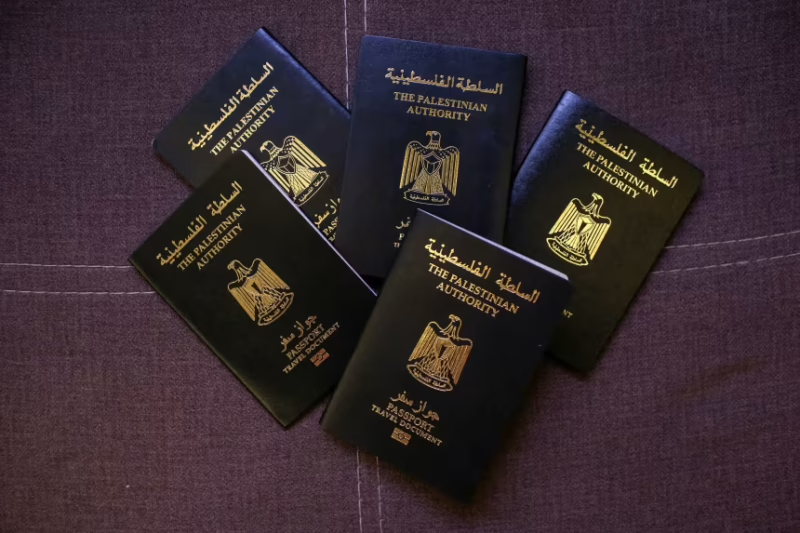
Under the new proclamation, nationals from Syria, South Sudan, Burkina Faso, Mali and Niger are now fully banned from visiting the United States. The White House also announced a complete restriction on travel by individuals using travel documents issued by the Palestinian Authority, a move likely to draw international scrutiny.
The expansion follows the recent arrest of an Afghan national accused of shooting two National Guard troops near the White House over the Thanksgiving weekend. While administration officials have not directly linked the case to the policy shift, the timing underscores how security incidents continue to shape immigration decisions.
The new measures build on a sweeping announcement Trump made in June, when he reinstated a hallmark policy from his first term by banning travelers from 12 countries and imposing partial restrictions on seven others.
That earlier list included Afghanistan, Myanmar, Chad, the Republic of Congo, Equatorial Guinea, Eritrea, Haiti, Iran, Libya, Somalia, Sudan and Yemen, with heightened restrictions placed on Burundi, Cuba, Laos, Sierra Leone, Togo, Turkmenistan and Venezuela.
Tuesday’s update goes further. In addition to the five newly banned countries, the administration added 15 more nations to the list facing partial travel restrictions: Angola, Antigua and Barbuda, Benin, Côte d’Ivoire, Dominica, Gabon, Gambia, Malawi, Mauritania, Nigeria, Senegal, Tanzania, Tonga, Zambia and Zimbabwe.
In justifying the move, the administration cited what it described as systemic problems in many of the affected countries, including widespread corruption, unreliable civil documentation and weak criminal record systems. Officials also pointed to high rates of visa overstays, refusals by some governments to accept deported nationals, and political instability that complicates U.S. vetting efforts.
“The restrictions and limitations imposed by the Proclamation are necessary to prevent the entry of foreign nationals about whom the United States lacks sufficient information to assess the risks they pose,” the White House said, framing the policy as essential to national security, counterterrorism and immigration enforcement.
The Afghan suspect in the Thanksgiving shooting has pleaded not guilty to murder and assault charges. Still, the broader policy shift suggests the administration is once again using border security as both a governing priority and a defining political signal—one with far-reaching diplomatic and humanitarian consequences.