Career diplomats out. Loyalists in. Washington’s foreign service enters a dangerous new phase.
The Trump administration has quietly recalled nearly 30 U.S. ambassadors and senior overseas diplomats, signaling a sharp escalation in its campaign to reshape the State Department around political loyalty rather than professional neutrality, according to multiple diplomatic sources.
The recall—confirmed by current and former senior officials—has raised alarm precisely because it targets career Foreign Service officers, who are traditionally retained across administrations to preserve continuity and insulate diplomacy from partisan politics. Such sweeping removals are rare, and critics say they amount to a politicization of America’s diplomatic corps.
Officials close to Donald Trump have framed the move as routine. A senior State Department official said ambassadors are “personal representatives of the president” and that Trump has the right to ensure U.S. envoys advance his “America First” agenda. The official confirmed the diplomats will be reassigned rather than fired.
But the scale and secrecy of the recalls tell a different story.
The effort aligns with the administration’s long-stated goal of dismantling what it calls the “deep state,” a term critics argue is being used to justify purging experienced professionals. Diplomats interviewed described confusion, fear, and a lack of transparency, with recall orders delivered quietly over the weekend and staff scrambling to compile lists of who was removed—and why.
“This is a travesty,” said one former senior official who spoke with affected ambassadors. “It’s random. No one knows why they were pulled or spared.”
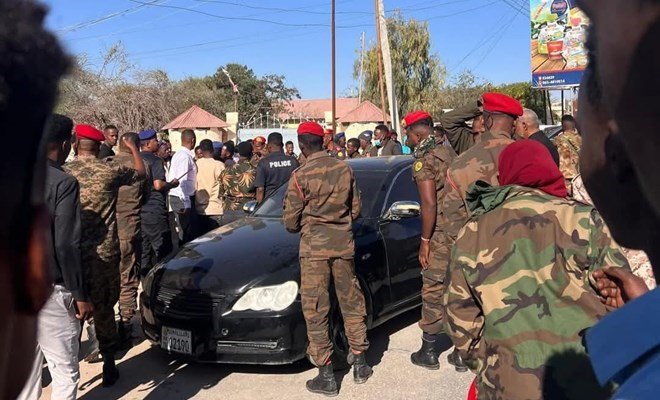
Africa was hit hardest. Around a dozen chiefs of mission were recalled from Niger, Uganda, Senegal, Somalia, Côte d’Ivoire, Mauritius, Nigeria, Gabon, Congo, Burundi, Cameroon, and Rwanda. Additional recalls affected U.S. missions in Egypt and Algeria, while European posts including Slovakia, Montenegro, Armenia, and North Macedonia also saw removals.
The American Foreign Service Association, which represents U.S. diplomats, issued a sharply worded statement expressing “deep concern.” AFSA warned that the promotion process now appears skewed to elevate diplomats perceived as politically aligned with the administration—penalizing those who faithfully served under previous governments.
“Foreign Service staff who dutifully executed the policies of a previous administration should not be penalized,” the union said, adding that the department must explain how fairness is preserved when loyalty outweighs merit.
Democratic lawmakers echoed those concerns. Jeanne Shaheen, the ranking Democrat on the Senate Foreign Relations Committee, warned that recalling seasoned ambassadors amid roughly 80 vacant posts “hands U.S. leadership to China and Russia.”
Secretary of State Marco Rubio confirmed last week that hundreds of diplomats had been nominated for promotion after the administration rewrote evaluation criteria and reshaped promotion panels—moves tied to the rollback of Diversity, Equity, and Inclusion policies across federal agencies.
Behind the scenes, powerful White House figures such as Stephen Miller have pushed to place ideological allies inside the State Department, particularly to advance stricter immigration enforcement and nationalist policy goals.
For critics, the recalls mark a dangerous turning point. Diplomacy, they argue, depends on credibility, institutional memory, and the perception of professionalism. Turning ambassadors into political enforcers risks weakening U.S. influence abroad—at a moment of intensifying global competition.
What emerges is not merely a reshuffle, but a redefinition of American diplomacy itself: less insulated, more ideological, and increasingly aligned with the political priorities of one administration. Whether that shift strengthens U.S. power—or erodes it—may soon be tested on the world stage.