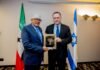
From Hargeisa to Davos: Somaliland at Davos: President Irro’s Arrival Signals a New Era of Global Legitimacy.
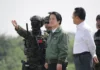
In global diplomacy, optics often matter as much as formal treaties. This week, as a helicopter touched down in the snow-covered enclave of Davos-Klosters, Switzerland, a single image quietly altered the political gravity of the Horn of Africa.
President Abdirahman Mohamed Abdullahi “Irro,” stepping onto Alpine ground at the World Economic Forum, did more than attend a conference. His arrival sent a message that resonated far beyond the Swiss mountains: Somaliland is no longer knocking at the door of international legitimacy — it is walking through it.
Davos is not just another summit. It is a gatekeeper of relevance. The World Economic Forum convenes leaders who shape capital flows, security architectures, and the future of global governance. Invitations are not extended to “regional administrations” or symbolic entities. They are reserved for actors deemed capable of influencing the world’s direction.
That is why the absence of Somalia — and the presence of Somaliland — carried such political weight.
For Mogadishu and Somaliland’s long-standing detractors, the shock was not merely symbolic. It was structural. While Somalia remains mired in dependency politics and internal fragmentation, Somaliland’s head of state was entering the room where global priorities are debated, funded, and implemented.
This is the “Spirit of Dialogue” made tangible — a dialogue in which Hargeisa is now formally present.
President Irro’s public message to Somalilanders spoke of “peace, prosperity, and goodwill.” But the subtext was unmistakable: sovereignty is no longer a claim; it is a practiced reality.
By linking his greetings to an image from Davos, Irro anchored Somaliland’s local struggle for recognition to the global pursuit of stability and growth. For citizens at home and in the diaspora, the image validated more than three decades of self-governance, democratic transitions, and economic resilience built without international recognition — and now, increasingly, without apology.
The theme of this year’s WEF, “Connecting leaders to make sense of global challenges,” aligns almost surgically with Somaliland’s emerging geopolitical posture. As Somaliland navigates the post-recognition phase following Israel’s recognition and its deepening integration into the UAE-led Red Sea security and trade architecture, Davos offers a critical platform to translate political legitimacy into material power.
Three strategic priorities stand out.
First, engaging global capital. Somaliland is signaling a shift from aid dependency toward direct investment, placing Berbera, logistics, energy, and digital infrastructure into conversations with sovereign wealth funds and multinational CEOs.
Second, solidifying alliances. In a neutral, high-level setting like Davos, Somaliland can quietly reinforce ties with Abraham Accords partners and maritime security stakeholders without the diplomatic noise that often surrounds bilateral visits.
Third, defining the Horn of Africa’s future. By positioning Berbera and the corridor linking Ethiopia to the Gulf as a cornerstone of global supply chains, Somaliland inserts itself into discussions previously dominated by Djibouti, Kenya, and fragile federal Somalia.
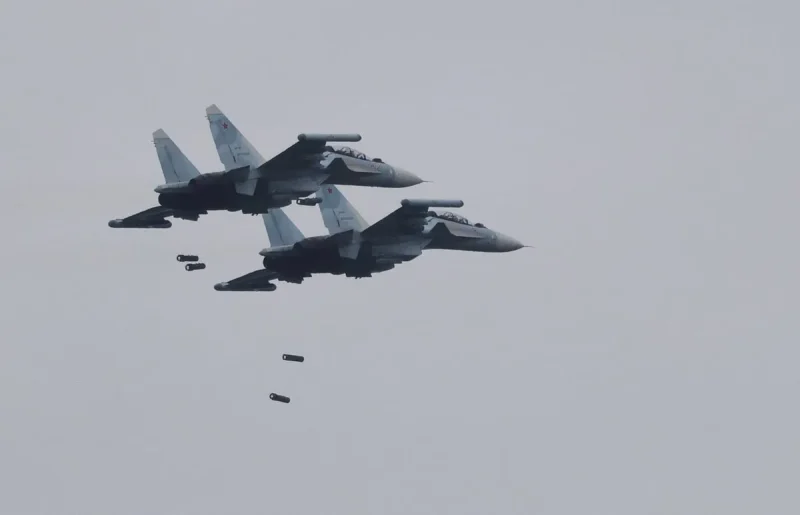
The symbolism could not be sharper. The roar of F-35s over Hargeisa days earlier spoke to territorial security. The hum of helicopter blades in Davos spoke to the expansion of influence. One secures the nation. The other projects it.
President Irro’s presence in Switzerland reflects more than diplomatic ambition. It represents a new Somaliland doctrine: security at home, legitimacy abroad, and relevance everywhere in between.
Somaliland has not simply arrived in Switzerland. It has arrived on the global stage — not as a petitioning territory, but as a contributing actor in shaping tomorrow’s world.
And for the first time in modern history, Somaliland is no longer asking to be recognized.
It is being recognized by where it stands.