US President Says Historic Alliance Has Changed After UK Hesitation Over Iran Strikes.
From “special relationship” to public frustration — is the Atlantic alliance cracking?
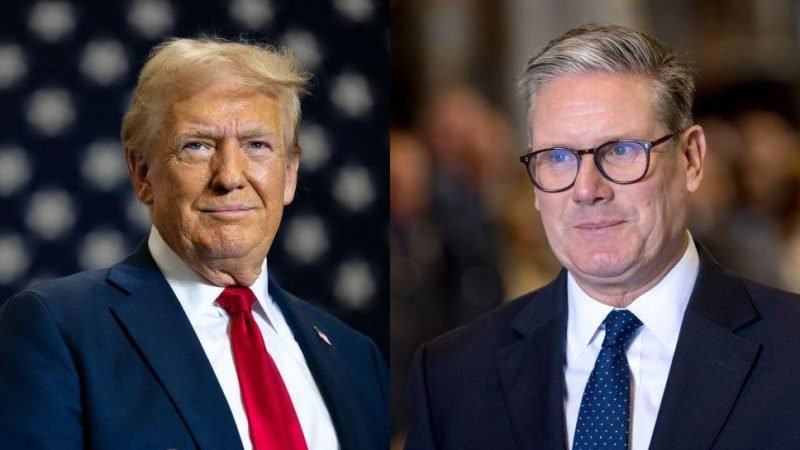
U.S. President Donald Trump said the once “most solid relationship” between Washington and London is “not like it used to be,” signaling a rare public strain in the transatlantic alliance as the Middle East conflict widens.
In an interview with The Sun, Trump criticized British Prime Minister Keir Starmer for initially refusing to allow the United States to use British military bases in operations connected to strikes on Iran.
“This was the most solid relationship of all,” Trump said. “Now we have very strong relationships with other countries in Europe,” singling out France and Germany.
He described Starmer as “not helpful” and said he never expected such hesitation from the United Kingdom. Though he later acknowledged Britain’s decision to permit limited use of bases for what London described as a specific defensive purpose, Trump argued that the approval “took far too much time.”
The disagreement touches on politically sensitive terrain in Britain. Memories of former Prime Minister Tony Blair’s support for the 2003 Iraq invasion continue to shape public and parliamentary caution over Middle East interventions.
Addressing Parliament, Starmer defended his position, saying his duty was to act in Britain’s national interest. “We all remember the mistakes of Iraq,” he said, stressing that any UK involvement must have a lawful basis and a clear strategic plan.
Downing Street confirmed that British bases, including RAF Akrotiri in Cyprus, were not being used by U.S. bombers for offensive operations. The Cypriot base was itself struck by an unmanned drone, which Starmer said had been launched prior to Britain’s policy decision.
The exchange marks one of the sharpest rhetorical breaks in U.S.-UK relations in years. While the alliance remains operationally intact — particularly within NATO — the public tone reflects deeper unease over strategy, escalation and political risk.
For Washington, speed and alignment are strategic necessities in a fast-moving conflict. For London, caution carries domestic and legal weight. The friction underscores a broader reality: even long-standing alliances can bend under the pressure of war.