As Hormuz Disruption Deepens, Arab Gulf Leaders Urge Washington to Finish the Job While Avoiding Direct Entry Into War.
They didn’t ask for this war — but now Gulf leaders fear living with a half-finished one.
The Gulf Arab states did not press Washington to launch its war on Iran. But as missiles strike airports, oil terminals and commercial hubs from Doha to Abu Dhabi, many now fear something worse than escalation: an unfinished campaign.
According to regional sources and diplomats, leaders across the Gulf increasingly believe that if the United States and Israel halt operations before decisively degrading Iran’s military capacity, the region could face a permanent state of vulnerability.
Tehran’s ability to disrupt the Strait of Hormuz — the artery carrying roughly one-fifth of global oil — has transformed abstract security concerns into immediate economic threats.
Abdulaziz Sager of the Gulf Research Center described a turning point in sentiment. Gulf governments initially opposed war. But once Iranian missiles and drones struck their territory, the calculus shifted. For some policymakers, the question is no longer whether Iran should be constrained — but whether Washington will see the campaign through.
Yet the Gulf faces a strategic paradox.
While pressing the U.S. not to leave Iran militarily intact, most Gulf states are reluctant to join the fight directly. Collective action might dilute exposure; unilateral intervention would invite retaliation.
The six members of the Gulf Cooperation Council — Bahrain, Kuwait, Oman, Qatar, Saudi Arabia and the United Arab Emirates — have held limited consultations, but no unified military posture has emerged.
The United Arab Emirates has publicly emphasized restraint, stating it does not seek escalation. Saudi Arabia, long Tehran’s principal rival, has signaled red lines — particularly attacks on major oil infrastructure or desalination plants — but appears intent on calibrating any response.
The underlying fear is clear: a weakened but not neutralized Iran could periodically hold the Gulf’s energy lifeline hostage.
The 2019 strike on Saudi oil facilities at Abqaiq and Khurais demonstrated how vulnerable even sophisticated defenses can be. Today’s disruptions go further, shaking the region’s carefully cultivated image as a stable hub for trade, tourism and investment.
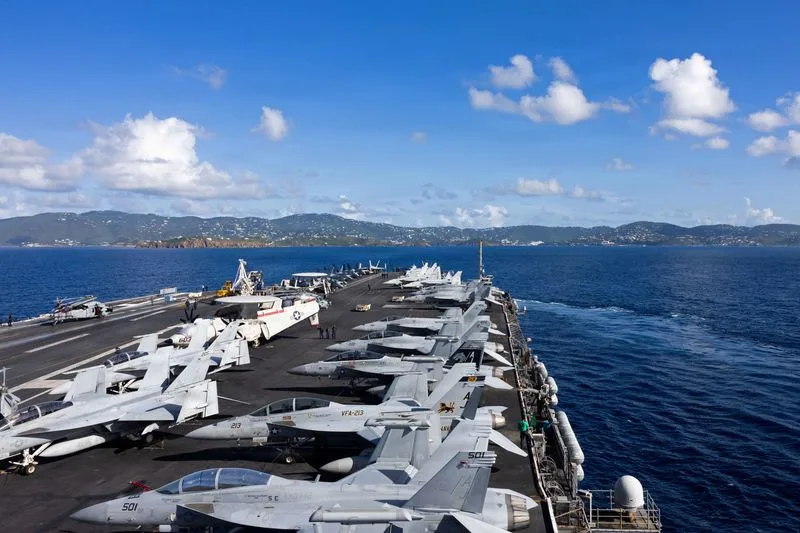
Washington, for its part, is urging broader support. President Donald Trump has called for international participation in securing Hormuz. But enthusiasm is limited. Many regional leaders worry that deeper alignment with a U.S.-led offensive would magnify the very risks they seek to contain.
Iran’s leverage lies not only in missiles but in geography. Control over maritime chokepoints grants outsized influence over global markets. Even sporadic disruption sends oil prices soaring and rattles economies far beyond the Gulf.
The Gulf’s dilemma is therefore existential and political at once. Neutralizing Iran decisively could restore deterrence — but risks widening war. Leaving Iran partially intact may preserve short-term calm — but at the cost of enduring insecurity.
For now, Gulf capitals appear to be walking a narrow path: urging Washington to degrade Tehran’s capabilities while avoiding a direct plunge into the conflict. Whether that balance can hold may determine not only the outcome of this war, but the strategic architecture of the Gulf for years to come.