Le Monde’s report on a UAE-built military facility at Berbera Airport shows why Somaliland’s geography is becoming central to Red Sea security. For Hargeisa, defense integration is not a luxury — it is survival.
Berbera’s Defense Equation
Why Somaliland’s Security Integration Is Becoming a Question of Survival
Berbera is no longer only a port city. It is becoming one of the most closely watched security locations in the Red Sea system.
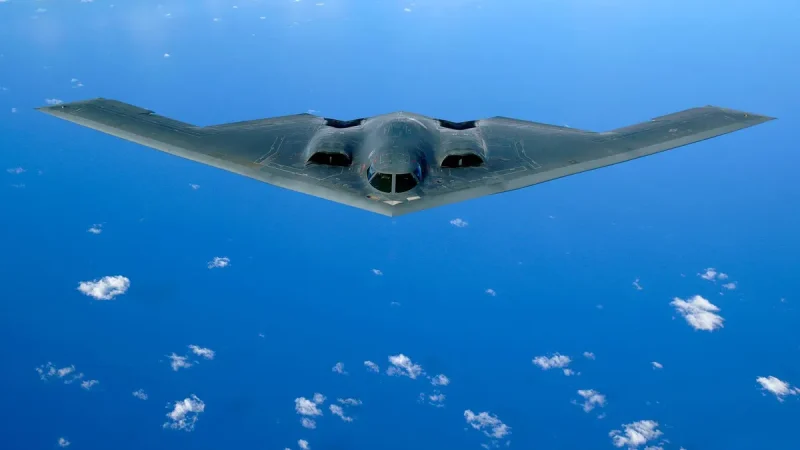
A new Le Monde report says the United Arab Emirates is quietly building a military facility at Berbera Airport for possible use by Emirati, American, and Israeli forces. The report, based on satellite imagery and security sources, says major excavation work has taken place south of the airport runway since October 2025, including at least 18 trenches that analysts believe may be linked to underground storage for ammunition or fuel.
Le Monde also reported that raised earth platforms may indicate preparations for air-defense systems.
The report has already triggered regional attention because it connects three sensitive issues at once: Somaliland’s recognition campaign, Israel’s Red Sea security needs, and the growing military competition around the Bab al-Mandab Strait.
Somaliland, Israel, and other officials have previously denied the existence of a formal Israeli base agreement. That matters, and any responsible analysis must separate confirmed facts from interpretation. But the larger strategic picture is becoming harder to ignore. Berbera’s location, airport infrastructure, port facilities, and proximity to Yemen make it valuable to any power concerned about Red Sea security.
Le Monde noted that Berbera Airport has a runway of more than four kilometers and sits near the southern entrance to the Red Sea, a corridor that has become increasingly important as Houthi threats continue to affect maritime calculations.
For Somaliland, the issue is not simply whether a foreign base exists today. The deeper question is whether Somaliland can survive in a region where its neighbors and rivals are arming, aligning, and recalculating.
This is the defense equation facing Hargeisa.
Somaliland’s security thinking is shaped by geography, memory, and political reality. The country sits near one of the world’s most strategic waterways, but it remains largely unrecognized. It has built institutions since 1991, but it faces a Somalia that continues to reject its independence. It has gained diplomatic momentum through Israel’s recognition, but that same recognition has intensified opposition from Mogadishu, Turkey, Egypt, and others.
This is why defense integration is not a luxury for Somaliland. It is an insurance policy.
The memory of 1988 remains central to Somaliland’s national security culture. Human Rights Watch has documented how the war in the north claimed tens of thousands of civilian lives, displaced huge numbers of people, and devastated Somaliland’s cities and communities. Amnesty International has also described the destruction of Hargeisa through air bombardments and the killing of thousands during the Siad Barre era.
That history taught Somaliland a hard lesson: security cannot be outsourced to promises. International sympathy often arrives late. Regional institutions can fail. Neighbors can become threats. A state that cannot deter danger may be forced to depend on the goodwill of others.
That is why Berbera matters.
A secure Berbera gives Somaliland more than military depth. It gives the country strategic relevance. It connects Somaliland to Red Sea security, Gulf logistics, counterterrorism planning, maritime monitoring, and global trade protection. It tells outside powers that Somaliland is not merely asking to be recognized; it is offering something valuable in return.
The timing also matters. Israel’s recognition of Somaliland in December 2025 created a new diplomatic reality and triggered a strong backlash. AP reported that tens of thousands of Somalis protested against Israel’s decision, while Somalia, Turkey, and more than 20 other countries condemned the move. Turkey’s president supported Somalia’s position and described Israel’s recognition as destabilizing, according to AP’s summary of the diplomatic reaction.
At the same time, Somalia has been deepening defense cooperation with Egypt and Turkey. Reuters reported in December 2024 that Egypt would contribute troops to AUSSOM, Somalia’s African Union peacekeeping mission, after a request from Somalia and the AU Peace and Security Council. The same report said Egypt had provided weapons and ammunition, including anti-aircraft guns and artillery, under a joint security pact with Somalia.
This does not mean war is inevitable. It does mean Somaliland must think seriously about deterrence.
The regional balance has shifted. Somalia’s opposition to Somaliland is no longer only diplomatic. It is now supported by stronger military partnerships, foreign training, and regional alignments shaped by larger disputes involving Ethiopia, Egypt, Turkey, Israel, and the Red Sea.
For Somaliland, the concern is not only invasion. The concern is pressure: diplomatic containment, military signaling, information warfare, economic isolation, and attempts to make recognition too costly for foreign partners.
This is where Berbera becomes central.
A fortified, internationally connected Berbera changes the calculation. It tells opponents that Somaliland is not isolated. It tells partners that Somaliland can provide a stable forward position near a dangerous chokepoint. It tells investors that security infrastructure is being built around one of the Horn of Africa’s most important gateways.
But this must be managed carefully.
Somaliland should not present Berbera as an offensive platform against its neighbors. That would give opponents an easy propaganda weapon. The stronger message is defensive and international: Berbera supports Red Sea stability, maritime security, counterterrorism cooperation, lawful trade, and deterrence against threats that could destabilize the region.
The distinction is important.
A responsible security partnership strengthens the state without turning the country into a battlefield. It protects Somaliland without dragging it into wars it did not choose. It raises the cost of aggression without inviting reckless escalation.
This is the balance Hargeisa must maintain.
The UAE has long been part of Berbera’s strategic transformation. Le Monde reported that the UAE signed a defense agreement with Somaliland in 2017 that included military use of the airport, and that the Emirati role expanded through runway renovation, military hangars, and maritime facilities near the port.
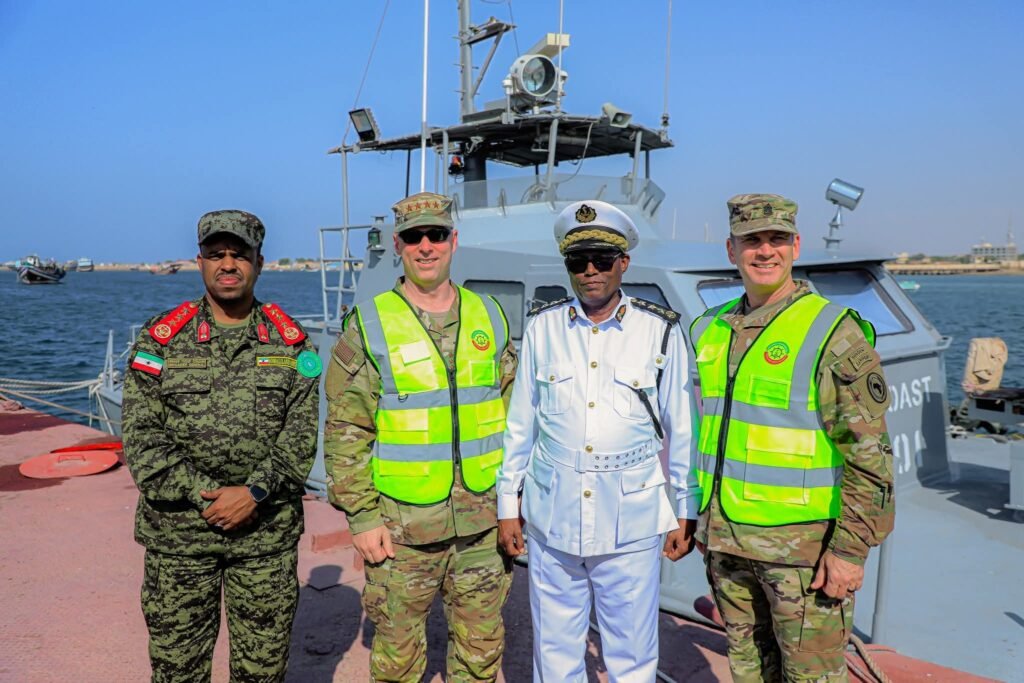
The United States also has reasons to pay attention. Le Monde reported that AFRICOM delegations have frequently visited the site and noted that Washington has long been interested in alternatives to Djibouti, where the U.S. base sits close to China’s first overseas military base.
For Israel, the logic is even clearer. The Red Sea has become a direct security theater because of Houthi threats and Iran-backed maritime pressure. A presence near the Gulf of Aden would give Israel and its partners greater intelligence depth, logistical flexibility, and monitoring capacity near Yemen and Bab al-Mandab.
For Somaliland, the strategic opportunity is significant. But so are the risks.
The opportunity is that Somaliland can become indispensable to major powers. Recognition often follows relevance. If Berbera becomes a trusted security and logistics node, Somaliland’s argument for statehood becomes stronger. It is no longer only a moral or historical case. It becomes a security case.
The risk is that Somaliland becomes too dependent on military alignment while neglecting public consent, economic benefits, and institutional oversight. Security cooperation must not be hidden from the public in a way that allows fear and misinformation to spread.
The government should explain the national interest clearly: what Somaliland gains, what limits exist, how sovereignty is protected, and how security partnerships connect to jobs, investment, and recognition.
This is where public communication matters.
If the public sees only foreign uniforms and secret construction, opponents will define the story. If the public understands Berbera as part of a national survival strategy — linked to deterrence, recognition, economic confidence, and Red Sea stability — the story becomes stronger.
Somaliland must also make sure that defense integration produces domestic benefits. Security infrastructure should be connected to local employment, airport development, engineering training, logistics capacity, emergency response systems, cybersecurity, and border protection. A strategic base should not become an isolated foreign island. It should strengthen Somaliland’s own institutions.
The larger message is simple: Somaliland cannot afford naïve neutrality in a region being militarized by others.
Egypt is moving deeper into Somalia’s security architecture. Turkey is expanding its military, maritime, and economic role in Mogadishu. The Houthis continue to affect Red Sea shipping calculations. Iran’s regional networks remain active.
The United States and Israel are searching for reliable partners near key maritime corridors. The UAE is building long-term influence through ports, logistics, and security platforms.
In that environment, Somaliland has two choices.
It can remain exposed, hoping that geography alone protects it.
Or it can turn geography into deterrence.
Berbera is the center of that choice.
The goal should not be war. The goal should be to prevent war by making aggression too costly, instability too dangerous, and Somaliland too valuable to ignore.
That is the logic of defense integration.
It is not about surrendering sovereignty. It is about protecting it through partnerships that match the realities of the region. For a small, unrecognized state, the worst position is isolation. The stronger position is disciplined alignment: clear agreements, public explanation, institutional oversight, and strategic benefit.
Somaliland must handle this moment with seriousness. It should neither deny reality blindly nor boast recklessly. It should present Berbera as a responsible security gateway for the Red Sea, a stabilizing partner for global commerce, and a defensive asset for a nation that remembers what happens when deterrence fails.
The world is discovering Berbera because the Red Sea has become dangerous.
Somaliland has understood Berbera’s value for much longer.
Strategic Assessment: The Le Monde report on Berbera Airport shows that Somaliland’s geography is becoming part of a larger Red Sea security architecture involving the UAE, the United States, and Israel. While formal base arrangements remain contested and officially denied, the strategic logic is clear. Somaliland faces a regional environment shaped by Somalia’s rejection of its independence, Egypt’s security role in Somalia, Turkey’s expanding influence, Houthi maritime threats, and great-power competition near Bab al-Mandab.
For Somaliland, defense integration is not a political luxury. It is a deterrence strategy rooted in history, geography, and survival. The challenge is to build security partnerships that protect sovereignty, inform the public, avoid reckless escalation, and turn Berbera into a stabilizing asset for Somaliland and the wider Red Sea.
By WARYATV Intelligence Desk | waryatv@waryatv.com
Strategic Assessments examine major geopolitical developments, separating events from implications and identifying the forces shaping what comes next.