A sweeping federal enforcement campaign, a wave of high-profile fraud prosecutions and escalating anti-Somali rhetoric from former President Donald Trump have converged in Minnesota, placing the nation’s largest Somali community under intense pressure and heightened fear.
Since Dec. 1, Immigration and Customs Enforcement has detained 12 people in the Twin Cities as part of “Operation Metro Surge,” a Department of Homeland Security initiative officials say targets individuals they consider threats to public safety or priorities for removal.
Yet immigration lawyers and community advocates report a different picture: Somali residents with no criminal history being detained during routine check-ins, despite years of compliance with immigration procedures.
“These are people who have done everything the government asked of them,” Minneapolis attorney David Wilson said. “They checked in, they brought their documents, and still they were taken into custody.”
Across Somali neighborhoods, fear is altering daily life. Families report avoiding schools, mosques and workplaces. Community centers—particularly Cedar-Riverside’s Brian Coyle Center, known as “Little Mogadishu”—have become gathering places for urgent legal briefings, know-your-rights sessions and crisis support.
“It is about targeting a whole community,” said Amano Dube, the center’s director. “People are afraid to leave their homes.”
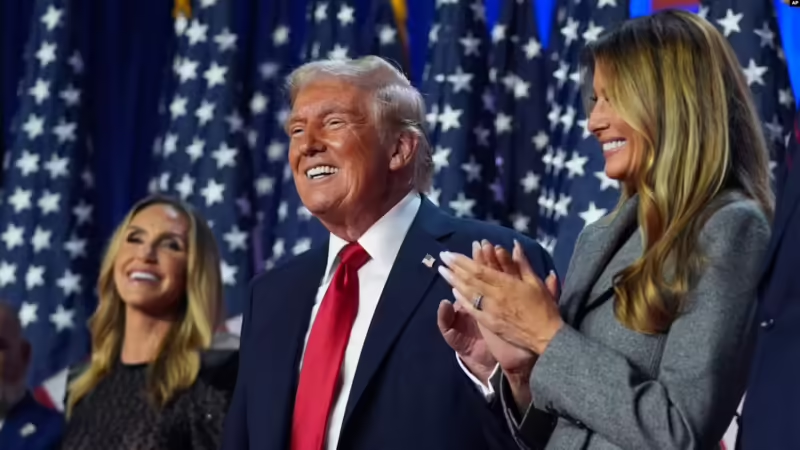
Trump’s recent remarks have amplified the anxiety. He has called Somali immigrants “garbage,” accused them of contributing “nothing,” and tied them to high-profile fraud cases that federal prosecutors have pursued since 2022.
In those cases—spanning pandemic-era nutrition funding, housing stabilization and autism therapy—many defendants are of Somali ancestry, though others are not.
No evidence has been publicly presented linking the schemes to terrorism, despite speculation from conservative lawmakers.
Rep. Ilhan Omar, who represents Minneapolis, warned that Trump’s rhetoric is dehumanizing her community. “These are Americans he is calling garbage,” she said. “This kind of hateful rhetoric can lead to dangerous actions.”
Local officials, from Minneapolis Mayor Jacob Frey to St. Cloud city leaders, have begun openly pushing back, emphasizing that law enforcement must separate criminal accountability from broad cultural suspicion. At the same time, ICE has described Minnesota as having “a large illegal alien community,” insisting its actions are targeted and legally grounded.
For many Somali Minnesotans—refugees who fled dictatorship, war and famine—the moment feels painfully familiar. “It feels like living under dictatorship,” said Minneapolis council member Jamal Osman. “People have déjà vu of the civil war they escaped.”
Yet community leaders say the response is resilience, not retreat. “We are not undocumented,” said St. Cloud social worker Farhiya Iman. “We are not going anywhere.”