Trump’s Armada Tests Iran’s China-Fuelled Missile Rebuild in Post-Protest Standoff.
The streets of Tehran may be quiet again, scrubbed clean of blood and broken slogans, but the crisis between Washington and Tehran has not receded—it has hardened.
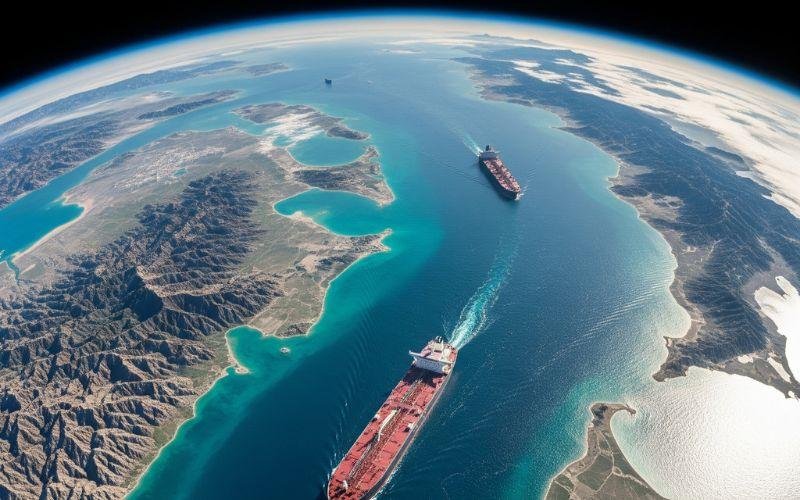
As Iran’s protest movement collapses under brutal repression, Donald Trump appears to be shifting from rhetorical pressure to military positioning. The USS Abraham Lincoln strike group has gone dark en route to the Arabian Sea. Additional carrier groups are moving through the Mediterranean and Atlantic. U.S. F-15s have quietly redeployed from Britain to Jordan. This is not theater. It is preparation.
The paradox is stark: Trump promised rescue, but arrived after the rebellion was crushed. Thousands are dead, tens of thousands imprisoned. For many Iranians, American “help” feels less like salvation than a belated gesture aimed not at the people, but at the regime.
Yet Washington’s focus is no longer protest. It is deterrence—and possibly destruction.
What has shifted the balance is not merely U.S. firepower, but Iran’s rearmament. Intelligence assessments suggest Tehran, aided by Chinese chemical imports, has rebuilt solid-fuel production capacity sufficient for hundreds of ballistic missiles. The regime, humiliated by last year’s Israeli decapitation strikes, has gone underground—literally and strategically. Missile units are dispersed. Leadership rotates through safe houses. Communications are hardened. Iran is no longer improvising; it is entrenching.
Trump reportedly hesitated last week on ordering strikes, pressured by Gulf states fearful of retaliation and by Israel’s concern that its defenses could not absorb a sustained missile assault. Those constraints are now being addressed. Patriot and THAAD systems are reinforcing U.S. bases. Israel is recalibrating its tolerance threshold. In effect, Washington is preparing not just to strike—but to absorb the consequences.
That is the most dangerous phase of escalation.
Iran’s missile program, though degraded, remains formidable. Dozens of missiles penetrated Israeli defenses during last year’s exchanges. Even limited breach rates can inflict outsized damage on desalination plants, energy hubs, and civilian infrastructure across the Gulf. Missile warfare favors offense. And Tehran knows it.
The regime’s calculus has changed. Having lost legitimacy at home, it now relies almost entirely on coercion and external defiance to survive. Where restraint once served diplomatic survival, ferocity now serves political continuity. Friday sermons in Tehran no longer speak of patience, but of targeting “every base, every interest.”
China’s role is equally revealing. Beijing has not armed Iran directly with air-defense systems, but it has enabled missile production by supplying chemical precursors. That is strategic ambiguity in action—fueling confrontation without triggering accountability.
Trump now faces a credibility trap of his own making. After issuing explicit threats, restraint risks appearing as retreat. He has seen what Obama’s red line failure did to American deterrence. For Trump, inaction now would echo weakness.
Yet force carries its own costs. Airpower alone rarely topples regimes. Iran is not Libya. There are no advancing rebels, no collapsing institutions—only a hardened state capable of projecting pain across borders.
This standoff is no longer about protests or nuclear files. It is about whether deterrence still governs the Middle East—or whether escalation has become its new language.
And in that language, both sides are now fluent.