Hormuz Is Becoming the World’s Naval Front Line
ANALYSIS
The reported British-American effort to assemble a multinational naval force for the Strait of Hormuz marks a potentially decisive expansion of the US-Iran confrontation.
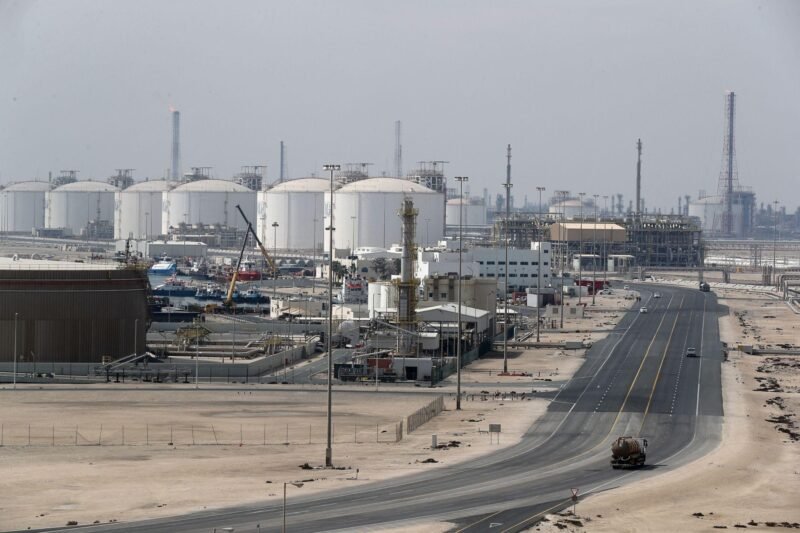
What began as a direct military struggle between Washington and Tehran is moving toward a broader contest over whether an international coalition can restore freedom of navigation through one of the world’s most important energy corridors.
Officials from as many as 40 countries could be invited to London to discuss the proposal, although no final decision has been made. The concept reportedly emerged from discussions between British Defence Secretary Wes Streeting and US Defense Secretary Pete Hegseth as concern grows in London that the situation in Hormuz is approaching a major escalation.
The proposal reflects urgency. It also exposes the scale of the strategic problem.
Building a coalition is politically achievable.
Securing Hormuz under sustained Iranian missile, drone, mine and fast-boat attacks would be far harder.
From Postwar Stabilization to Active Protection
Britain and France had previously promoted a multinational mission designed mainly for the period after active fighting ended.
That force would help reopen shipping routes, conduct mine-clearing operations and restore commercial confidence once an agreement or ceasefire made deployment possible. Earlier discussions attracted representatives from dozens of countries, while more than a dozen governments expressed a willingness to contribute under suitable conditions.
The new discussions appear more immediate.
Rather than planning only for post-conflict stabilization, Britain and the United States are now considering how an international force might protect vessels while the confrontation remains active.
That is a fundamentally more dangerous mission.
Mine clearance after a ceasefire is difficult but manageable. Escorting tankers while missiles, drones and anti-ship weapons remain operational could place participating countries directly inside the US-Iran war.
A multinational force would therefore need to answer a basic question: is it a neutral freedom-of-navigation mission, or a military coalition prepared to engage Iranian forces?
The distinction may exist diplomatically.
It may not survive the first attack.
Why Hormuz Cannot Be Secured by Numbers Alone
A coalition of 40 nations would produce political legitimacy and distribute the military burden. It would not necessarily guarantee safe passage.
Iran does not need to destroy a large number of warships or tankers to influence commercial behavior.
It needs only to demonstrate that it can occasionally penetrate naval defenses.
A successful drone strike, mine incident or missile attack could cause insurers to raise premiums, shipping companies to suspend voyages and crews to refuse passage. Recent attacks and falling vessel traffic have already demonstrated how quickly commercial activity can retreat when the risks become unacceptable.
Military control and commercial confidence are not the same thing.
A naval coalition could declare the strait open while shipowners continue to treat it as effectively closed.
That is one of Tehran’s greatest advantages.
Iran can impose economic disruption without achieving conventional naval supremacy.
The Interceptor Problem
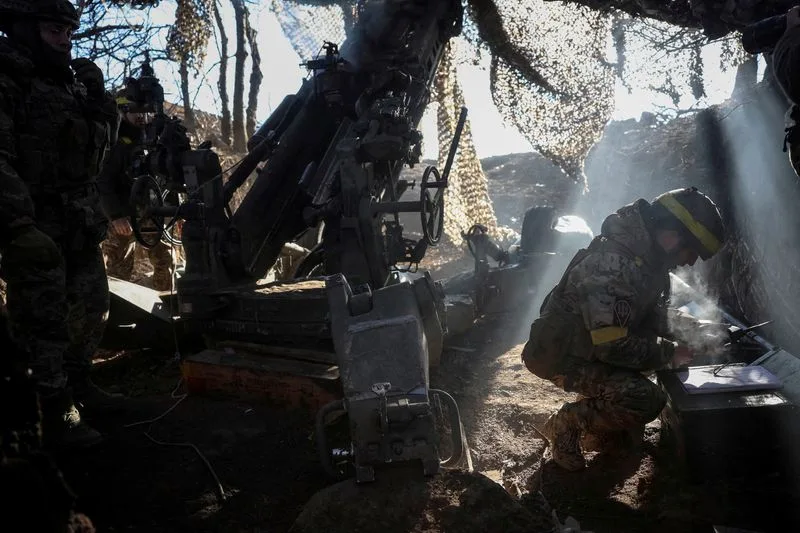
Reports that American commanders are becoming more selective about which Iranian missiles and drones they intercept reveal another important constraint.
According to US officials cited in American media, weapons assessed as unlikely to hit troops or critical facilities may be allowed to continue rather than consuming scarce defensive interceptors.
That does not necessarily indicate a collapse in American defenses. Modern air-defense operations routinely prioritize threats according to trajectory, expected impact and the value of the target being protected.
But the reported pressure on interceptor inventories highlights a central feature of prolonged missile warfare.
Iran can launch comparatively inexpensive drones and missiles. The United States and its allies often respond with sophisticated interceptors costing far more and available in much smaller quantities.
Over time, this creates an unfavorable economic exchange.
Iran does not have to overwhelm every defensive battery simultaneously. It can attempt to exhaust stocks gradually, force commanders to make difficult choices and create uncertainty over which bases, ports or vessels receive the highest level of protection.
A maritime coalition would expand the number of assets requiring defense.
That could relieve pressure by bringing additional allied ships and systems into the region. It could also enlarge the target set.
A Coalition Would Test Western Unity
The naval proposal is also a test of alliance politics.
Relations between London and Washington were strained after Britain initially restricted American use of British bases for offensive operations against Iran. London later permitted certain activities under a self-defense justification after Iranian attacks threatened US forces and regional allies.
The new British government has now emphasized its commitment to securing Hormuz and protecting global supply chains, indicating an effort to rebuild strategic coordination with Washington. Britain has also stated that its armed forces are prepared to defend national and allied interests against Iranian threats.
Yet countries considering participation will face different political calculations.
Gulf states depend directly on Hormuz and have an urgent interest in reopening it.
European governments want stable energy prices but may be reluctant to enter another Middle Eastern conflict.
Asian economies depend heavily on Gulf energy imports but have traditionally avoided major combat roles in the region.
Some countries may offer mine-clearing ships, surveillance aircraft or logistical support while refusing offensive missions.
A force involving 40 flags could therefore appear formidable while remaining constrained by dozens of separate rules of engagement.
Iran would search for those divisions.
The Danger of Mission Creep
The mission could begin with defensive escort operations.
It might not remain defensive.
Suppose an Iranian drone approaches a tanker under coalition protection. The escorting warship would likely intercept it.
If the drone was launched from an Iranian coastal facility, commanders might then demand authorization to destroy the launcher.
That could require strikes on radar sites, missile batteries and command centers.
Mine-clearing vessels could require air-defense cover. Air-defense operations could require suppression of Iranian coastal systems. Protecting those aircraft could require strikes deeper inside Iran.
Each defensive requirement creates another operational task.
The coalition could therefore move step by step from protecting shipping to attacking the military infrastructure threatening it.
This is how a maritime-security mission could become a multinational war campaign without any government formally announcing that transition.
Iran’s Strategic Response
Tehran would likely portray the coalition as a Western attempt to occupy or control the strait.
Iran has already sought to establish authority over shipping movements in Hormuz, a position rejected by the International Maritime Organization, whose governing council urged states not to recognize Iranian restrictions on international navigation.
Iran could respond to a coalition in several ways.
It could intensify missile and drone attacks, deploy additional mines, harass individual ships through fast boats or shift pressure toward weaker coalition members.
It could also expand operations outside Hormuz.
The Houthi threat to shipping near Bab el-Mandeb gives Iran’s regional network the ability to pressure maritime trade at the opposite end of the Arabian Peninsula. Oil markets have already reacted sharply to the combined danger facing Hormuz and the Red Sea.
A coalition concentrated in Hormuz could therefore find itself protecting one artery while instability spreads to another.
The Political Case for a Large Coalition
Despite the dangers, Washington and London have strong reasons to seek broad international participation.
Hormuz is not solely an American security interest.
A large share of the energy passing through the strait is destined for Asian markets. Gulf economies depend on it for exports. European consumers are exposed through global prices even when their direct imports come from elsewhere.
An international force would therefore distribute responsibility more fairly and prevent Tehran from portraying the confrontation as simply an American attempt to dominate the Gulf.
It could also strengthen deterrence.
Attacking a US vessel carries one set of consequences. Attacking ships from Europe, Asia and the Gulf could produce a far wider diplomatic response.
The challenge is ensuring that the coalition possesses enough military cohesion to make its political size meaningful.
Forty governments attending a conference is not the same as 40 governments accepting combat risk.
WARYATV Strategic Assessment
The emerging Hormuz coalition reflects both Western resolve and Western vulnerability.
The United States has the military capability to destroy Iranian ships, missile sites and coastal infrastructure. What it lacks is an inexpensive method of guaranteeing that every commercial vessel can cross the strait without risk.
Britain and France can add naval capacity and diplomatic legitimacy. Gulf and Asian partners can contribute ships, surveillance, logistics and political support.
But no coalition can completely remove the advantage Iran gains from geography.
Iran operates from a long coastline overlooking a narrow waterway. It can disperse missiles, drones, sensors and small boats while forcing its opponents to defend predictable shipping lanes.
The coalition would therefore not be designed to eliminate all danger.
Its realistic purpose would be to reduce the threat enough for commercial shipping and insurers to return.
That may require sustained military operations, substantial interceptor expenditure and a willingness to accept casualties.
WARYATV ASSESSMENT
A 40-nation naval force could become the largest international maritime-security operation in the Gulf in decades.
It could also become the mechanism through which the US-Iran war is internationalized.
The strategic question is not whether Britain and the United States can assemble enough ships.
It is whether they can create a coalition with unified command, credible rules of engagement, adequate missile-defense stocks and the political endurance to remain after the first casualties.
Hormuz can be patrolled by warships.
It can only be reopened when merchants believe those warships can protect them.
That difference will determine whether the coalition restores global trade—or becomes the next front in a widening war.