Iran Denounces Calls for Restraint as U.S. Reinforces Military Presence in the Middle East
Iran has firmly rejected calls for restraint from France, Germany, and Britain concerning its response to the assassination of a Hamas leader in Tehran. The European trio’s plea for calm was swiftly rebuffed by Tehran, which labeled the calls as “politically illogical” and contrary to international legal principles.
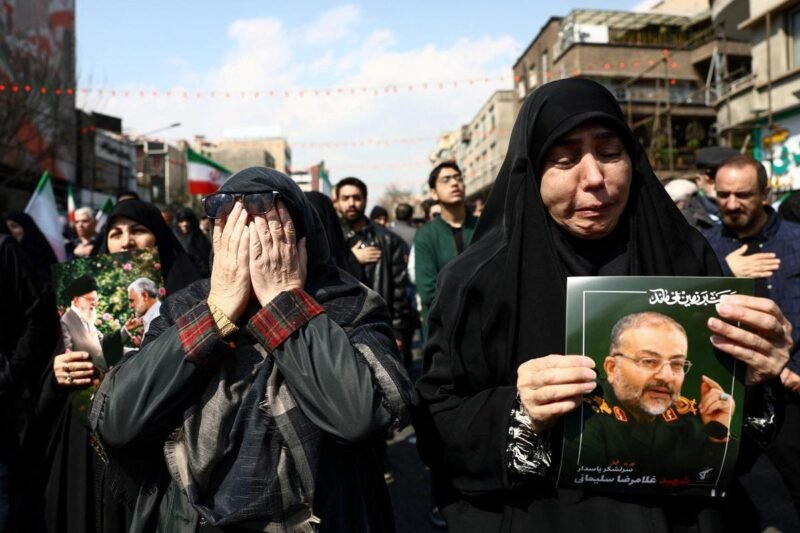
The assassination of Ismail Haniyeh, a prominent Hamas official, has ignited a fierce confrontation. Iran’s Foreign Ministry, represented by spokesperson Nasser Kanaani, accused the European nations of audaciously demanding that Iran forgo its right to retaliate for what it sees as a blatant breach of its sovereignty. Kanaani urged France, Germany, and Britain to “unequivocally oppose the war in Gaza and Israel’s warmongering.”
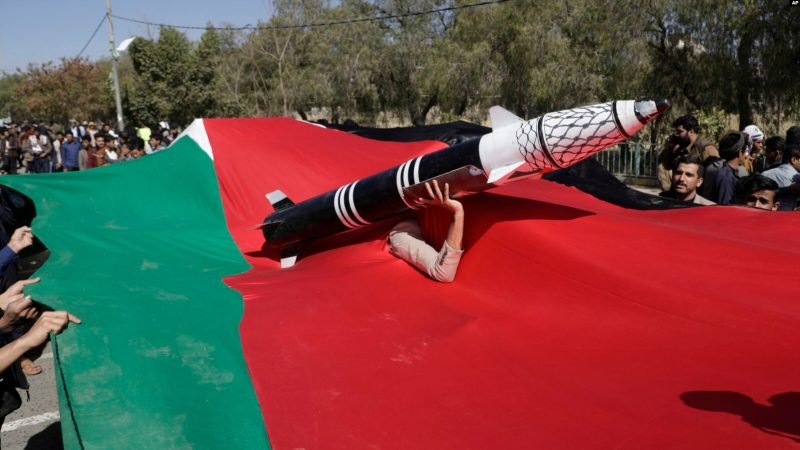
In a defiant statement, Iran’s President underscored to Britain’s Prime Minister that retaliation is not only justified but necessary to deter further Israeli aggression. This stark assertion aligns with the broader sentiment in Tehran, which views the assassination as a grave provocation.
The U.S., meanwhile, has ramped up its military posture in the region, signaling a potent response to the burgeoning crisis. White House National Security spokesperson John Kirby has warned that Israel and its allies should brace for a “significant set of attacks” from Iran, potentially unfolding within the week. To underscore this message, U.S. Secretary of Defense Lloyd Austin has mobilized the USS Georgia, a guided missile submarine, and expedited the deployment of the USS Abraham Lincoln aircraft carrier strike group to the Middle East. Pentagon spokesperson Maj. Gen. Pat Ryder confirmed that this military maneuver is intended to both deter further escalation and protect U.S. interests and Israeli defense.
Amidst these heightened tensions, European leaders have reiterated their commitment to a cease-fire and the safe delivery of humanitarian aid to Gaza. They have expressed full support for the ongoing diplomatic efforts led by the U.S., Qatar, and Egypt to broker peace. However, the situation remains precarious.
Ari Circurel from the Jewish Institute for National Security of America indicated that while a cease-fire might eventually be achieved, the resolution of the hostage crisis remains complex. Hamas, Circurel notes, has consistently rebuffed Israeli attempts to negotiate a cease-fire, and the release of hostages appears to be a critical leverage point.
In a grim update, Hamas claimed responsibility for the killing of an Israeli hostage and the wounding of two others. Abu Obaida, a Hamas spokesperson, justified the fatality as retaliation for alleged Israeli massacres of Palestinians, further inflaming the already volatile situation.
The conflict, which erupted following a devastating October 7 attack by Hamas that claimed 1,200 lives and resulted in the capture of 250 hostages, has led to a catastrophic counteroffensive by Israel. According to Gaza’s Health Ministry, nearly 40,000 people have been killed in Gaza, predominantly women and children. Israel, however, maintains that this toll includes thousands of Hamas fighters, underscoring the deeply entrenched and contentious nature of this conflict.
As diplomatic efforts continue to grapple with the escalating violence, the shadow of autonomous weapons and intensified military responses looms large. The stakes are high, and the path to peace remains fraught with uncertainty and peril.