Somalia’s Forgotten Front: Who Takes an Al-Shabaab Fighter After He Defects?
Somalia has spent decades trying to answer one question: how do you defeat Al-Shabaab?
Japanese peacebuilder Yosuke Nagai is working on a different one.
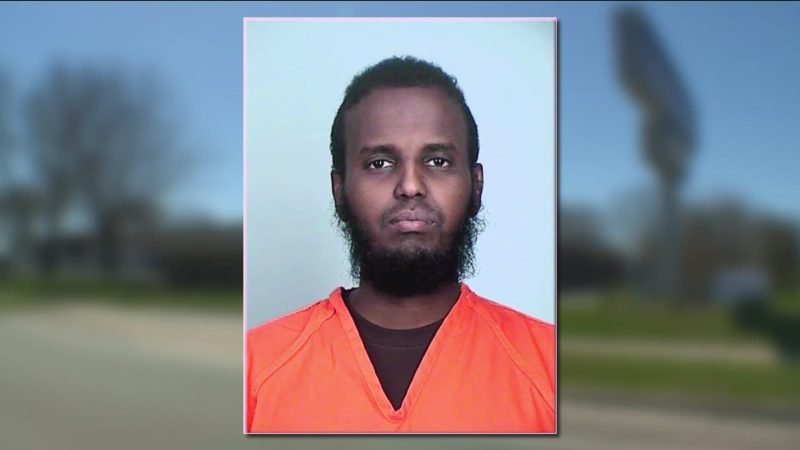
What happens when an Al-Shabaab fighter wants to leave?
That distinction matters because military pressure can kill fighters and seize territory, but an insurgency embedded in communities also survives through recruitment, coercion, grievance and the absence of credible alternatives.
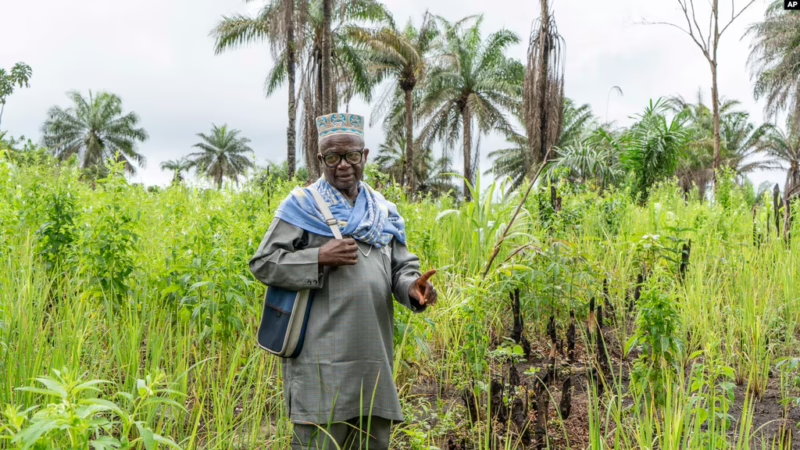
Nagai was only 19 when he began working with Somali students in 2011. His organization, Accept International, later moved into rehabilitation work and eventually began cooperating with Somalia’s federal government on former Al-Shabaab members. AFP reports that the organization has worked with roughly 1,700 imprisoned Al-Shabaab members and 250 defectors.
Today that work has become more strategically important because much of the international architecture surrounding reintegration has receded.
AFP reports that Accept International is effectively the remaining foreign-funded organization doing this kind of work in Somalia, operating with Japanese donations and personnel in Mogadishu and Dhusamareb.
And its approach is revealing.
Nagai dislikes describing the process simply as “deradicalisation.” He prefers empowerment.
Participants receive counselling, religious education, basic education and vocational training. The objective is not merely to persuade somebody that Al-Shabaab’s ideology is wrong. It is to give that person a viable life outside the organization.
That is where counterterrorism meets economics.
A fighter who defects but has no education, employment, protection or community to return to has escaped Al-Shabaab physically without necessarily escaping the conditions that can pull him back.
Research from the Royal United Services Institute reaches a similar strategic conclusion: reintegration has to be treated as the ultimate objective of the disengagement process, rather than concentrating narrowly on time spent inside rehabilitation centres.
The Most Important Battlefield May Come After Defection
One case described by Nagai demonstrates the problem.
A 21-year-old reportedly fled Al-Shabaab shortly before becoming a suicide bomber. He entered rehabilitation and appeared to be progressing.
Then he returned to the organization.
According to Nagai, pressure came from his father, who supported Al-Shabaab.
That single story exposes one of Somalia’s hardest security realities.
Defection is not simply an individual decision.
Family networks matter.
Clan relationships matter.
Local security matters.
Employment matters.
Ideology matters.
And Al-Shabaab’s continuing presence in communities means leaving the organization can itself carry enormous personal risk.
That is why rehabilitation cannot substitute for military pressure against Al-Shabaab—but military pressure cannot substitute for rehabilitation either.
Somalia needs both.
The Donors Are Leaving at the Wrong Moment
The deeper problem is that international confidence in Somalia’s reintegration architecture has weakened.
AFP reports that UN support for Somalia’s programmes ran from 2013 until 2024 before funding ended in 2025, amid concerns about limited visibility into important parts of the process and declining donor confidence.
That creates a dangerous contradiction.
Somalia and its international partners want Al-Shabaab fighters to defect.
But every potential defector has to ask:
Defect to what?
If rehabilitation centres lack adequate resources, if former fighters cannot find work, if communities reject them, and if Al-Shabaab can threaten their families, then the government’s offer becomes less convincing.
That ultimately affects the battlefield.
A credible defection programme gives commanders another weapon: it creates an exit route for fighters who have lost faith in the insurgency.
A weak programme tells those same fighters that surrender may simply exchange one dangerous existence for another.
WARYATV ASSESSMENT
Yosuke Nagai’s story is inspiring.
But strategically, it is also troubling.
One Japanese NGO should not be carrying such an important component of Somalia’s counterinsurgency architecture.
Accept International can rehabilitate individuals.
It cannot repair Somalia’s institutions.
It cannot eliminate corruption.
It cannot provide employment for every former combatant.
And it cannot independently protect communities from Al-Shabaab retaliation.
Those responsibilities ultimately belong to the Somali state.
There is also no guarantee that rehabilitation succeeds with every participant. Serious programmes require screening, long-term monitoring and credible evaluation precisely because disengagement from violence, ideological change and successful social reintegration are different things. RUSI’s work on Somalia has repeatedly emphasized these complexities.
But abandoning reintegration because it is difficult would be strategically shortsighted.
Every Al-Shabaab member who genuinely defects is one fewer fighter the Somali military may eventually have to confront.
Every former fighter who successfully builds a civilian life becomes evidence to those still inside that leaving is possible.
And every failed reintegration risks communicating the opposite.
Nagai therefore represents something larger than an unusual story about a Japanese idealist who went to Somalia.
He represents one of the least glamorous but potentially important fronts in a war that cannot be solved entirely with drones, airstrikes and infantry offensives.
Somalia has spent billions trying to make Al-Shabaab fighters afraid to stay.
It also needs to give them a reason to leave.