President Abdirahman Mohamed Abdullahi Irro’s call for dialogue to address the ongoing conflict in Sool and Sanaag represents a critical moment in Somaliland’s efforts to stabilize its disputed regions. This move underscores the administration’s recognition of the urgency of ending violence while maintaining its territorial integrity amidst rising tensions with Khatumo forces.
The president’s call for an “unconditional peace process” reflects a dual strategy: projecting a willingness to negotiate while reaffirming Somaliland’s constitutional duty to safeguard its territorial sovereignty. The government’s stance, articulated by Presidential Spokesperson Hussein Ige Dayr, positions Somaliland as open to reconciliation yet firm in its resolve to defend against perceived threats.
This duality seeks to address both domestic and international audiences. Locally, it appeals to those affected by the conflict, especially displaced civilians, while signaling to international observers, including humanitarian organizations like the UN, that Somaliland values dialogue over prolonged military engagements.
The conflict in Sool and Sanaag has caused significant humanitarian distress. According to the UN Office for the Coordination of Humanitarian Affairs (UNOCHA), nearly 43,000 people have been displaced, with many fleeing to nearby towns such as Ceel Afweyn and Laasqoray or further afield to Bossaso and Burco. The disruption has devastated local livelihoods, and reports of civilian casualties, including children, highlight the urgency for de-escalation.
The fragile calm reported in Erigavo following the Khatumo withdrawal is tenuous. Residents fear renewed violence, emphasizing the necessity of sustained peace efforts to prevent further displacement and casualties.
Challenges to Peace
Deep-Rooted Grievances: The Khatumo movement’s claims of marginalization and lack of representation complicate reconciliation efforts. Addressing these grievances will require Somaliland to adopt a more inclusive approach that reassures all stakeholders.
Trust Deficit: Historical mistrust between Somaliland authorities and Khatumo forces undermines dialogue. Building trust will require confidence-building measures such as ceasefires, humanitarian access, and local consultations.
Regional Dynamics: The involvement of neighboring Puntland, which has vested interests in Sool and Sanaag, adds a layer of complexity. Somaliland must navigate these dynamics carefully to avoid external escalation.
Somaliland’s call for dialogue must be backed by concrete actions that demonstrate sincerity. Key steps could include:
Localized Mediation: Engaging neutral local elders, civil society leaders, and religious figures to mediate between the government and Khatumo forces.
Humanitarian Corridors: Collaborating with international organizations to ensure safe delivery of aid and support for displaced populations.
Decentralized Governance: Exploring power-sharing or autonomy arrangements that address Khatumo’s demands without undermining Somaliland’s sovereignty.
A Test of Leadership
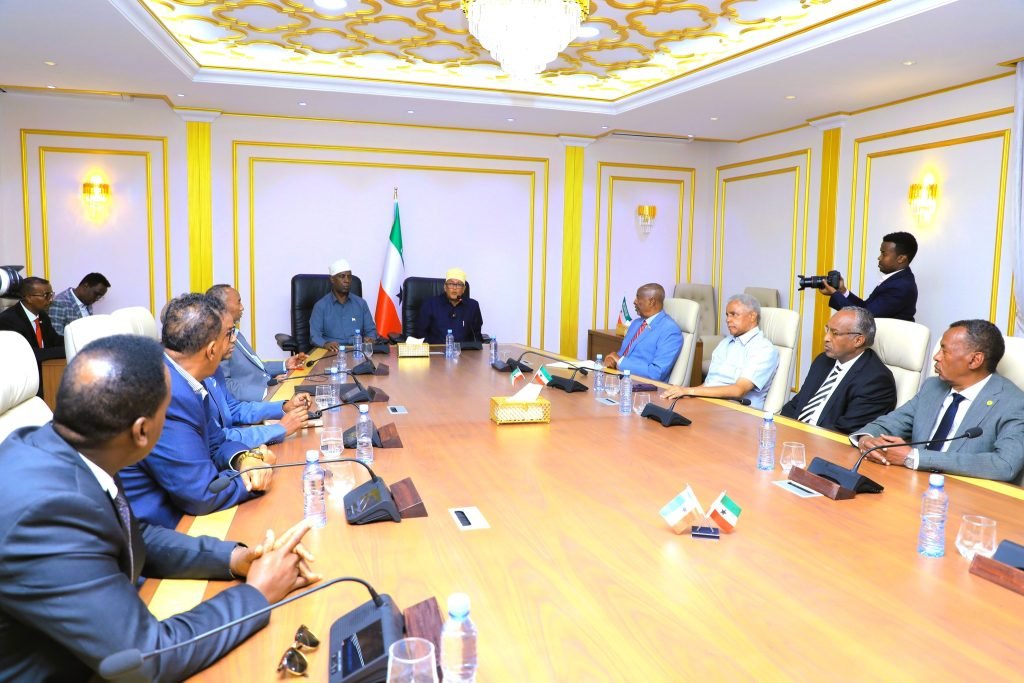
President Irro’s appeal for dialogue is a step in the right direction, but its success hinges on balancing firmness with genuine efforts to address the root causes of the conflict. The humanitarian crisis in Sool and Sanaag adds urgency to these efforts, with regional stability hanging in the balance.
For Somaliland, this conflict is not just a test of military capability but a broader challenge to its state-building aspirations. Resolving this crisis peacefully could reinforce Somaliland’s claims of stability and governance, strengthening its case for international recognition. Conversely, a failure to contain violence risks undermining its progress and escalating regional instability.