Exclusive Insights into Somalia’s Strategic Shift and Its Global Implications
By Kasim Abdulkadir:
Explore the emerging Somalia-Russia alliance, the factors driving Somalia to sever Western ties, and the potential global consequences of this geopolitical shift.
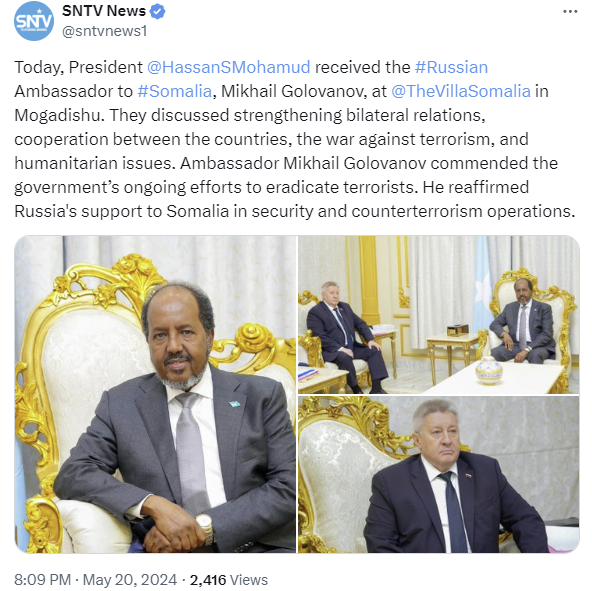
Somalia’s recent diplomatic maneuvers signal a significant shift in its international alliances, with President Hassan Sheikh Mohamud engaging in strategic discussions with Russian Ambassador Mikhail Golovanov. As Somalia prepares to sever its ties with Western countries and the United Nations, this evolving relationship with Russia raises crucial questions about the underlying motives, key players, and potential consequences for both nations and the broader geopolitical landscape.
Historical Context and Motivations
Somalia, plagued by decades of violence, corruption, and political instability, has long relied on Western aid and the United Nations for support. Despite this, the country remains mired in poverty and conflict, with militant groups like Al-Shabab exploiting the power vacuum left by a dysfunctional government. The recent intelligence reports suggesting Somalia’s intention to cut ties with Western allies and the UAE indicate a dramatic reorientation of its foreign policy.
Russia’s interest in Somalia is not surprising, given its historical strategy of expanding influence in Africa through diplomatic and economic initiatives, military cooperation, and resource extraction. The Kremlin’s pursuit of Somalia’s vast natural resources, including minerals, oil, and gas, aligns with its broader goal of challenging Western dominance and establishing strategic footholds in resource-rich regions.
The Key Players and Their Interests
President Hassan Sheikh Mohamud’s administration appears determined to pivot towards Russia, motivated by a mix of dissatisfaction with Western support and the allure of new economic opportunities. The president’s gratitude towards Russia for its role in Somalia’s HIPC debt relief process suggests a deeper appreciation and trust in Russian support.
Under President Vladimir Putin, Russia has intensified its engagement with African nations, seeking to expand its geopolitical influence. By offering economic and military support to Somalia, Russia aims to secure access to crucial resources and establish a strategic presence in the Horn of Africa, a region critical for global maritime trade routes.
The United States, European Union, and United Nations have been the primary supporters of Somalia’s reconstruction efforts. However, their influence is waning as Somalia gravitates towards Russia. The potential withdrawal of UNSOM and AMISOM highlights the fragility of Western-led stabilization efforts in the region.
Potential Consequences and Implications
Russia’s engagement in Somalia promises lucrative economic opportunities, particularly in resource extraction. Access to Somalia’s minerals, oil, and gas can bolster Russia’s energy sector, enhancing its global market position. However, these ventures come with significant risks, including security challenges posed by militant groups and the instability of Somalia’s political landscape.
Somalia’s pivot towards Russia signifies a broader realignment of global alliances, challenging Western hegemony in Africa. This shift could inspire other African nations to reconsider their alliances, potentially leading to a multipolar world order where regional powers like Russia and China play more dominant roles.
The withdrawal of Western support could exacerbate Somalia’s security challenges. Without the stabilizing presence of AMISOM and the strategic guidance of UNSOM, Somalia risks descending further into chaos, providing fertile ground for militant groups to expand their influence.
Somalia’s humanitarian situation remains dire, with millions in need of aid. Russia’s focus on strategic and economic interests may not adequately address these humanitarian needs, potentially worsening the plight of Somalia’s most vulnerable populations.
Expert Insights and Data-Driven Analysis
Experts suggest that Somalia’s shift towards Russia is driven by a combination of economic desperation and political opportunism. Dr. Ahmed Abdullahi, a Somali political analyst, notes, “The Somali government’s frustration with the slow pace of progress under Western aid programs has made the allure of Russian support irresistible. However, this move is fraught with risks, as Russia’s track record in supporting fragile states is mixed at best.”
Data from the World Bank and other financial institutions highlight the precarious state of Somalia’s economy, with unemployment rates soaring and infrastructure in dire need of investment. The promise of Russian investment in these sectors could offer a lifeline, but the long-term benefits remain uncertain given the volatile political environment.
Historical Parallels and Lessons
Historical parallels can be drawn with other African nations that have shifted their alliances in search of new opportunities. The Democratic Republic of Congo’s engagement with China, for instance, brought substantial investment but also raised concerns about resource exploitation and environmental degradation. Somalia must navigate these challenges carefully to avoid similar pitfalls.
Future Developments and Recommendations
Looking ahead, Somalia’s relationship with Russia will likely evolve based on several factors:
For Somalia to benefit from Russian engagement, it must strengthen its governance structures and ensure that investments are managed transparently and equitably. This requires a concerted effort to combat corruption and build institutional capacity.
Somalia should strive for a balanced foreign policy, maintaining constructive relations with both Eastern and Western powers. This approach can maximize the benefits of international support while mitigating the risks of overreliance on a single partner.
Engaging with neighboring countries and regional organizations will be crucial for Somalia’s stability and development. Collaborative security arrangements and economic partnerships can enhance regional stability and create a more conducive environment for investment.
Somalia’s youthful population and increasing connectivity present opportunities to harness technology for development. Investments in digital infrastructure and education can empower the next generation and drive economic growth.
In conclusion, Somalia’s evolving relationship with Russia represents a significant geopolitical shift with far-reaching implications. While the promise of economic support and strategic partnership is enticing, the risks associated with this realignment are substantial. Somalia’s leaders must navigate this transition with caution, ensuring that the nation’s long-term stability and development are prioritized.
By adopting a balanced and strategic approach, Somalia can leverage its newfound partnerships to build a more prosperous and stable future. The international community, meanwhile, must remain engaged, offering support and guidance to ensure that Somalia’s journey towards progress is both sustainable and inclusive.
Sources and References:
- World Bank
- EU Tax Observatory
- MIT Economics Department
- United Nations Assistance Mission in Somalia (UNSOM)
- African Union Mission in Somalia (AMISOM)
- Interviews with Somali and international political analysts
For an exclusive, in-depth analysis of Somalia-Russia relations, stay tuned to waryatv.com.
UNSOM’s Demise: Somalia’s Descent into the Abyss of State Collapse
https://www.waryatv.com/2024/04/13/current-challenges-facing-somalia-a-deep-dive/
World Bank Issues Stern Warning to Somalia Over Audit Delays