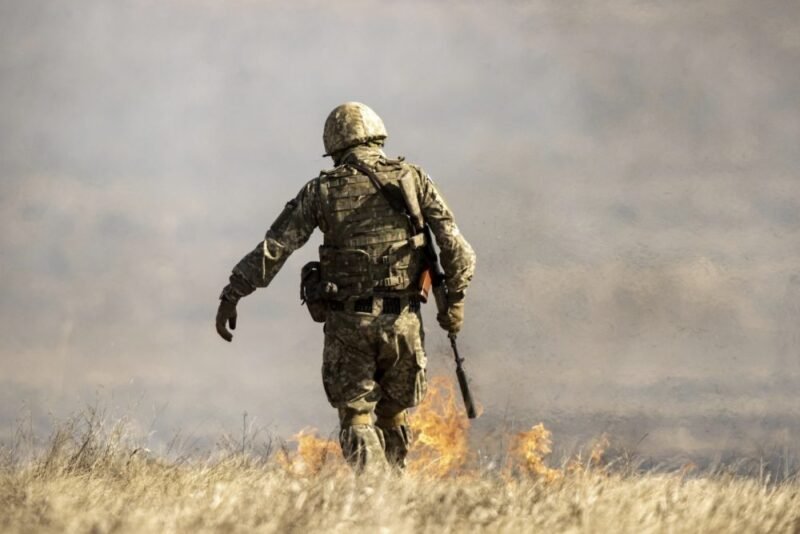
Ending the Ukraine conflict won’t eliminate the broader threats from Russia, warn top European and U.S. officials.
European and U.S. officials warn that the threat from Russia will persist beyond the Ukraine war, emphasizing the need for continued vigilance and strategic readiness.
The annual Aspen Security Forum in Aspen, Colorado, served as a stark reminder of the enduring geopolitical tensions facing Europe and the United States. Top European diplomats and U.S. military officials underscored that even a resolution to the war in Ukraine would not end the broader threats posed by Russia. This gathering of influential voices highlighted the complex and ongoing nature of security challenges in the region.
U.S. General Christopher Cavoli, head of U.S. European Command and NATO’s supreme allied commander, articulated the gravity of the situation. “The outcome on the ground is terribly, terribly important,” Cavoli said, stressing the significance of the conflict’s resolution. However, he cautioned against any illusions that peace in Ukraine would equate to an end of hostilities with Russia. “At the end of a conflict in Ukraine, however it concludes, we are going to have a very, very big Russia problem,” Cavoli warned, highlighting the potential for a reconstituted and even more antagonistic Russian force on NATO’s borders.
Echoing Cavoli’s sentiments, Jens Plötner, Germany’s foreign and security adviser, painted a grim picture of a prolonged conflict. “By the choice of [Russian President Vladimir] Putin, we are entering a phase of a long, drawn-out conflict with Russia,” Plötner remarked. He pointed out that the war in Ukraine is only the most visible aspect of Russia’s broader hybrid warfare strategy, which includes activities across Europe and beyond, from Africa to alliances with nations like Iran and North Korea.
Plötner’s comments came amid heightened security concerns in Germany, particularly following reports of a Russian plot to assassinate the CEO of Rheinmetall, a leading defense company. While Kremlin spokesperson Dmitry Peskov dismissed these reports as fake, German authorities remain vigilant, having already thwarted similar plots.
The broader European security landscape is increasingly troubled by Russian espionage and interference. German authorities have arrested individuals linked to Russian espionage and sabotage efforts, including plans to attack U.S. military facilities to disrupt aid to Ukraine. Meanwhile, U.S. intelligence has flagged Russian attempts to meddle in the upcoming U.S. presidential election, aiming to bolster candidates favorable to Moscow.
Jonatan Vseviov, secretary-general at Estonia’s Ministry of Foreign Affairs, urged Western nations to remain clear-eyed about Putin’s tactics. “His foreign minister, I think yesterday, talked about peace. This is him laying a trap,” Vseviov warned, emphasizing that Putin’s overtures for peace are often strategic maneuvers meant to disrupt Western unity and policy.
Amidst these high-stakes warnings, the backdrop of the Republican National Convention highlighted a contrasting narrative. Supporters of former President Donald Trump promoted the idea that “Trump will end the Ukraine war,” with Trump’s vice-presidential pick, Ohio Senator J.D. Vance, advocating for a negotiated peace between Russia and Ukraine. However, this stance has been met with skepticism and criticism from European officials who stress the importance of a strong, united response to Russian aggression.
Vance’s comments at a security conference in Munich, where he suggested that Europe needs to become more self-sufficient, sparked debate. European leaders have pointed to initiatives like the development of a deep-strike precision missile capability as evidence of their commitment to self-defense and countering Russia’s military buildup.
General Cavoli’s remarks at the Aspen Forum sought to dispel notions of European complacency. He praised the continent’s proactive stance, noting, “This is a different Europe than the Europe we complained about for years.” Cavoli emphasized that Europe now recognizes the need for shared defense burdens and is organizing accordingly. “This is exactly the partner we’ve been looking for for three decades,” he stated, highlighting the current moment as an optimal time for U.S.-European collaboration.
The discussions at the Aspen Security Forum underscored a sobering reality: the end of the Ukraine war, whenever it may come, will not mark the end of security threats from Russia. The Western alliance must prepare for a sustained period of strategic competition and potential conflict, with Russia continuing to pose a multifaceted threat to regional and global stability.